Call us on 01688 400682

Mull Scenery and Landscapes Archive

Your Mull in Photos: Island Beaches

Earlier this summer, we asked you to share your very best photos of island beaches on Mull with us over on our Facebook page. What a response we had! It seems we count some talented photographers among our guests, as well as some willing judges – thank you!

We asked you to vote for your favourites and chose a few of our own too. Today, we’re thrilled to share the best photos of island beaches on Mull with you. Sit back, relax and enjoy a dose of vitamin sea…

Tormore Beach by the Bull Hole, close to Fionnphort on the Isle of Mull

Photographed by Rob Hague

This picture blew us away with the soft palette of blues and creams on the beach, contrasting the dark, dramatic rocky hills beyond. But don’t be fooled by the boat that you can only reach this beauty by sea. It actually lies just beyond the disused quarry near Fionnphort and its secluded location means you’ll often have the sand to yourselves.

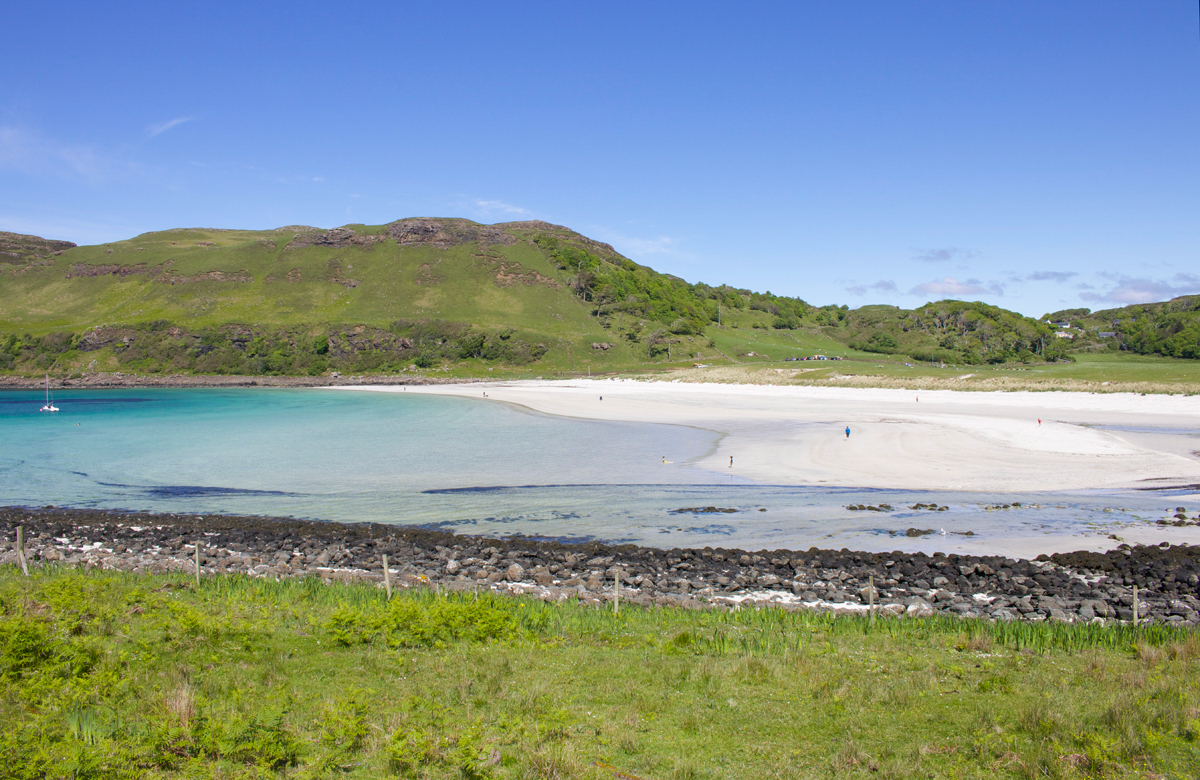
Sandy path leads through the sand dunes and grassland to Calgary Bay, with turquoise sea and blue skies.

Photographed by Mark Allardice

You won’t be surprised to see Calgary Bay featuring in our top island beaches. This beach is so beautiful it could be lifted from a postcard (it certainly features on many!). In fact, the area as a whole made such a great impression on one visitor, that they took the name home to Canada and the city of Calgary in Alberta gained its name.

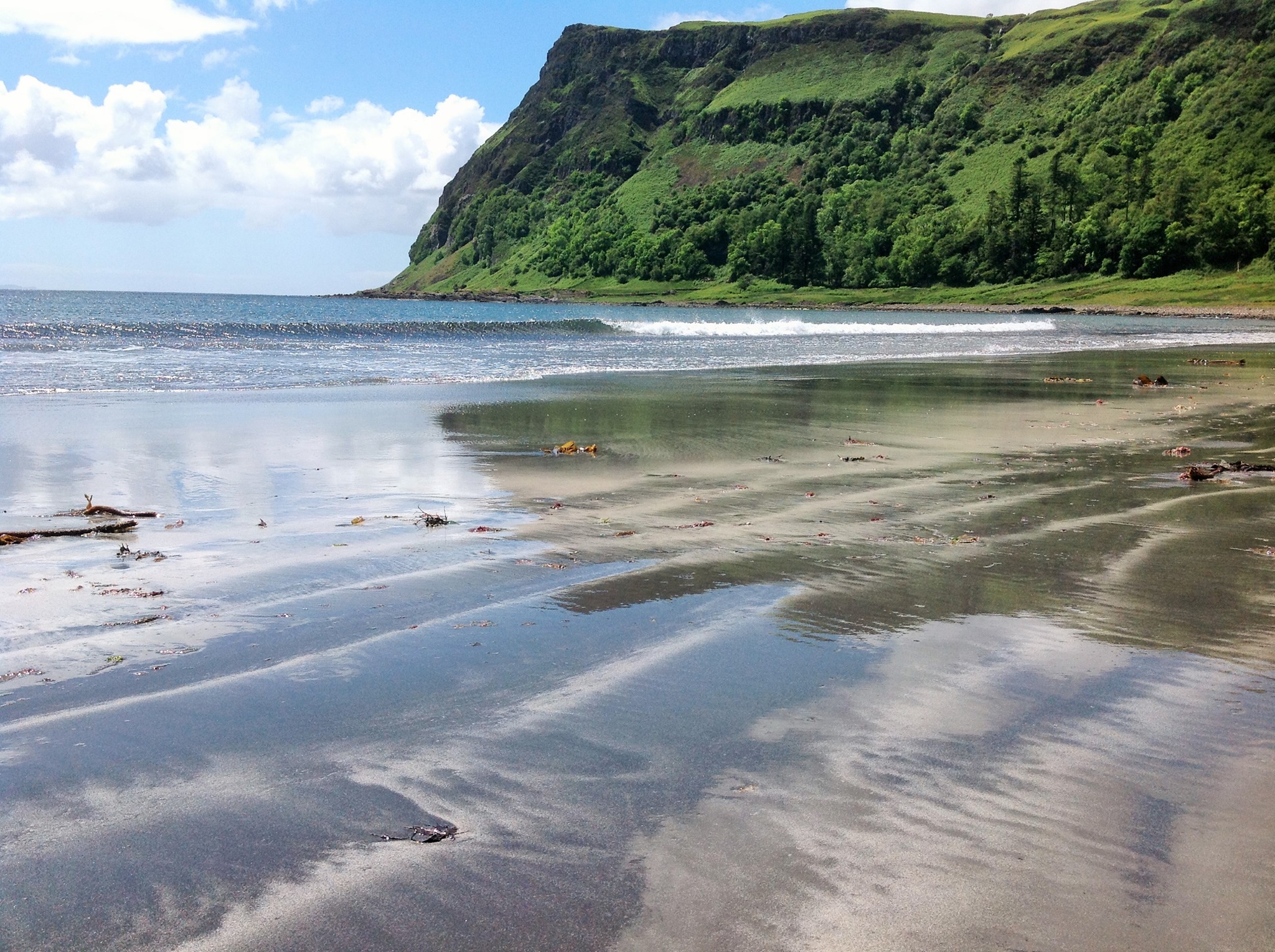
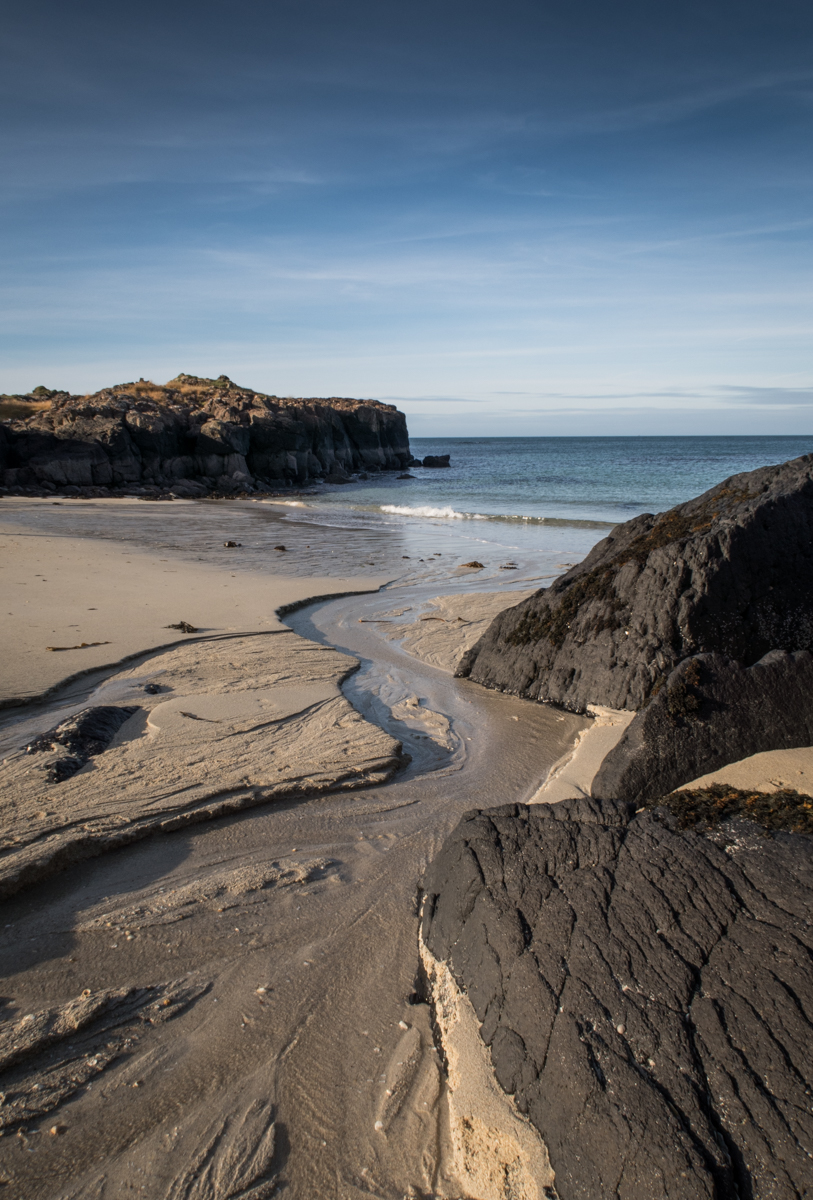
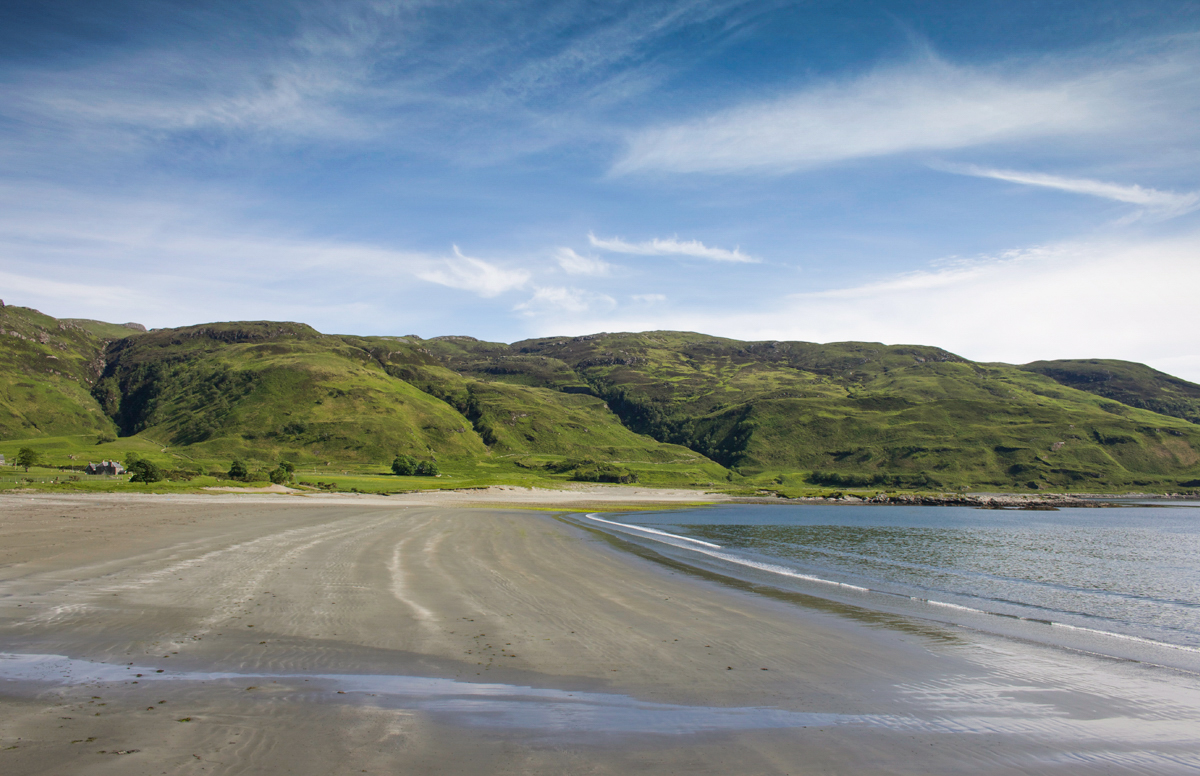
The grey sand beach at Carsaig, surrounded by a lush green headland and blue clouded skies as the waves lap on shore

Photographed by Nat Buckley

While we may be famed for our white sandy island beaches, we’ve got some cracking grey beaches too. Carsaig is among the most dramatic, with waves unfurling onto a grey beach surrounded by lush and epically steep sloping cliffs.

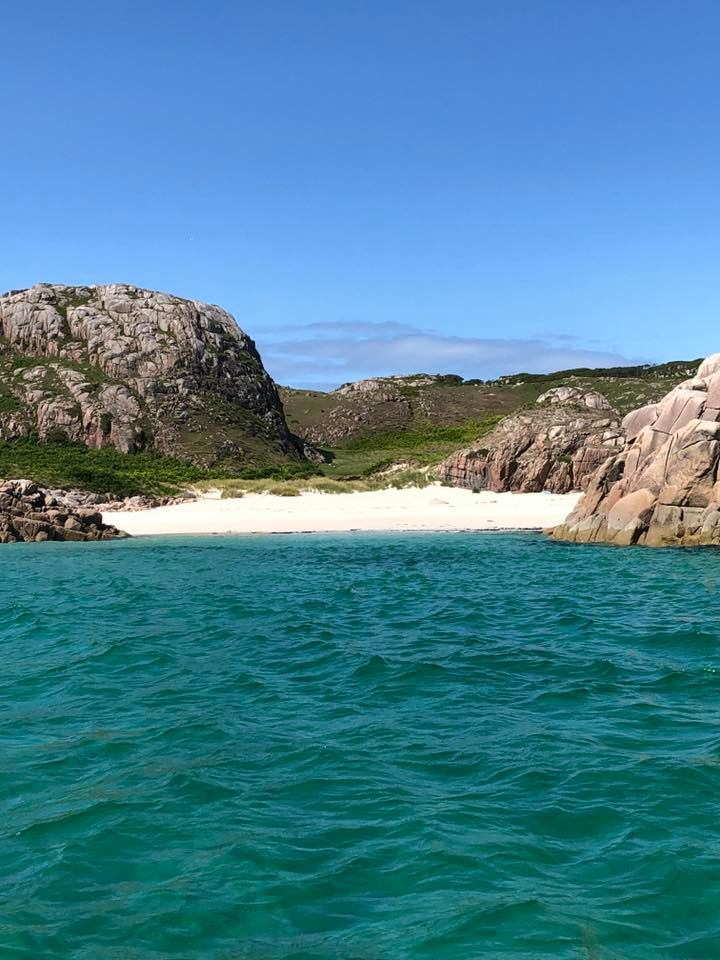
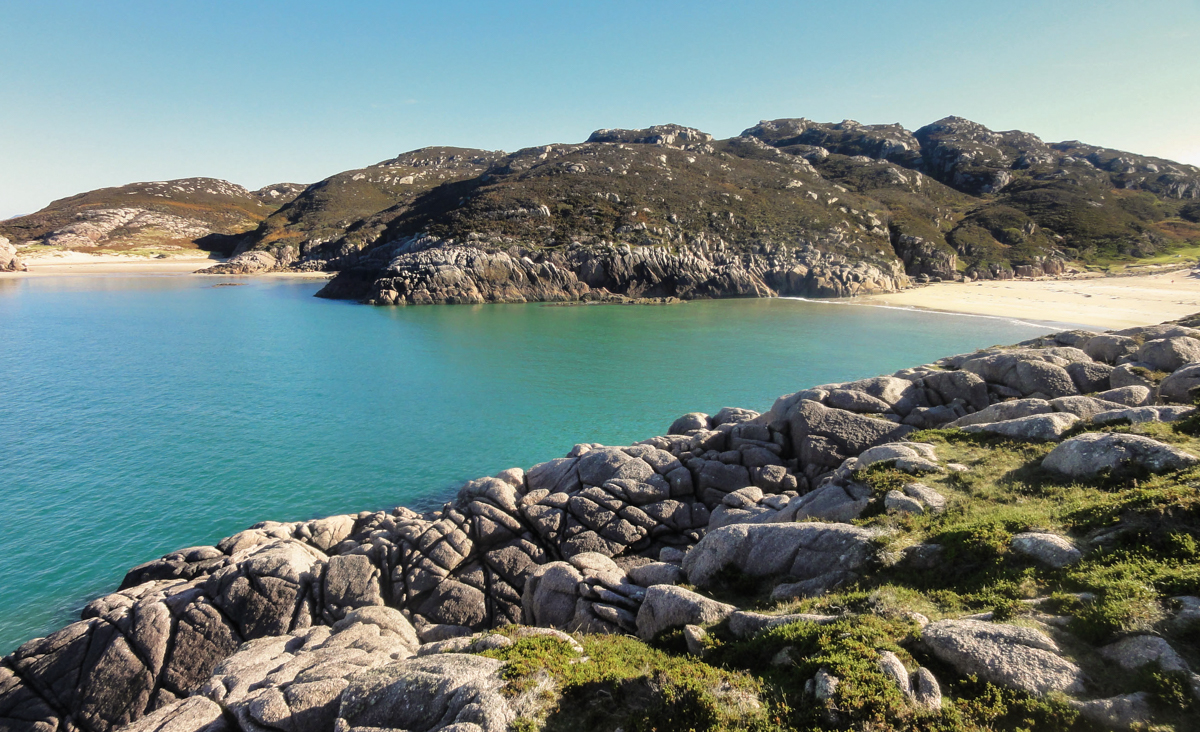
Turquoise sea and a white sandy cove, surrounded by tall pink granite rocks and blue sky

Photographed by Peter MacInnes

When you visit Mull, make the most of any opportunity to chat to locals (including us!) about their favourite beaches. It can be a brilliant way to uncover quiet spots that are easy to miss but utterly magical, like this cove between Knockvologan and Port nan Ron.

Crystal clear blue waters over white sand beside a rocky outcrop at Croig

Photographed by Gail Cannon

The sandy coves at Croig in north west Mull are one of the island’s best kept secrets. Discover them first-hand by following the track around the coast from the charming fishing harbour, then dropping down to these tiny coves with water that is temptingly clear.

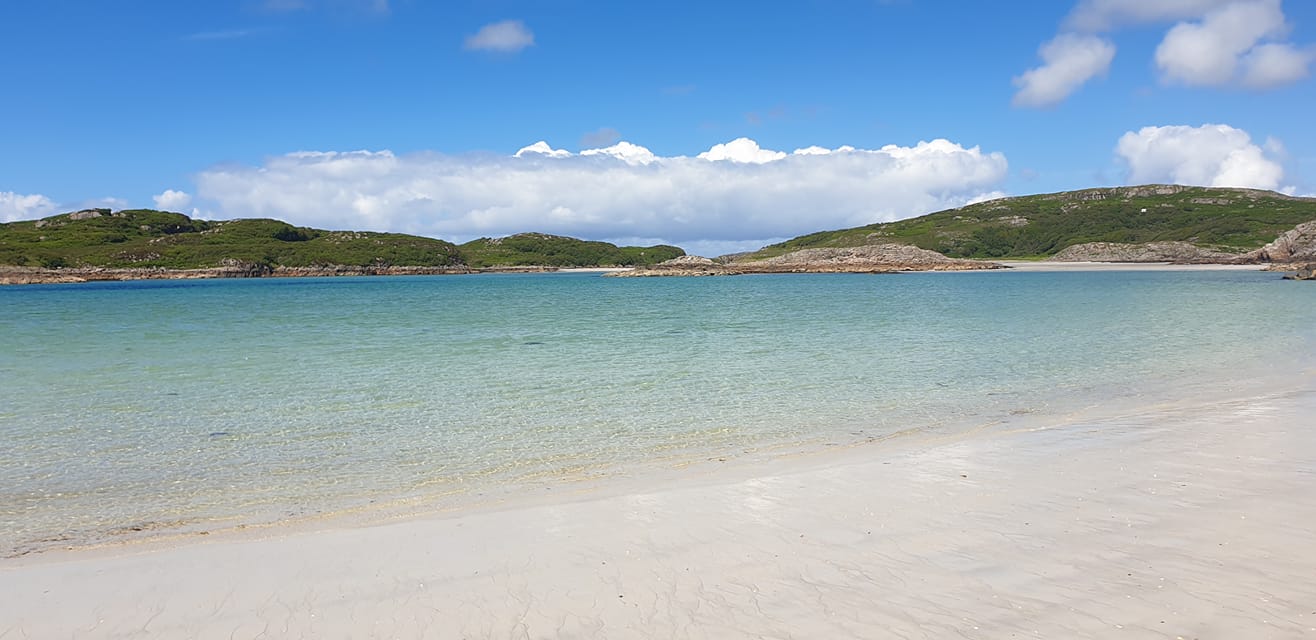
White sand beach at Knockvologan with gentle waves, turquoise sea, distant hills and blue skies

Photographed by Elspeth Valentine

Knockvologan is arguably one of the most beautiful of all island beaches on Mull. With its white shell sand, dazzlingly clear water and striking pink granite boulders, this is a great spot for a picnic and a paddle. But don’t stop here, because if you follow the coast round you’ll find even more enchanting secret coves. You may even have them all to yourself!

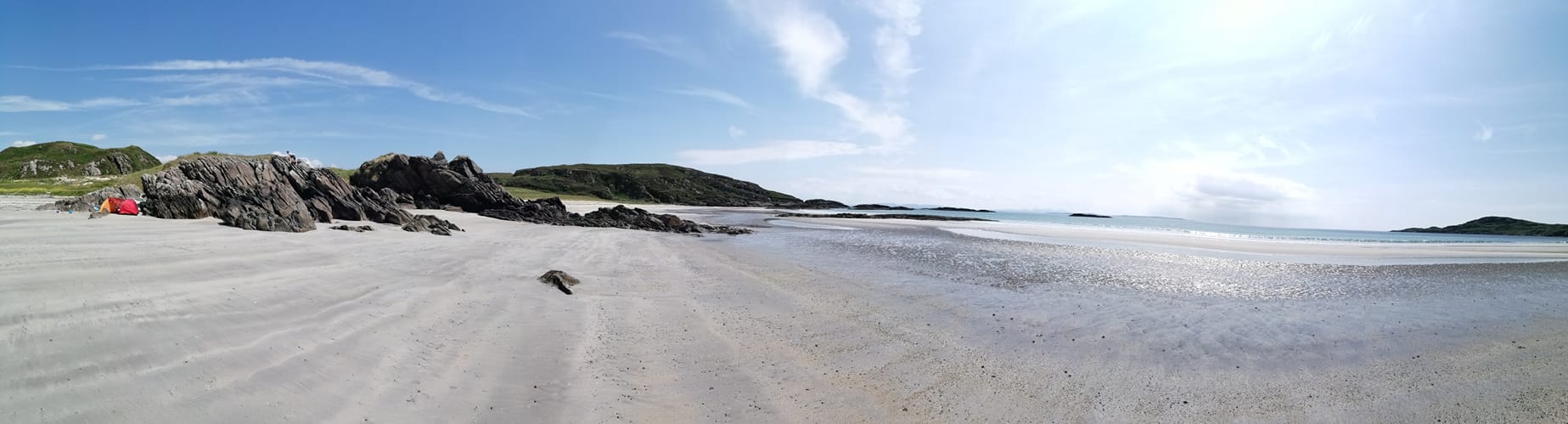
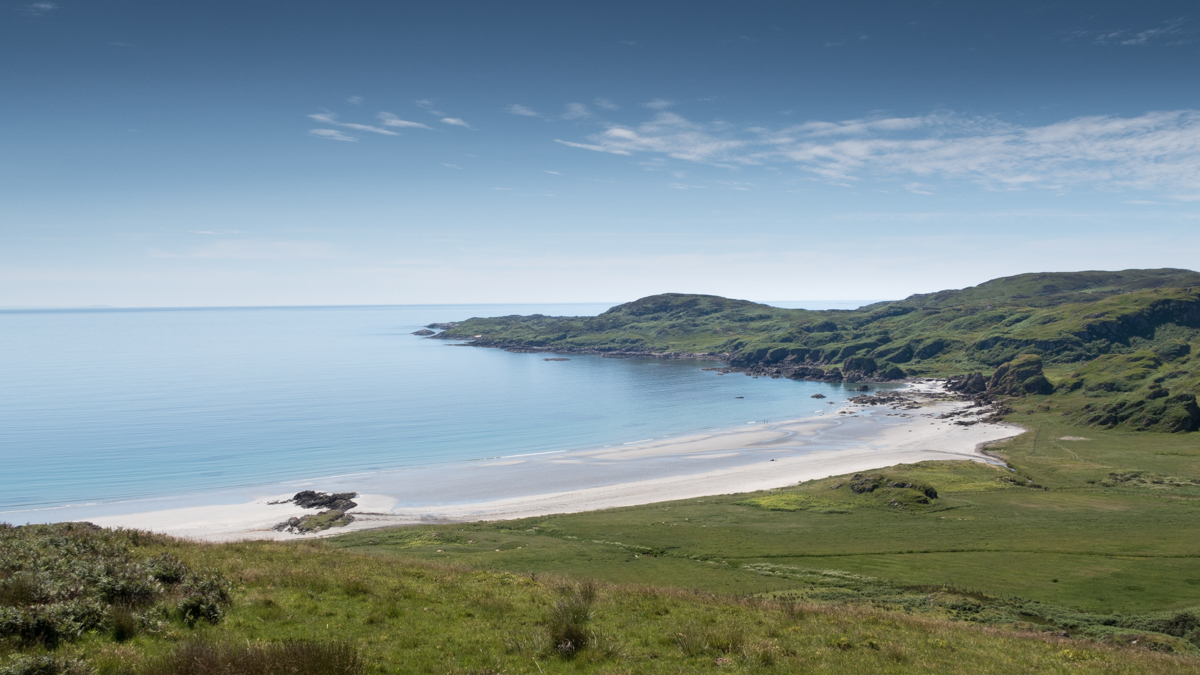
Silver sand of Ardalanish Bay with blue skies above

Photographed by Stephen Docherty

The silver sands of Ardalanish Bay really do sparkle in this sweeping panorama. Sheltered by rocky headlands, this is a great beach for dog walking or taking a dip, as well as beach-combing or rock-pooling. Visit in summer for a sensational display of wildflowers in the surrounding machair too – a real jewel of the Hebrides.

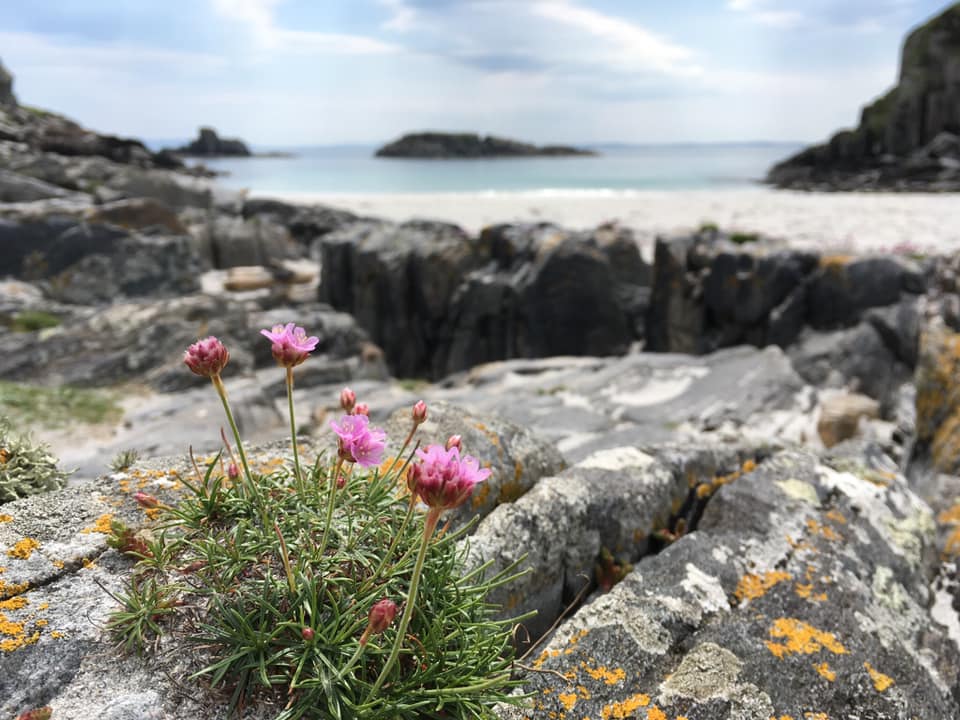
Sea thrift flowering on the rocks in front of a white sand bay and blue sea

Photographed by Chloe Cartwright

We’ll let you guess which of the island beaches this photo was taken on. The flush of pink sea thrift flowers are a sign of summer’s arrival on Mull. See if you can spot them blooming on the rocks next time you’re here.

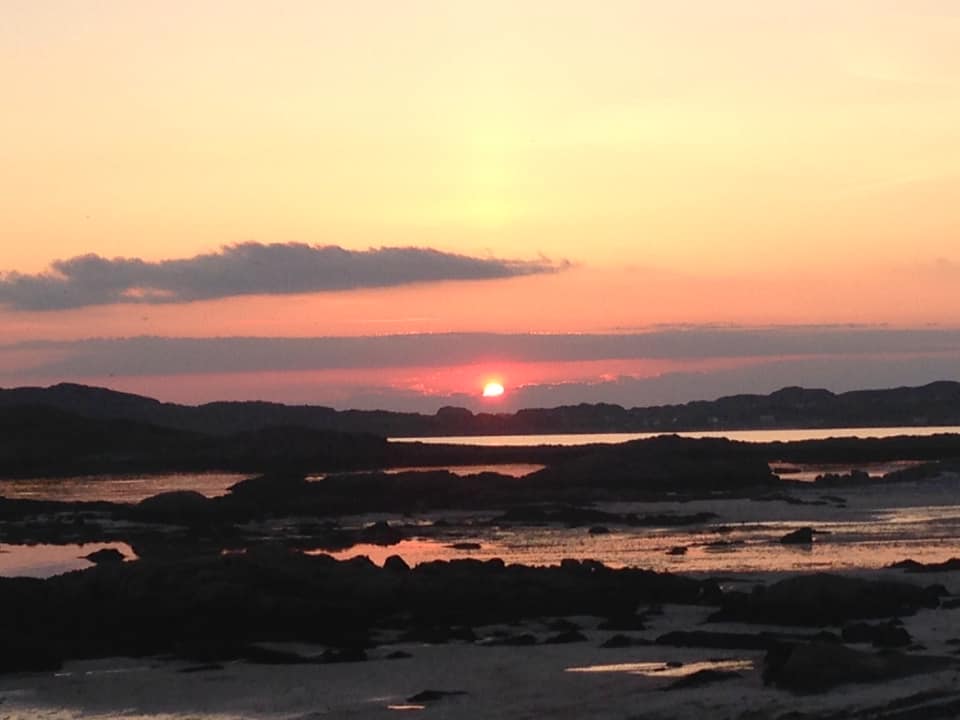
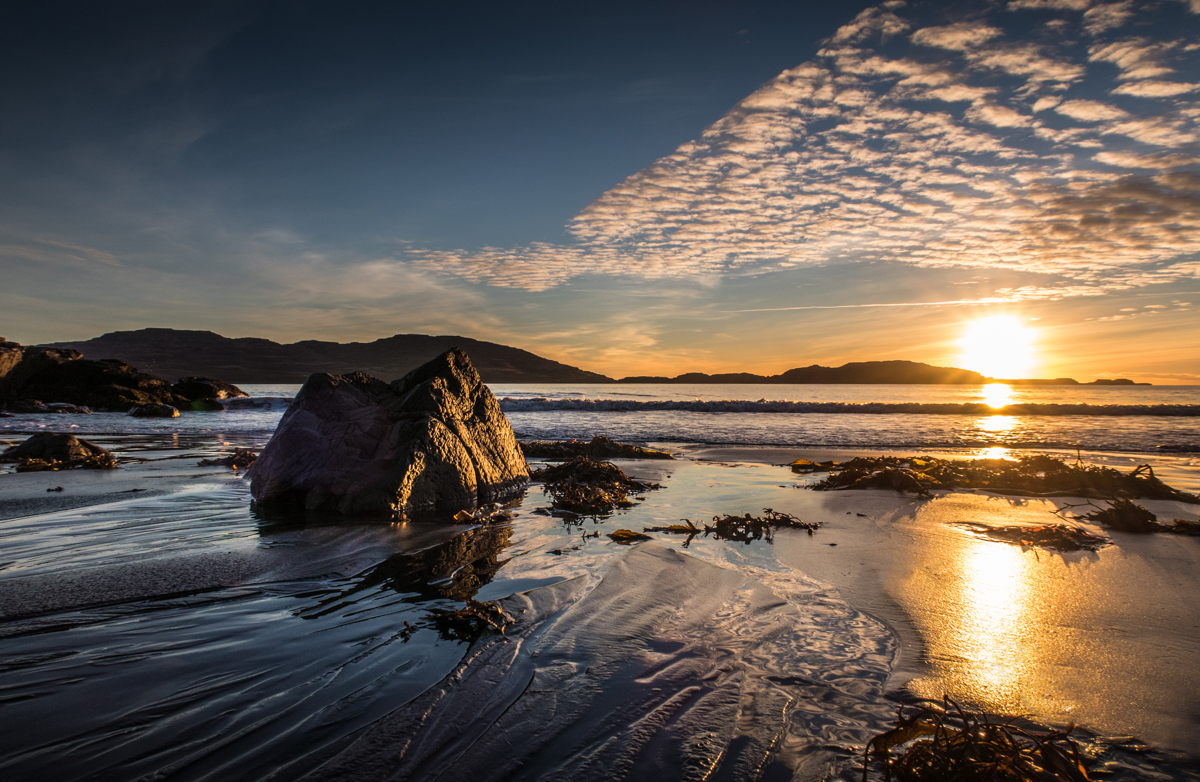
Fidden Beach rocks and pools with the tide out at sunset with an orange sky - one of the best times to photograph islands beaches on Mull

Photographed by Carl Gee

For our final island beaches photo we venture down to the Ross of Mull, where Carl Gee captured this stunning sunset over Fidden Beach.

Craving the feeling of sand beneath your toes and the scent of salt in the air? Book one of our coastal cottages and stay right beside the sea.

Which of these island beaches is your favourite?

Afternoons by the Sea: 7 Isle of Mull Beach Walks

Visitors to Mull are spoiled for choice for coastal and beach walks. From the dramatic and challenging route to the Carsaig Arches, to the tidal crossing to the Isle of Erraid, there’s a seaside stroll to suit even the most adventurous. Here, we’re sharing seven easy Isle of Mull beach walks, perfect for spending an afternoon by the sea.

Often named Mull's most beautiful beach, Calgary Bay is a stunning sweep of white sands in a horseshoe shape, with lovely walks along the coastline nearby.

Calgary, North West Mull

Arguably Mull’s most popular beach, Calgary Bay lies on the north-west coast, sheltered by dramatic headlands that slope down steeply towards the sea. The white shell-sand glistens in the sun while the crystal clear waters lap on shore. One of the gentlest beach walks, simply follow the curve of the horseshoe bay to the far side, where a burn runs into the sea. Keep an eye out for sailing boats passing on the horizon.

Langamull is a stunning sandy beach in the island's North West

Langamull, North West Mull

You’ll need to put in a 20-minute walk through woodland to reach this secluded beach, but Langamull is well worth it when you do. Look out for living treasures in the rock pools or enjoy a swim in the clear waters. Quieter than Calgary, but still with plenty of charm, Langamull makes a lovely afternoon excursion in the north of the island.

Port an Tobire beach is tucked beneath a ruined castle on Mull's east coast

Port an Tobire, East Mull

A wee gem on the mainly rocky east coast, this beach is tucked beneath the ruins of Aros Castle, just outside Salen. Part sand, part shingle, you can enjoy a stroll with views that stretch down the Sound of Mull.

Laggan Sands is a lovely option for a beach walk on Mull

Laggan Sands, South East Mull

Park beside the glittering waves at Loch Buie and pop into The Old Post Office for drinks and nibbles to take to the beach. The route to Laggan Sands stretches along the shore, before you reach the grey sand bay.

Throw out a rug, unpack the picnic and enjoy the coastal breeze as you gaze out over the Atlantic ocean. It’s a lovely reward for the scenic beach walk to get there.

One of Mull's most popular beach walks, Ardalanish beach is a beauty formed with white shell sand and perfect blue waters. Machair blooms in the summer months from this beach in south west Mull.

Ardalanish, South West Mull

While the nearby beaches at Uisken and Fidden are very popular, if you’re staying on the Ross, Ardalanish is another must-visit for beach walks. This is one of the island’s larger bays, with white sands that sweep round, making for lovely coastal walks. In the summer months, the machair comes into bloom, giving you even more to discover.

Market Bay, South West Mull

Unlike many of Mull’s beaches that enable you to park close to the sand, Market Bay demands a fair walk to get there. But what a reward when you do! This white sand bay is snuggled within rocky outcrops, creating a real sense of privacy. Azure waters lap the shore with fantastic views out to sea. Little wonder this beach is rumoured to be popular with the Royals, too!

One of Mull's most striking beach walks, Traigh na Cille is very dramatic and especially stunning at sunset with its black sand.

Traigh na Cille, West Mull

One of Mull’s more dramatic beaches, Traigh na Cille features striking grey and black sand. Facing west, this beach is brilliant for short walks at sunset. Keep an eye on the weather. Sunsets here are particularly special when the fading light dances through a lightly cloud-dappled sky.

Want to wake to views of the water and breathe in the fresh sea air every morning of your holiday? Check out these stunning Mull holiday cottages by the sea.

Island Hopping: Scottish Islands You Can Visit From Mull

When you arrive in Oban, ready to make the ferry crossing to Mull, you’re bound to hear the west coast town referred to as the ‘Gateway to the Isles’. But Oban isn’t the only place from which you can explore the surrounding Scottish islands. It’s possible to visit several from Mull too. Here’s how to do it.

Discover six Scottish islands you can visit from Mull, with boat trips, walks and historical attractions to see, as well as abundant wildlife.

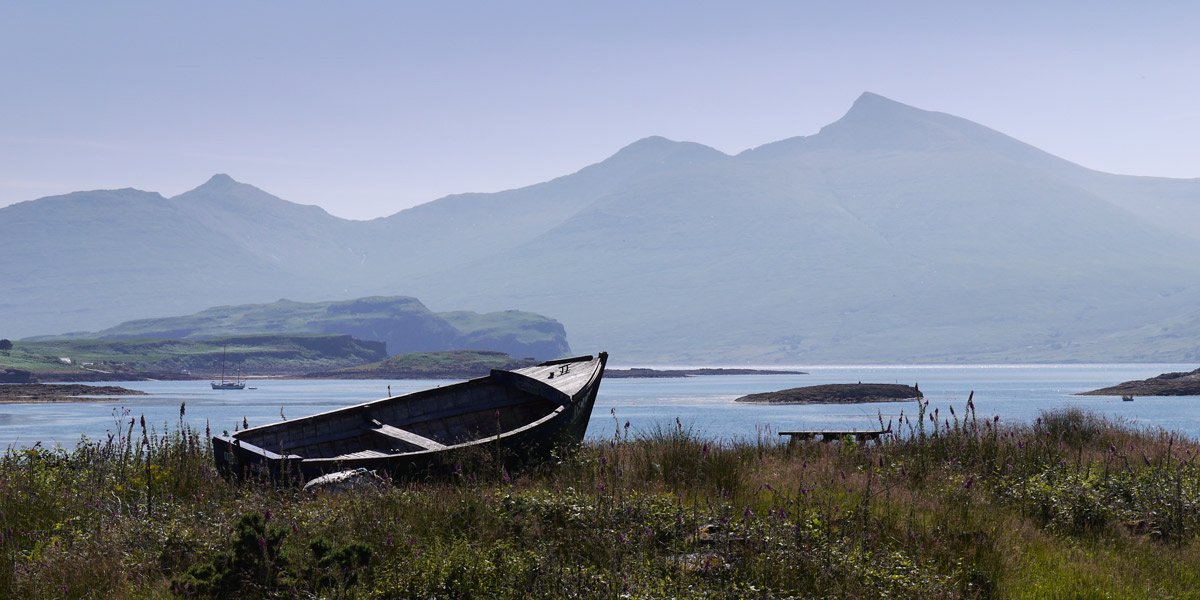
The view from the nearby island of Ulva looking back across to Mull

Iona

Perhaps the most famous of Scottish islands surrounding Mull, Iona has attracted visitors for centuries. In fact, over a thousand years ago in 563AD, St Columba arrived, bringing with him Christian teachings that are still felt on the island to this day.

Iona Abbey dates from the Middle Ages. It is one of the most popular attractions to visit, alongside the 13th-century nunnery and St Oran’s Chapel.

But that’s not all there is to explore on Iona. Three miles long, this wee island is a natural treasure trove waiting for you to discover it. Wildlife enthusiasts flock to hear the elusive corncrakes, while walkers make their way to the island’s highest point, Dun I, or to the beautiful white sand beaches, like the Bay at the Back of the Ocean.

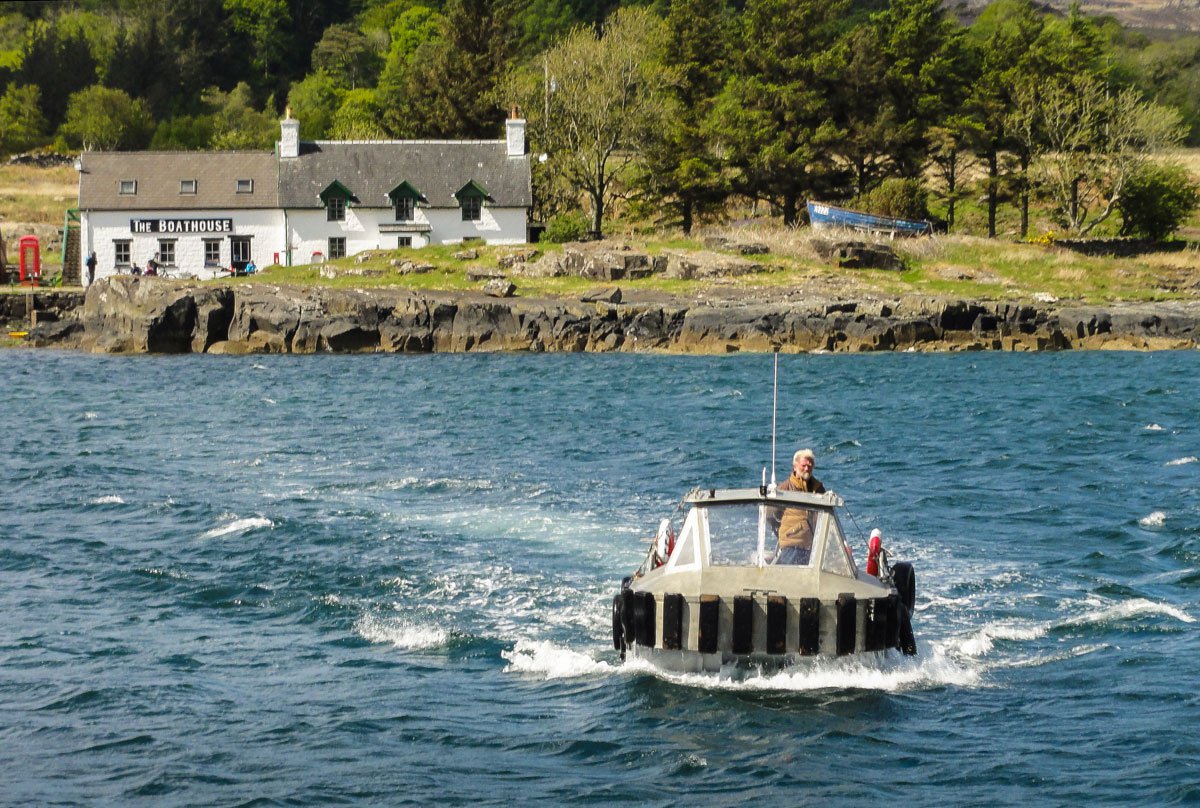
You’ll find Iona just off the south-western tip of Mull. The passenger ferry from Fionnphort takes as little as 15 minutes.

Discover six Scottish islands you can visit from Mull, with boat trips, walks and historical attractions to see, as well as abundant wildlife.

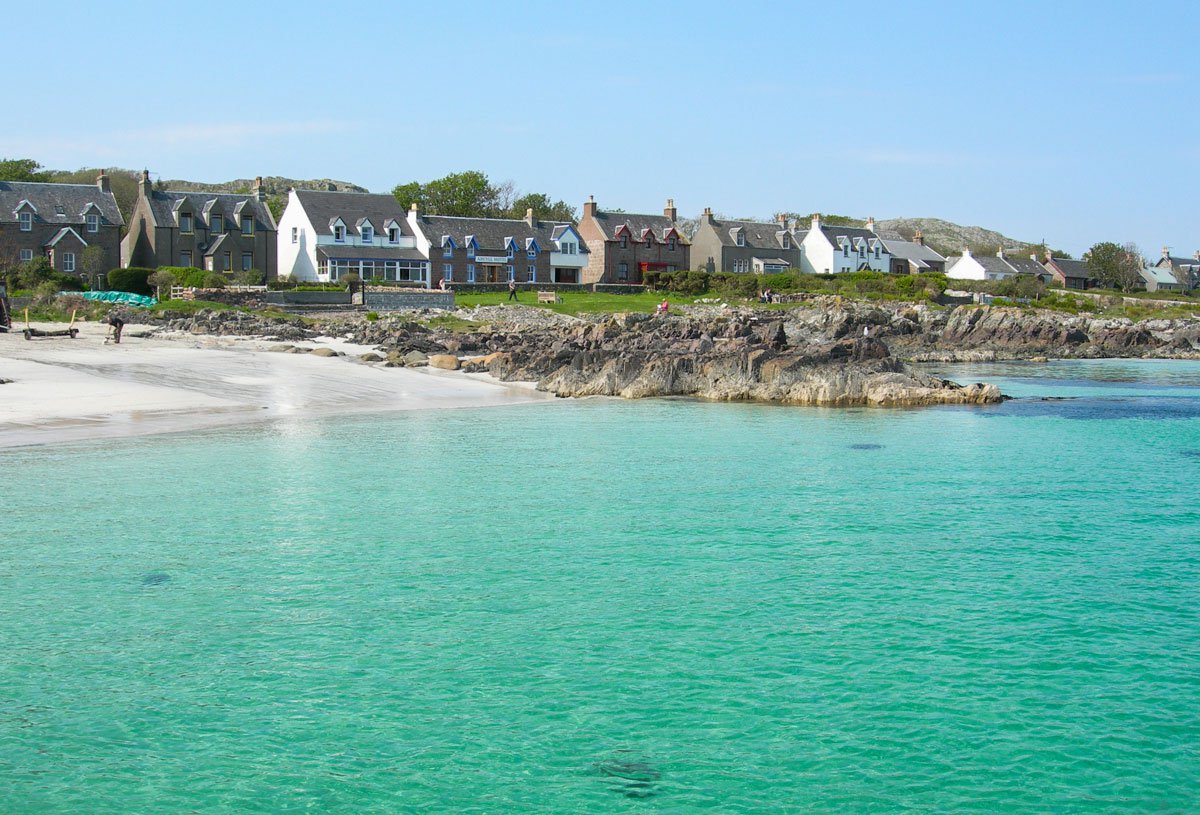
Discover the quaint cottages and charming coastline of Iona

Ulva

Ulva is one of the most accessible of the Scottish islands surrounding Mull. A boat will take you across from the aptly named Ulva Ferry on Mull’s west coast on weekdays, and Sundays between June and August too.

Ulva is a nature-lover’s paradise, with no end of waymarked trails that allow you to explore the island’s diverse scenery. There are rocky shorelines, picturesque woodlands and open countryside to discover. With this range of habitats comes an amazing array of species, with unusual wildflowers to spot, as well as birdlife and mammals.

Much like Iona, Ulva has its own interesting history. Visiting Sheila’s Cottage is a great way to experience what island life was like in the 20th century, before walking to ruined buildings or Livingstone’s Cave.

Discover six Scottish islands you can visit from Mull, with boat trips, walks and historical attractions to see, as well as abundant wildlife.

Hop across to Ulva and enjoy woodland walks

Staffa

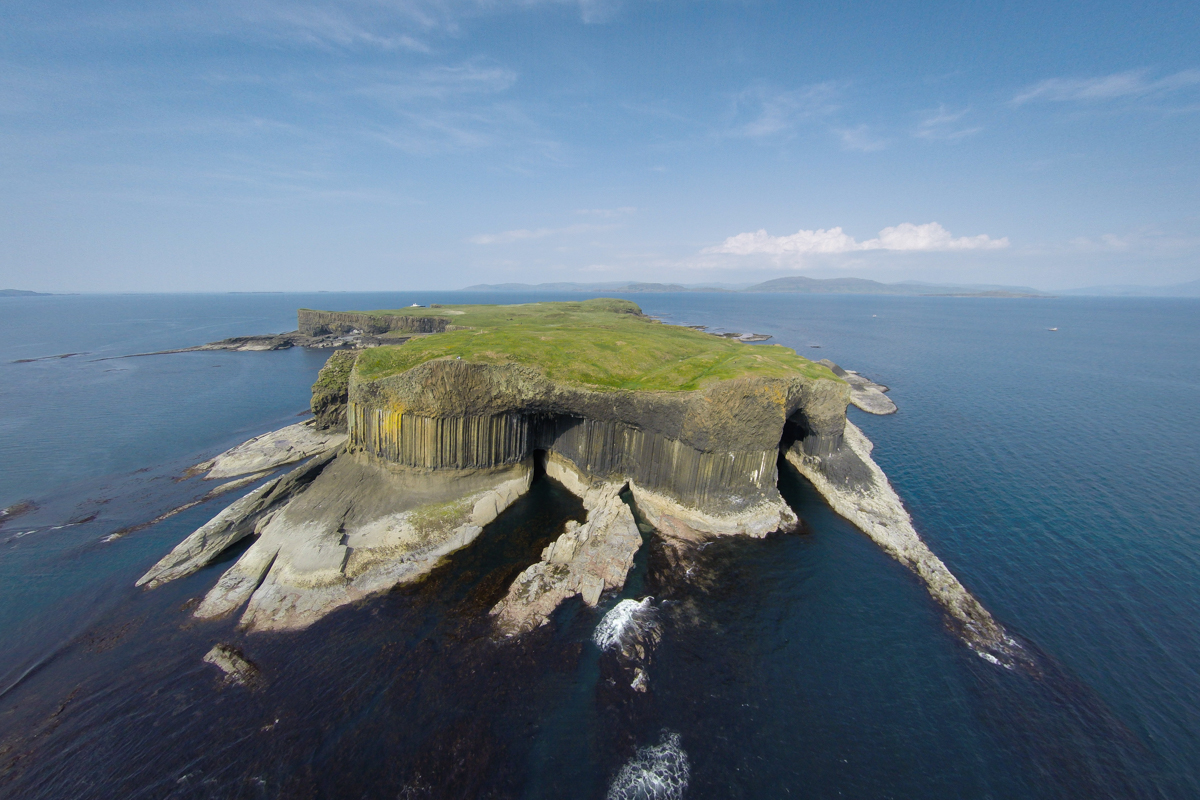
Many visitors to Mull embark on one of the many boat trips to Staffa for the day. Staffa’s claim to fame is for inspiring the musician Mendelssohn with the acoustics in Fingal’s Cave.

But Staffa is iconic in its own right, with towering basalt columns lapped by foaming blue waters. In the summer months, the puffins arrive, attracting many visitors to the island. But whatever time you choose to visit, you’ll have the chance to spot sea birds. You can also look out for marine species, like dolphins and porpoises, from the boat.

There are a variety of boat trips available to visit Staffa, departing from both Tobermory in the north and Fionnphort in the south. Find out more about boat trips on Mull.

Discover six Scottish islands you can visit from Mull, with boat trips, walks and historical attractions to see, as well as abundant wildlife.

Marvel at the magnificent basalt columns on Staffa

Treshnish Isles

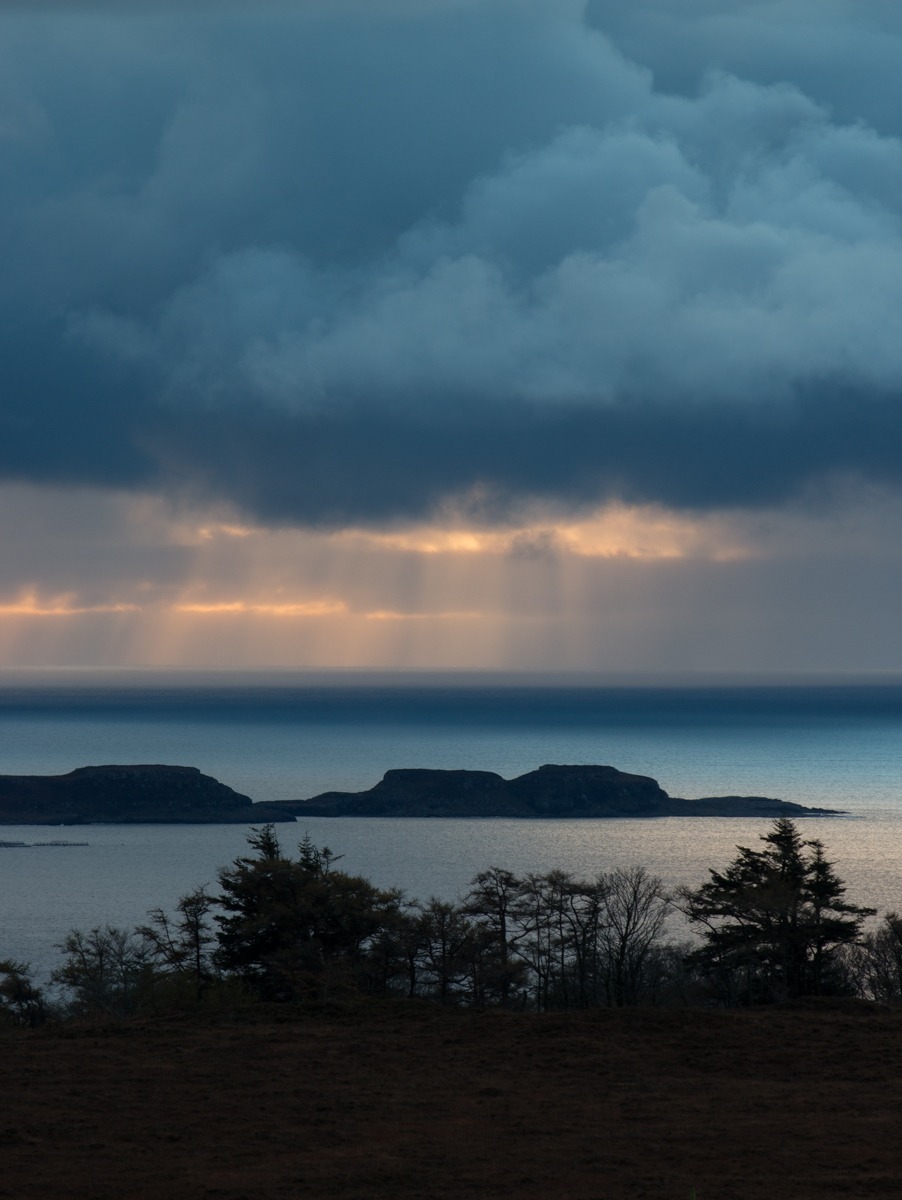
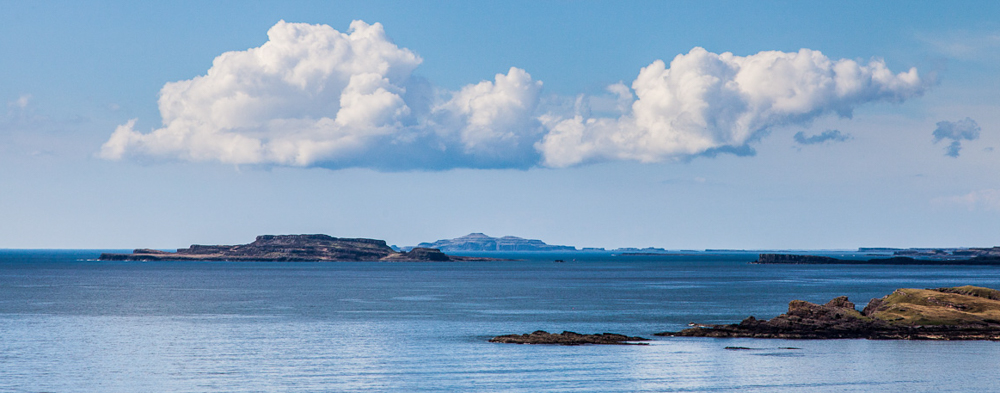
From a vantage point on the north-west of Mull,you’ll spot the silhouette of the Treshnish Isles.

Much like Staffa, several boat trips enable visitors to access this archipelago of Scottish islands, with the opportunity to make landing. Tours typically depart from Tobermory because the islands lie off Mull’s north-western coast.

The Treshnish Isles are a haven for wildlife. Puffins nest here during the summer, before the grey seals have their pups in autumn.

Boat trips tend to land on the largest of the islands, Lunga. Once off the boat, you can cross the rocky beach to explore the island and see the puffins, taking care not to disturb any nests.

Discover six Scottish islands you can visit from Mull, with boat trips, walks and historical attractions to see, as well as abundant wildlife.

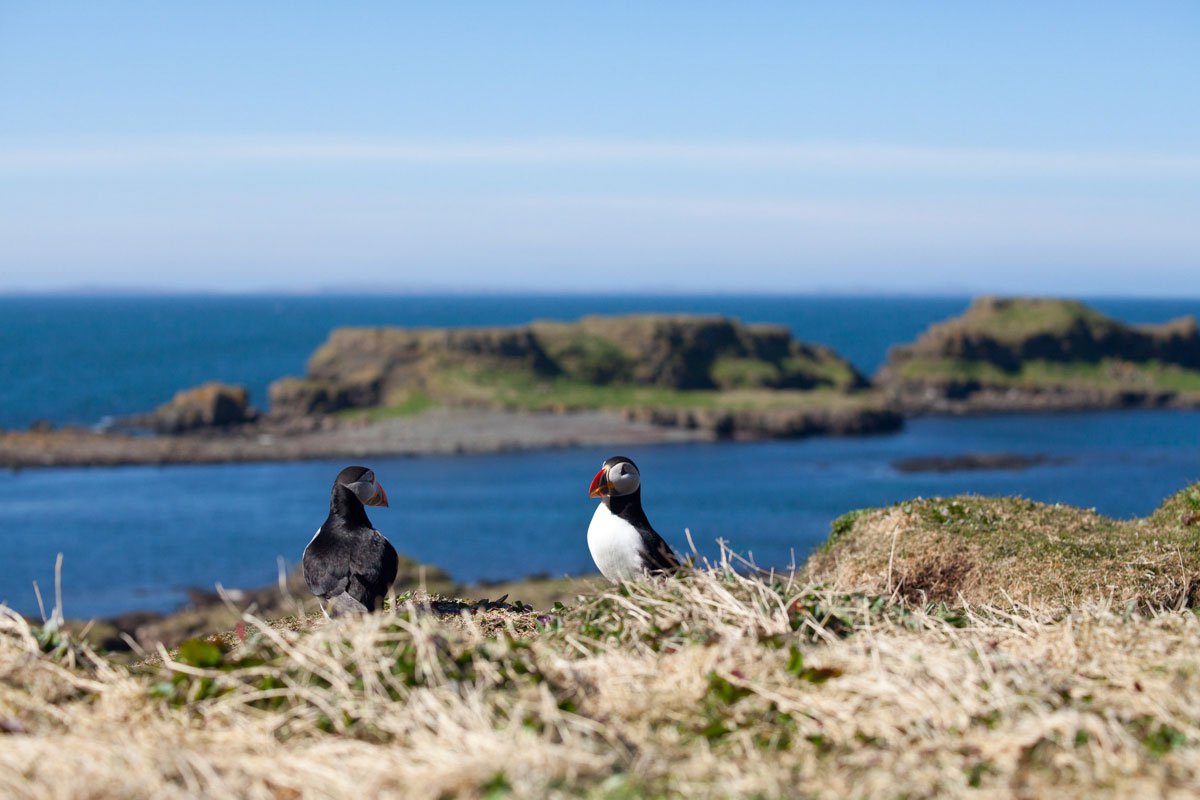
Meet puffins on the Treshnish Isles during the summer months

Erraid

Erraid lies just off the south-west coast of Mull and while it’s not well known, it is easy to reach if you time it right. Boats can anchor in Tinker’s Hole while visitors can cross over the tidal sandbar on foot when the tide allows.

Small but beautifully formed, visitors will be blown away by the views, from white sand beaches and pink granite outcrops, to the panorama back across to the Ross of Mull.

There are many walking trails that make exploring the island relatively simple. Just remember to check the tides and cross back before the waves cut you off!

Discover six Scottish islands you can visit from Mull, with boat trips, walks and historical attractions to see, as well as abundant wildlife.

The tidal Isle of Erraid lies off Mull’s south west coast

Gometra

One of the lesser known Scottish islands on Mull’s west coast is Gometra, perhaps because it is one of the trickiest to reach. But if you fancy an adventure, a few days on Gometra could make a unique extension to a week on Mull.

You reach Gometra by first taking the boat from Mull to Ulva, then walking a challenging eight miles over hills to reach the bridge to Gometra. The route is as rugged as the landscape and is best tackled only by experienced walkers.

This isolated isle is home to just a handful of islanders and runs off the electricity grid. It’s a true wilderness, with both the challenges and beauties that come with it. Few will discover Gometra first hand, making it a hidden gem for those who do tackle the journey.

The view to Gometra from Mull

Find out more about visiting Mull’s outlying islands and plan your next holiday with our helpful island guide.
Discover 8 Idyllic Isle of Mull Waterfalls

The Isle of Mull scenery has to be one of the island’s biggest attractions. Mountains and glens, lochs and burns… This island packs a lot into its 338 square miles of space. Isle of Mull waterfalls are also in abundance and here we guide you to some of Mull’s most magical.


Aros Park, Tobermory

Aros Park is well worth a visit, with pathways through forest that offer fun for all the family. But the waterfalls here are spectacular too, surrounded by lush ferns, trees and vegetation. If you’ve been before, visit in autumn when the leaves are a blaze of copper and red. It’ll feel like an entirely different experience again.

Eas Fors waterfall

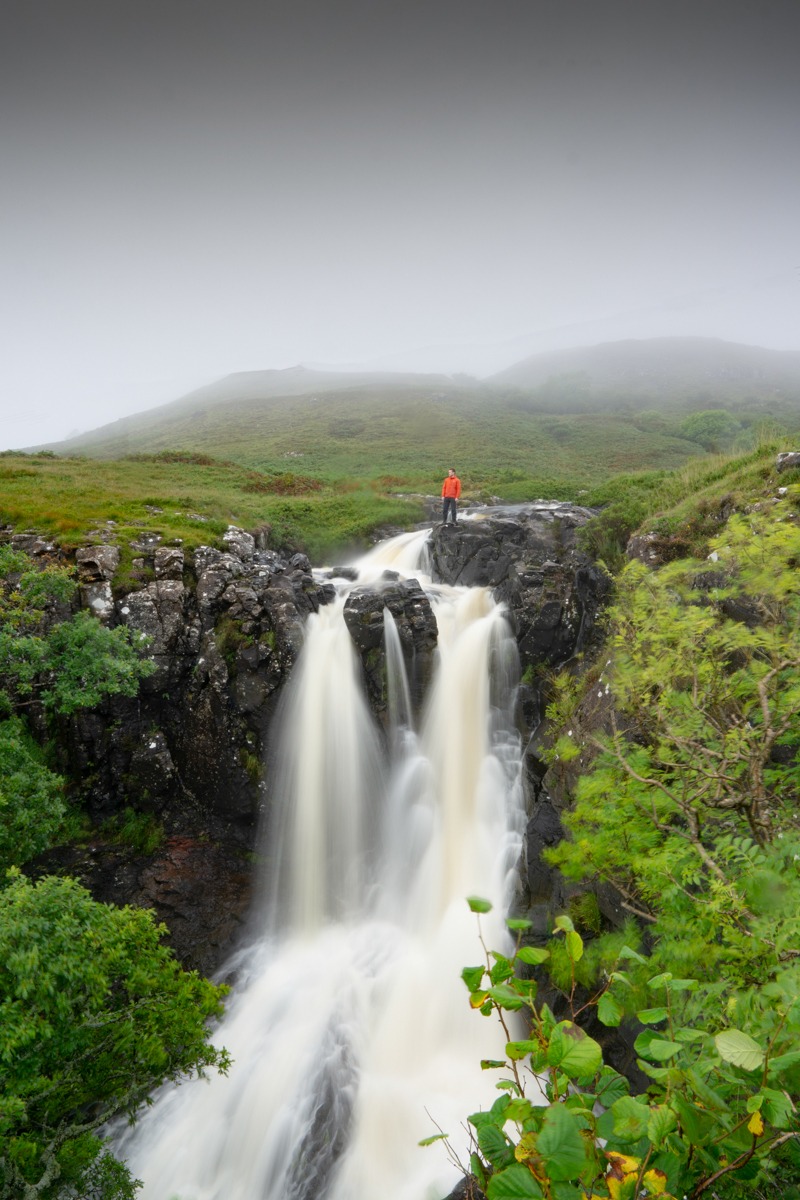
Perhaps the most well know of all the Isle of Mull waterfalls is Eas Fors. Located on the west coast of Mull, not far from the famed Isle of Mull scenery of Laggan Bay, these falls are easily accessible from the road.

Eas Fors waterfall with man stood at the top

Guest image shared by Ben Ferguson

Flowing over three tiers, Eas Fors really is spectacular and a firm favourite with visitors and islanders alike. You can head up or down from the road to see each tier more closely, but take care over the rugged terrain and stay well clear of the drops.

Eas Fors Waterfall

The best thing about sunshine after the rain? The Isle of Mull's waterfalls are in full flow! This one is Eas Fors which is located on the island's north west coast. You park near an old bridge and walk along the river down to the falls which land in the sea on the shore of Loch Tuath.www.isleofmullcottages.com

Posted by Isle of Mull Cottages on Tuesday, 19 July 2016

Ben More pools

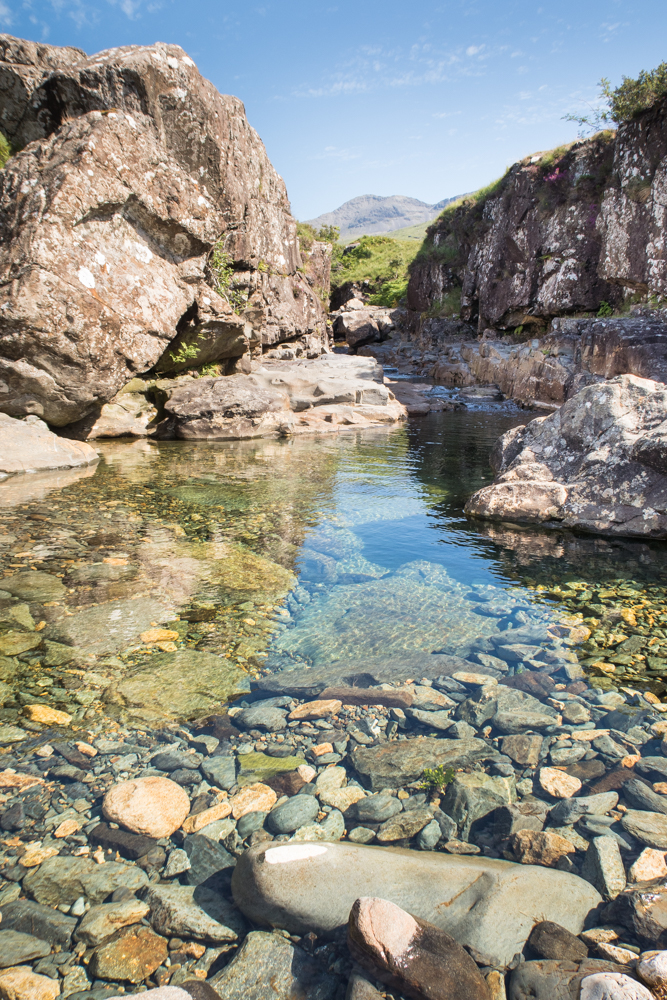
These Isle of Mull waterfalls have a character of their own, making them well worth the hike to get there. On the north-west side of Ben More, the Ben More pools burble across the landscape, meandering down smaller but more frequent rocky cascades. The water is magically clear and the falls frothy and soft – an amazing contrast to the mountains behind.

Eas Mor woodland waterfalls

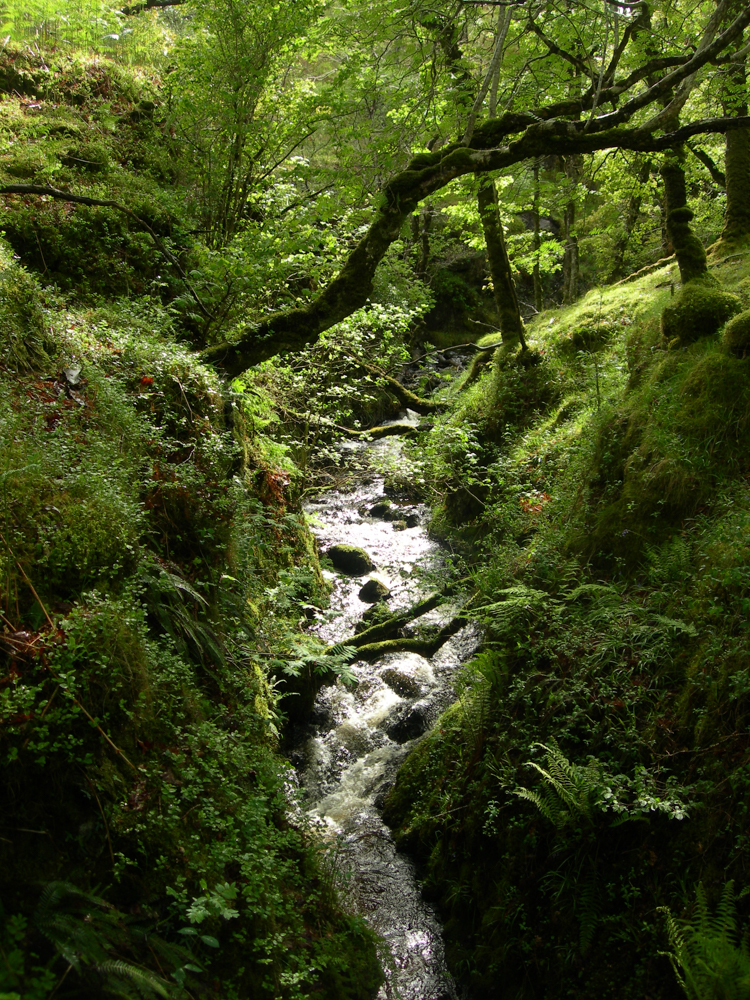
Isle of Mull waterfalls are many and varied, especially after a spell of heavy rain. The fall along the Eas Mor burn has a beautiful, secluded woodland setting. The burn weaves through mossy banks and oak trees, trickling over a number of falls and passing through narrow dark gorges.

It’s an altogether gentler, more serene experience, but no less lovely for that. Complete the experience by following the burn to the end, where you’ll reach the sandy Port Donain beach.

Carsaig

After a nail-biting drive with a plummeting drop to your right as you approach Carsaig, you’ll round a tight stone-walled bend, plunge into dappled shade and be grabbed by the sound of water rushing down beside a red telephone box!  This is Eas na Dabhaich, a cascading burn the source of which is Loch Fraing on the hills above.  This source keeps to falls flowing in all but the driest of weather.

Ben More hills

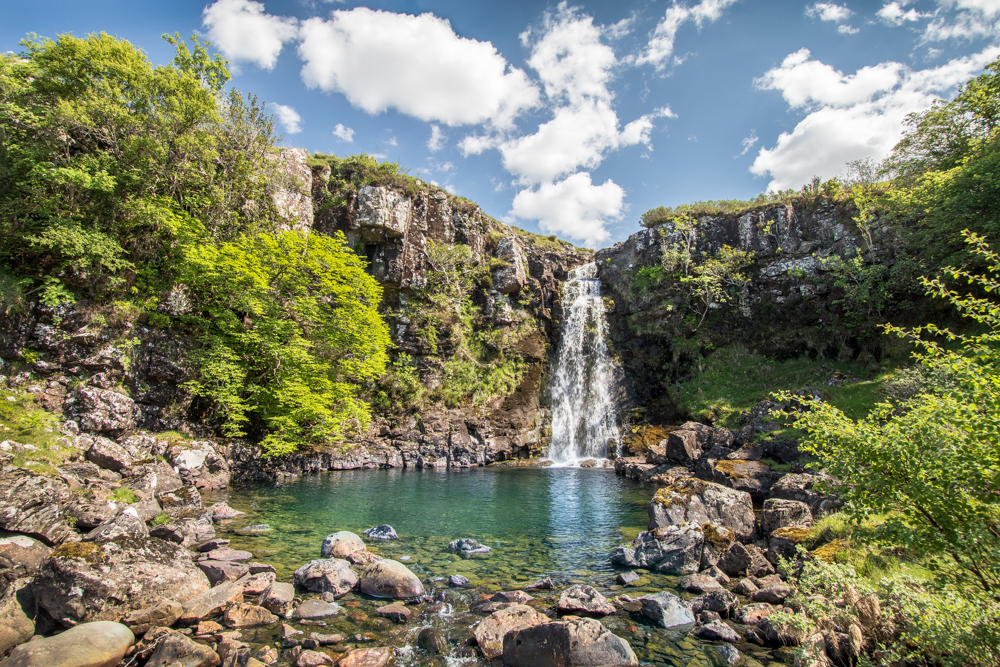
If you’re looking for hidden gems on the island that most visitors have yet to discover, try the waterfalls that flow on the Loch na Keal side of the Ben More hills.  Here at Derryguaig the water cascades dramatically down a rock face into an immaculate blue pool. Flanked by stones and surrounded by deciduous trees, it could be paradise. This spot certainly gives the beauty of Skye’s fairy pools a run for their money.

Ardmeanach Peninsular

Isle of Mull scenery ranges from rugged moorland to verdant woodland and rocky outcrops, and it’s the latter you’ll find when the burn Allt Airigh nan Caisteal flows into a waterfall.

You might recognise this of all Isle of Mull waterfalls because it found fame during a storm here. The winds were so strong that the water was blown back up the falls – the video of this happening went viral and was featured on news outlets worldwide!  As of 2018 our facebook video has been viewed 2.8 million times!

Waterfall… up.

The stormy winds on Mull today were turning the waterfalls upside down! This was looking toward Ardmeanach 'The Wilderness' on the island's west coast.www.isleofmullcottages.com

Posted by Isle of Mull Cottages on Monday, 1 February 2016

Rubha Dubh

On the South coast of Mull between Carsaig and Lochbuie you’ll find a beautiful fall at Rubha Dubh, where a channel of water slides down between two steep rockfaces.  Cascading between columnar basalt down to the boulder shore below where a small pool supports some unique plant life.  The best bit is you can walk behind this fall and look out to sea at to the waves crashing on the shore!

Which are your favourite Isle of Mull waterfalls and why?

Isle of Mull Photos That Will Take Your Breath Away

Get a new perspective on the Isle of Mull with these dizzy images!

The Isle of Mull has a well deserved reputation as a photographer’s paradise. Little wonder, then, that many locations have been the subject of visitors’ photos time and again.  We took to the skies to discover new perspectives of old favourite locations throughout the Isle of Mull and we hope you enjoy them too.

We are going to focus on the beauty of the locations and the circumstances and timing of the images, perhaps inspiring a visit and stay in one of our hand picked range of holiday cottages on Mull.

Ben More


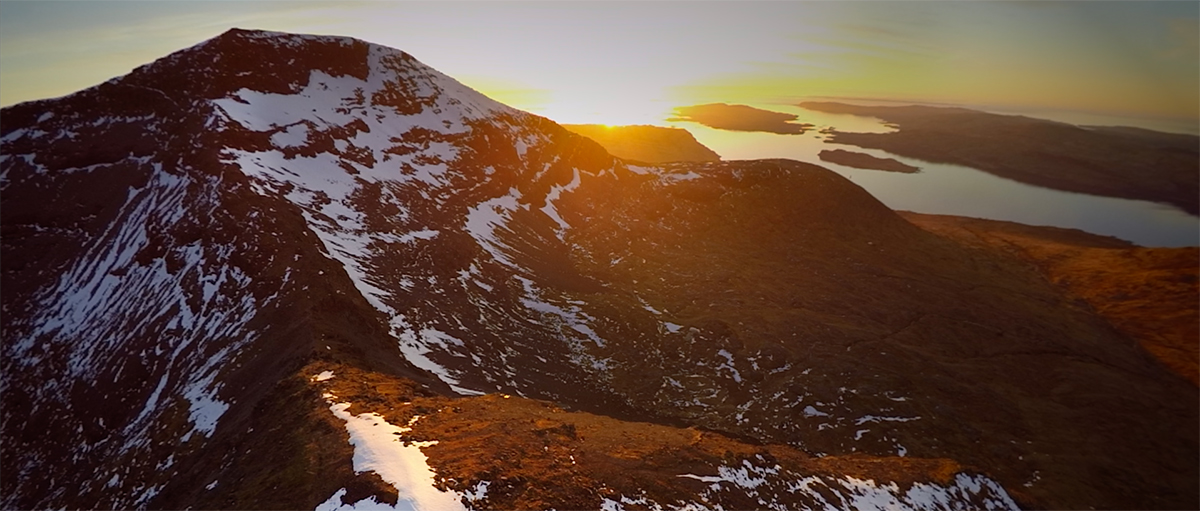
It was one of those perfect sunny days towards the end of March.  A touch of warmth in the sunshine brings signs of spring to Mull, yet snows still clads the mountains and the days are just beginning to get lighter and longer.  We timed our climb of Ben More to coincide with sunset, which at this time of the year drops behind the Isle of Ulva from this location.  We took the circular route via Beinn Fhada and over the A’Cioch ridge before reaching the summit after dark and heading down the mountain to Dhiseig in the faint afterglow.  The filming was a success with only light wind over the ridge.  We’ve tackled this munro in the winter too – find out about our climb here.


Iona


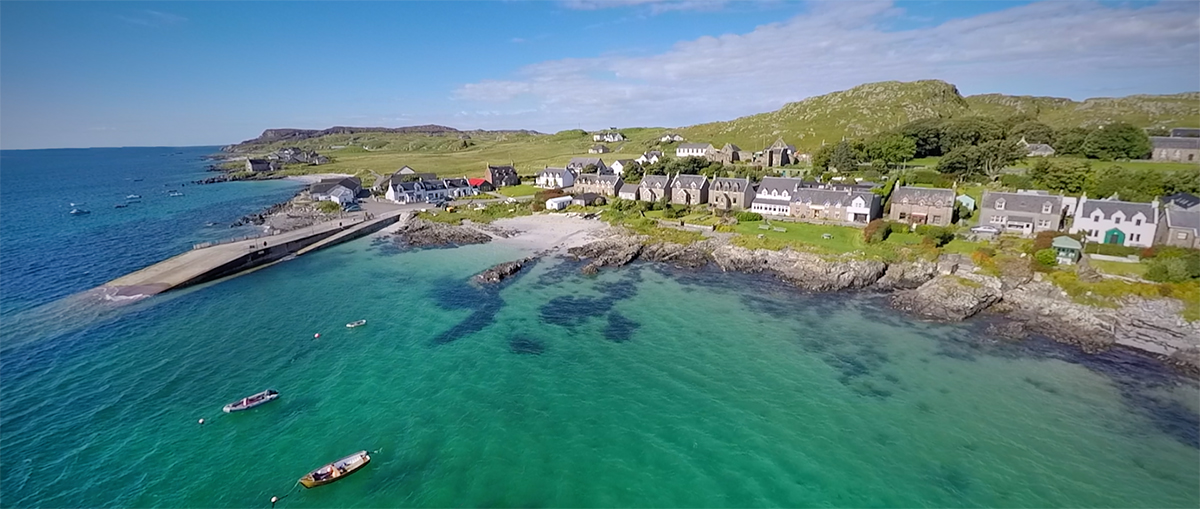
During the work on our guide to Mull’s islands we of course included Iona.  Iona is a emerald gem of an isle with a important historical role that is matched by the richness of the fine machair grasslands, which back the white sandy beaches.  With a population of around 150 people, Iona has one village – Baile Mor – which you see as you approach on the ferry from Mull.  In this view you can see the row of traditional stone cottages, each with a seaward facing garden in front.


Knockvologan


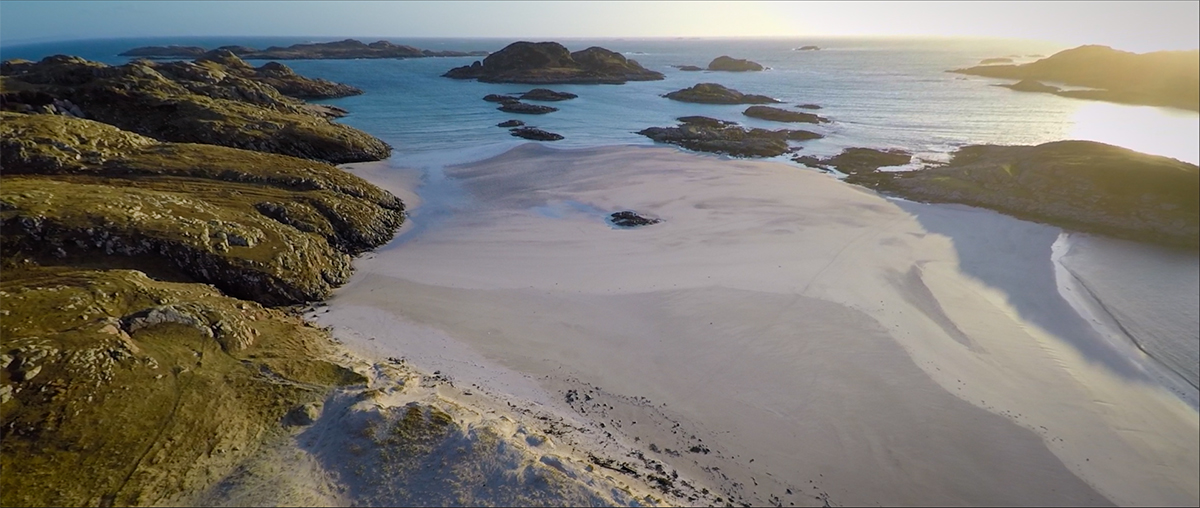
There’s no doubt that some of Scotland’s best beaches are on the Isle of Mull.  Be it the famous Calgary beach in the north, or one of the hidden coves on Mull’s south coast, with more than 20 beaches to visit there is something for every occasion.  When working on our Isle of Mull beaches guide we visited one of the the more spectacular stretches of sand at Knockvologan.  It was a still, sunny day in February. At this time of year the sun sets behind the south-west tip of Iona.  The days are shorter and the low angle light provides perfect conditions for picking out the details in the landscape.  This view looking south toward the distant Torran Rocks give a great perspective over the broad sweep of white sands that form the beach.


Loch Uisg


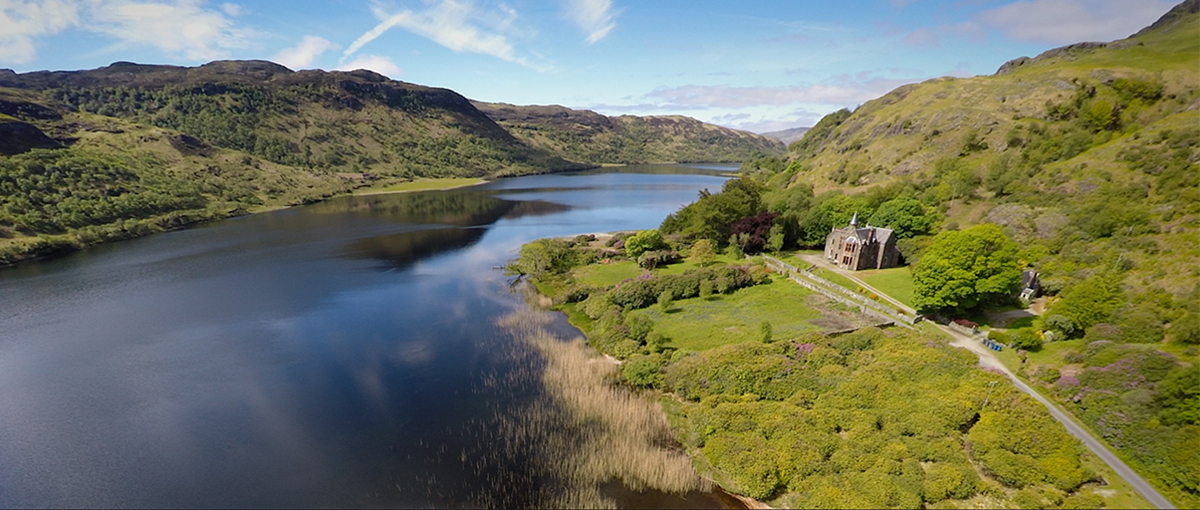
In late May, the long days of early summer are well on the way. Mull’s landscape is mainly transformed into a rich verdant green.  At this time rhododendron flowers are in full bloom and nowhere is the display more impressive than along the shoreline of Loch Uisg.  The single track road to Lochbuie skirts the edge of the loch and the whole drive can resemble a giant natural garden at times!  This image is looking west along the line of the Great Glen Fault, which runs under this part of Mull.  The house is Craig Ben Lodge. It’s a beautiful property built in the Bryce Baronial style.


Traigh na Cille


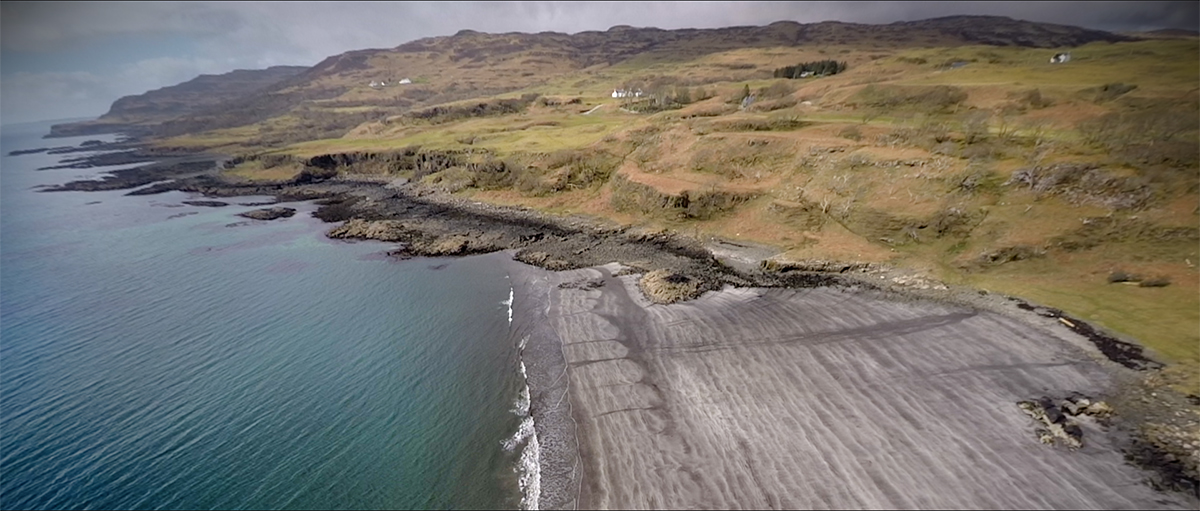
Here we jump to early April on north Mull’s west coast and to the beach of Traigh na Cille at Kilninian.  This is one of north Mull’s larger beaches. It is well known for its dark sand sediments, which you can see in this image form a distinct linear banding as the tide rises and falls.  The name of beach means ‘beach of the cell’, as in a monastic cell. This is most likely a connection to the times of St. Columba on Iona and the growth in Christianity in western Scotland.  This view looks to the north past Torloisk and towards Treshnish.


Loch na Keal


On the first Sunday in June each year, the Isle of Mull Cycling Club organise and run the Isle of Mull Cyclesportive.  Here you can see Mull cycling club members making their way along the shore of Loch na Keal.  Pictured in late September, this photo is from a promotional video we made for the Sportive. It showcases the outstandingly beautiful route and explains how proceeds from entrance fees go towards good causes in the local community.


Iona Ferry, Fionnphort


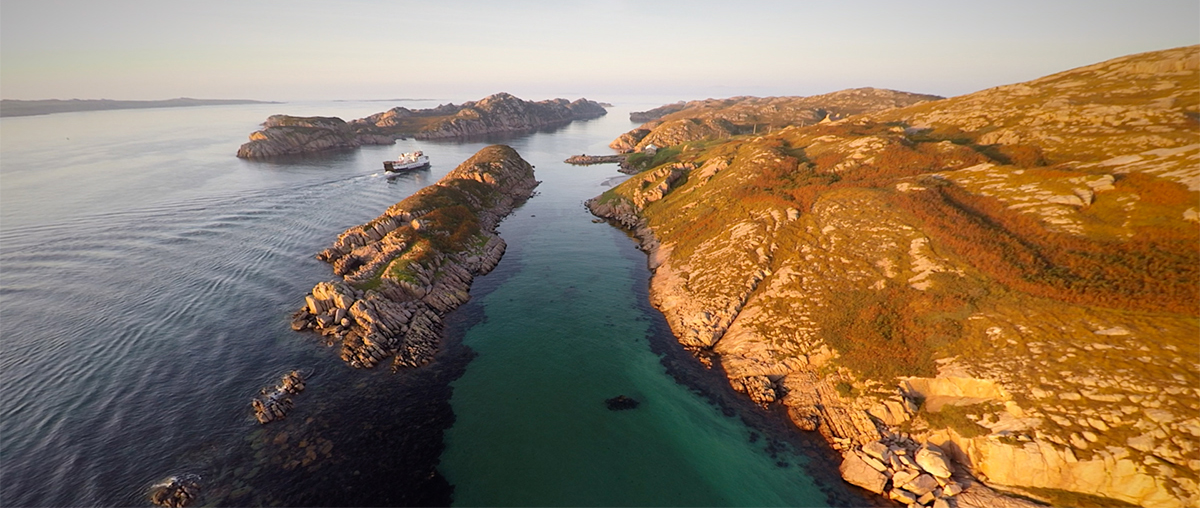
This image looks over the Isle of Mull’s most westerly point near the village of Fionnphort on the Ross of Mull.  Taken near sunset on a late September evening, the picture shows the Iona Ferry heading to its overnight mooring in the Bull Hole. This is the name for the channel of water that is protected by the small island of Eilean Nam Ban.  The coastline here is made of a distinctive pink granite, which was at one time quarried and used as decorative stone in buildings throughout the world.


Eas Fors Waterfall


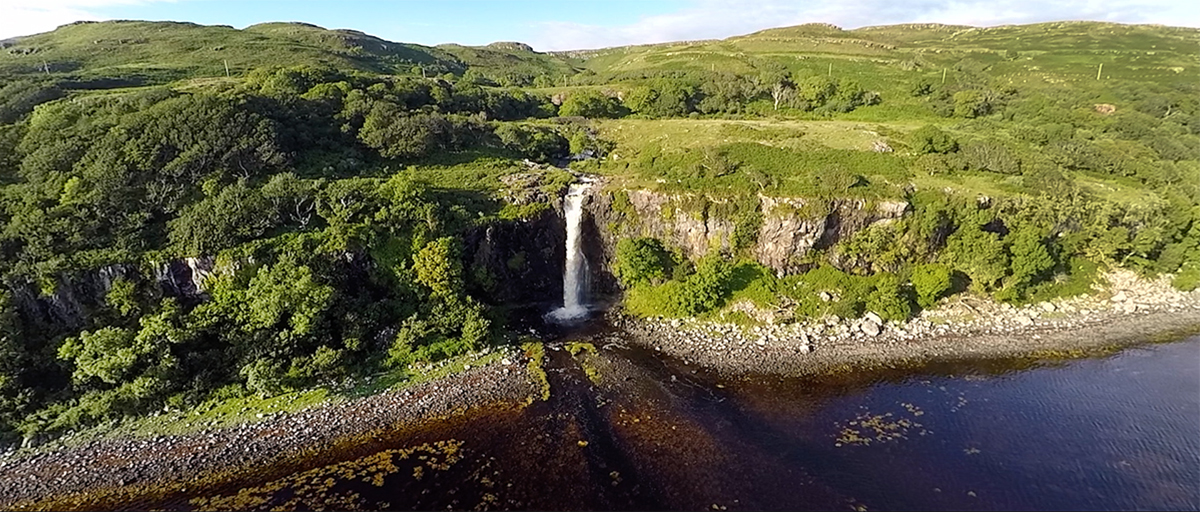
On the west coast of north Mull you will discover a landscape of distinct terraced strata. In fact, most of the geology of north Mull is comprised of these ‘steps’, caused by volcanic lava flows which set into visible layers.  Where burns and rivers flow down hill they become waterfalls as they pass these layers.  One of the most dramatic is Eas Fors, which cascades straight into the sea at Loch Tuath.  There is a parking area near these falls and a path explores the area – take care near the drop!


Port na Ba


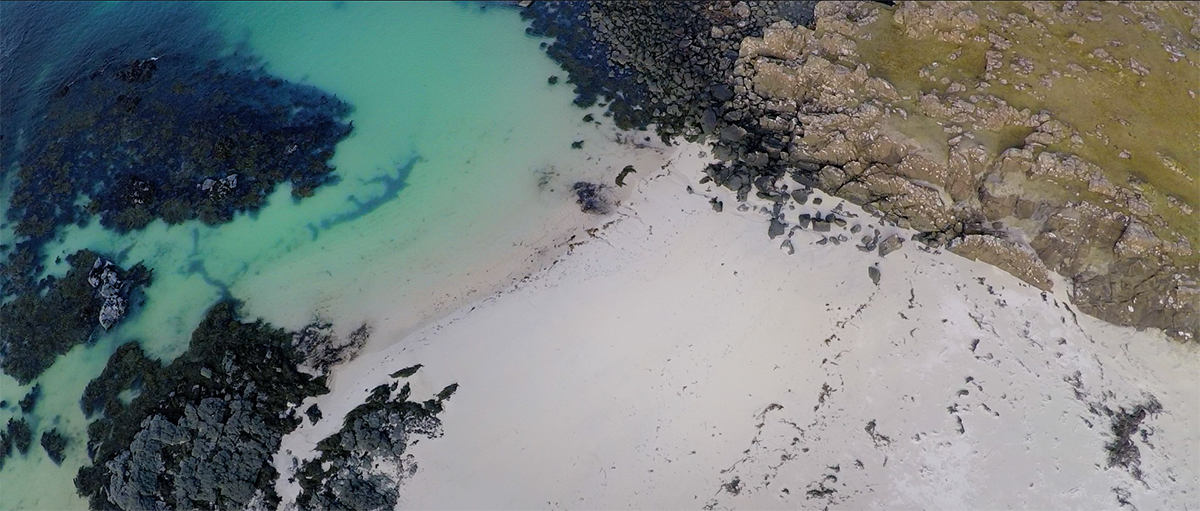
Located on the Isle of Mull’s north coast, Port na Ba is a beach of fine white sands, aqua waters and views towards the isles of Rum, Eigg and Skye.  Perfect for a paddle or swim, this photo shows the gently sloping sands and clarity of the sea.  It’s a bird’s eye view that shows Mull’s coastline is beautiful from any angle!


River Lussa


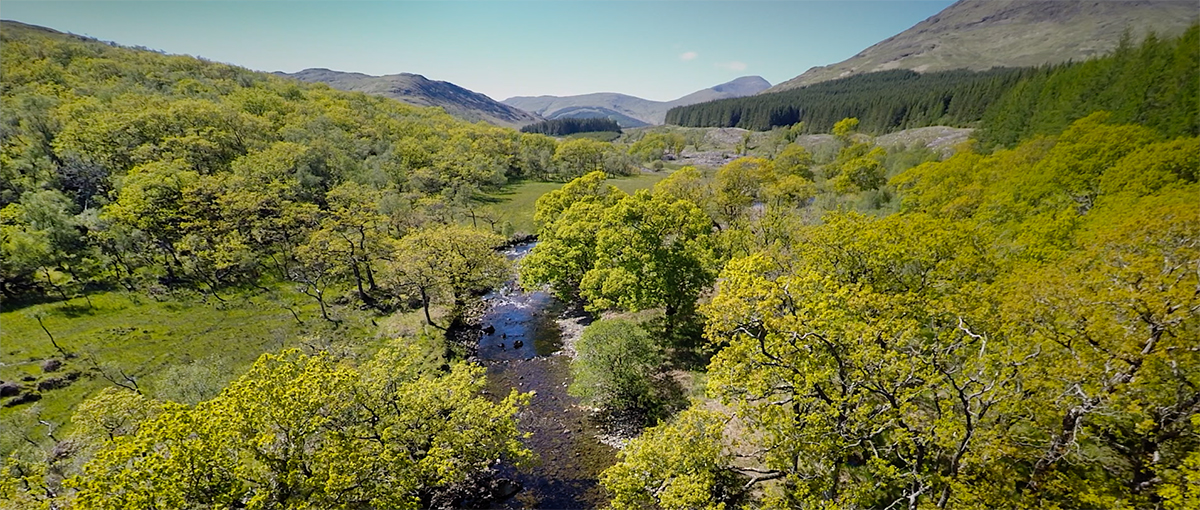
Situated in Mull’s south east, the river Lussa is one of Mul’s larger water courses.  The catchment is in Mull’s mountainous interior and the river gains size from tributaries that join from the flanks of Creach Beinn.  After cascading through a series of pools and a small gorge, the river enters the native oak woodland visible in this springtime photo.  The image is taken from a vantage point just higher than the canopy of the trees, affording a view to the distant mountain Beinn Talaidh.


Beinn Fhada


Get a new perspective on the wild and beautiful Isle of Mull with these dizzying images, taken from the skies! Check out these photos, from mountain to sea

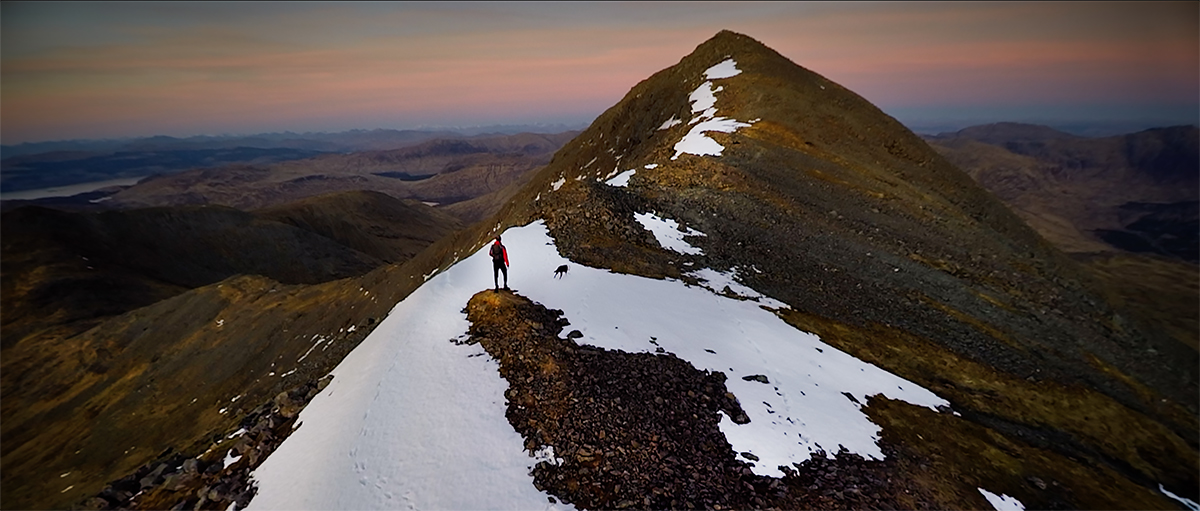
Our final image in this collection shows a lone walker and dog crossing the long ridge of Beinn Fhada (702m) in the Isle of Mull’s interior.  Mull has a well deserved reputation as one of the best islands for walking and this image typifies the at times wild but always beautiful nature of the island in the winter months.


We hope these photos have inspired you to plan that next visit to the Isle of Mull and perhaps a relaxing break in one of our select range of quality holiday cottages.


Which of these snapshots of the Isle of Mull do you like best? Have you visited any of these scenic places?


A Visit During Autumn On Mull

Autumn on Mull can be spectacular, from its starry, dark skies to the changing colours of the landscape and the wildlife waiting to be discovered...

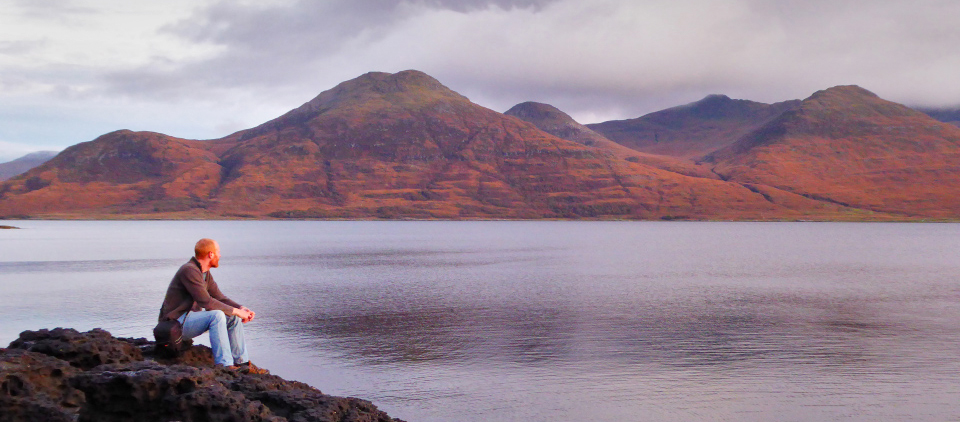
Author looking over Loch na Keal near Kellan Mill Lodge

I was a latecomer to Mull. Shamefully late in fact. Having moved to Scotland in 2003 and consciously making the decision at that point to explore every corner of my adopted home, it was 12 long years before I set foot on the island. It wasn’t until my second visit that I experienced autumn on Mull.

GREAT EXPECTATIONS

My first obstacle was an earnest but naïve fixation on climbing munros (Scotland’s 282 hills over 3000ft) and ONLY munros. I did so with single-minded determination for the first few years. In so doing I completely overlooked the walking potential of rugged ‘lesser’ hills on the islands or the unique atmosphere and challenges of their wild, convoluted coastlines… two things Mull has in spades. But when that fixation happily abated, a second and unexpected obstacle took its place.

A Guide To Visiting MacKinnon’s Cave on Mull

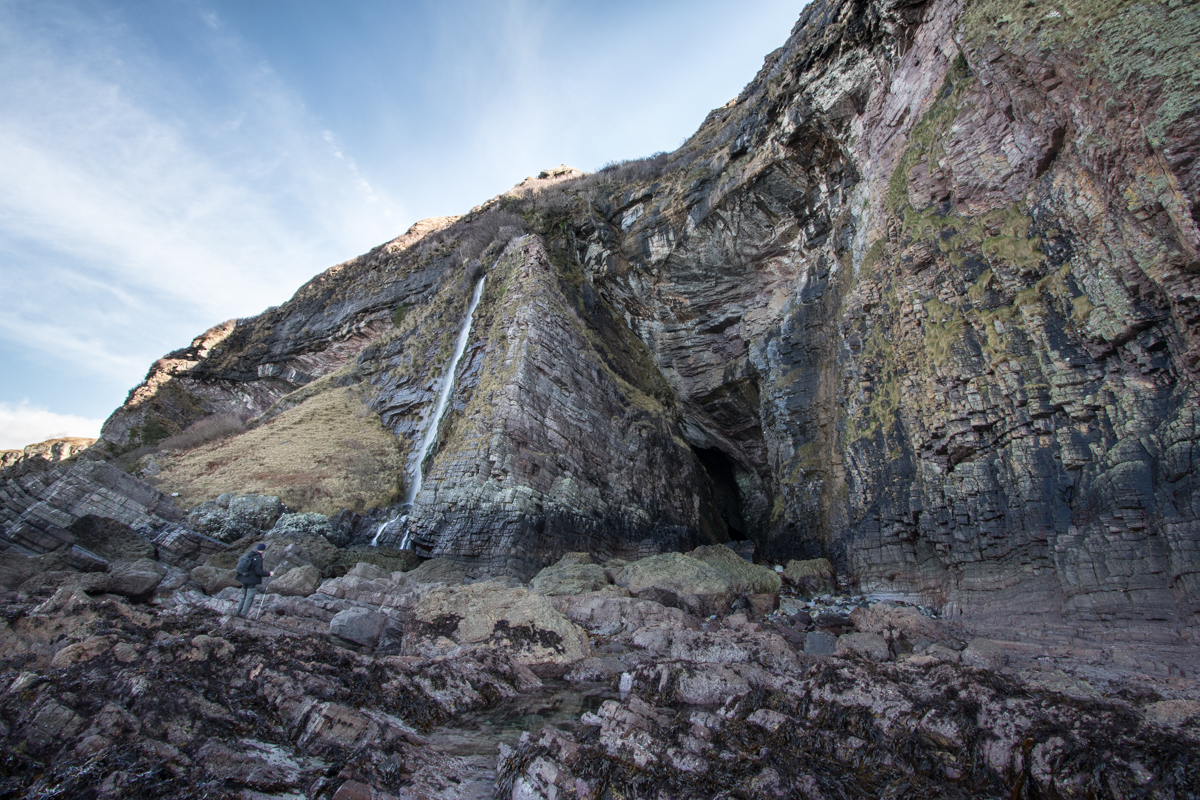
MacKinnon’s Cave is situated on the Isle of Mull’s west coast near Gribun.  The area is dominated by sheer cliffs and very broken country that affords a great view of several important geological time periods.  MacKinnon’s Cave is also said to be the longest sea cave in the Hebrides, at around 500 feet in length.  A torch is therefore essential to explore the cave, and as the mouth of the cave is tidal you must consult the tide times before setting off and plan your visit on a low tide.

MacKinnon's Cave shore at low tide

A Guide to Visiting the Treshnish Isles and Staffa

Boat trip to the Treshnish Isles and Staffa

With Dave Sexton, RSPB Mull Officer

Stand on a high point and gaze out to sea off Mull’s west coast and you will see them. A chain of mysterious, glistening jewels in the Hebridean sea that will set your pulse racing. The sense of anticipation of the wildlife gems they might hold is palpable. From Staffa in the south, up to the Dutchman’s Cap, onwards to Lunga and Fladda and finally to Cairn na Burgh Beg in the north, the Treshnish Isles archipelago will lure you in.

Luckily for us all, they are not ‘forbidden islands’. We are blessed here on Mull and Iona with a variety of choices of ways to get to the Treshnish Isles and Staffa, with daily boat trips in season leaving from Ulva Ferry, Fionnphort, Iona and Tobermory. Skippers and crews who know these waters intimately will welcome you on board, provide a warming brew en route and set sail for these distant, enticing lands.

Mull is an island surrounded by many other magical islands, home to seabird colonies and amazing marine sightings en route. We recommend the Treshnish Isles

Where To Visit On The Sound of Mull

Make the most of your journey alongside the Sound of Mull

Stretching along the Isle of Mull’s eastern shore, the Sound of Mull is the strip of water that divides the island from the west coast of mainland Britain. Visitors will cross it on either the Oban or Lochaline CalMac ferry. Naturally, many set straight off for their accommodation around the island, but there are lots of places to visit along the Sound on the way, and plenty lying within too! So take a bit of time to explore the Sound of Mull and all of its interesting sights en route with this guide.
Summer view over Grasspoint on the Sound of Mull

Looking over Grasspoint at the southern end of the Sound of Mull

A winter walk up Ben More, Mull’s Munro

A winter ascent of Ben More

As the highest point on the Isle of Mull, and Scotland’s only Munro that is accessible only by boat, a walk up Ben More is often on the ‘to do’ list for visitors to the island.

Ben More on the Isle of Mull with a covering of snow

Looking across Loch na Keal and Eorsa at Ben More on Mull

At 966 meters in height, Ben More towers over the island’s other hills.  Not only do you get a stunning, 360-degree view, but you also get the acute sense of altitude that this sort of elevation creates. With no neighbouring mountains of comparable height, Ben More really does feel like the highest point around!

The simplest route to the summit starts on the shore of Loch na Keal at Dhiseig.  From here a marked path leads up the broad flank of the hill to the circular summit cairn.  Simple.  To experience our island Munro at its most dramatic though, arguably the best route is a circular traverse of Beinn Fhada to A’Chioch and then along the ridge to Ben More. This route involves some scrambling (see the map below).  Let’s take a look at this route as it was on a fine winter’s day!
Beinn Fhada ridge with a person walking

Walking along the Bheinn Fhada ridge with Gribun and Ulva in the distance

Ben More on Mull's north face and snowdirfts

Hiker walking through snow drifts with the north face of Ben More in the distance

Having parked the car off the road along the shore of Loch na Keal, we began the walk by following the burn (Abhainn na h-Uamha), which has a series of spectacular waterfalls along its course. Feeling lucky that we had chosen such a clear, crisp day, we then headed uphill to crest the ridge of Beinn Fhada. At this point the views are just incredible. Looking back you can see the curve of the Gribun cliffs, the islands of Ulva and Eorsa, Staffa, and the Treshnish Isles. Up ahead, Ben More and the ridge look really inviting.

The Ben More circuit walk on the Isle of Mull

Frozen lochan on Beinn Fhada with walker surveying the scene

Walker climbs A'Chioch on Mull

Climbing A’Chioch with Glen Clachaig below and to the right

A'Chioch on Mull in winter with the sun

Winter sun blazing as a walker climbs the A’Chioch ridge on Mull

After a short sharp climb to the summit of Beinn Fhada (702m), with jelly babies providing the extra fuel we needed, we headed west and began the climb of A’Chioch (867m).  The views here are superb, and picking our way up towards the summit through snow drifts was great fun!  We were lucky that the winds weren’t strong at this point, so we were able to enjoy settled conditions and sunshine.

The final traverse over the ridge to Ben More was relatively straightforward, though the final section involves some scrambling. Just at the point where your legs are starting to ask for a rest, the ridge narrows to just a few meters wide and has significant drops on both sides, which help sharpen the senses!

View over Mull's interior

Looking west over the Isle of Mull with the mainland mountains visible in the distance

Ben More ridge on Mull in winter

Surveying the way ahead to the summit of Ben More

Walker heads towards the Ben More ridge

Starting to traverse the Ben More ridge

A'Chioch on Mull

Looking back along the ridge to A’Chioch

wind-blowing-snow-mull

Wind swirls snow into the air on Ben More

descending-ben-more-mull

Beginning the descent

From the summit of Ben More we followed the line of cairns that descend the hill back towards Loch na Keal.  After the rugged drama of the east face of the hill, this side seems very rounded and gentle, and the walking easy.  The wind picked up at this point for us, blowing ice around and creating some spectacular conditions:

ben-more-winter-mull

Ice and snow blows across the hill during the descent

walker-mull-cairns

Following the cairns with the Treshnish Isles in the distance

We finished the walk feeling battered but not broken. No matter which time of year or by which route you choose to climb Ben More, it is always a memorable experience and well worth the effort.

www.isleofmullcottages.com/isle-of-mull-walking.html

ben-more-map

Ben More OS map route


Note: Hill walking has inherent risks and dangers.  Conditions change quickly and navigation can be difficult.  Always make sure you are well prepared for any conditions and have the correct level of experience for your chosen route.