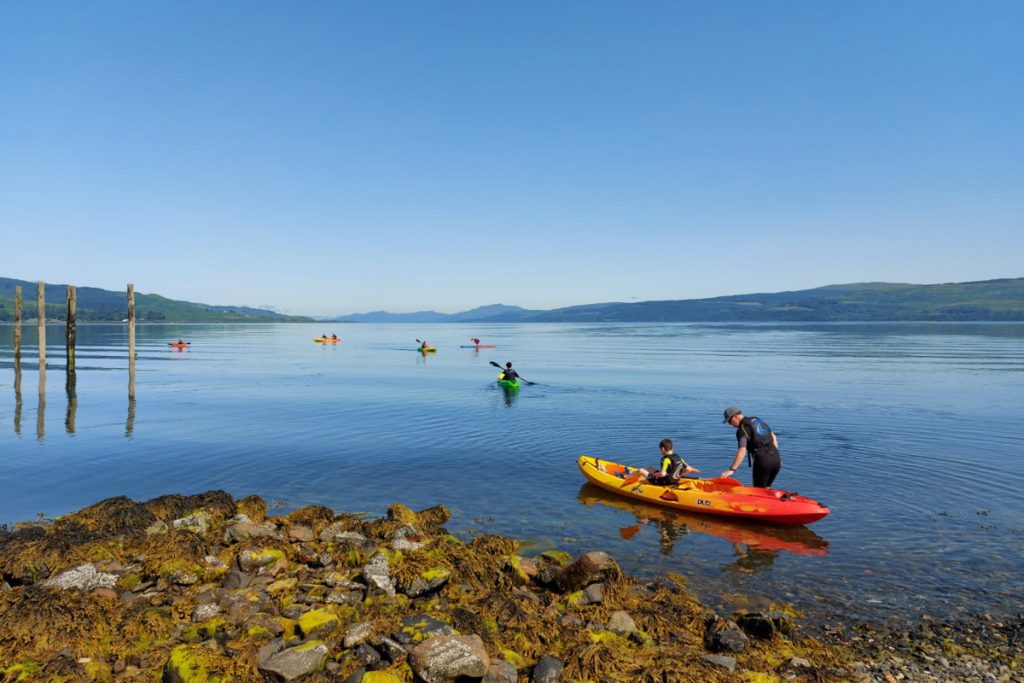
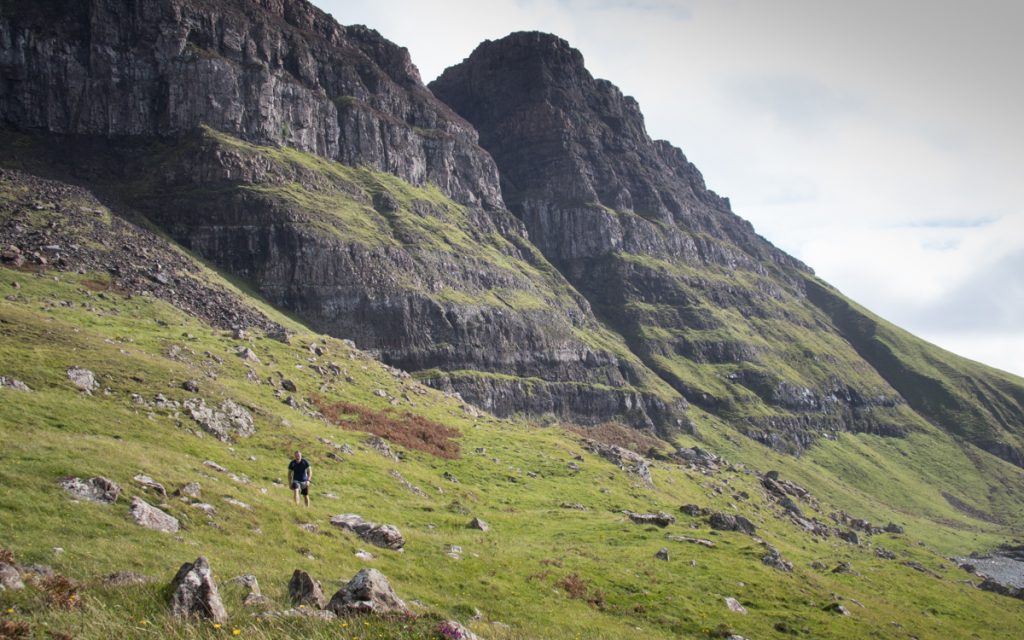
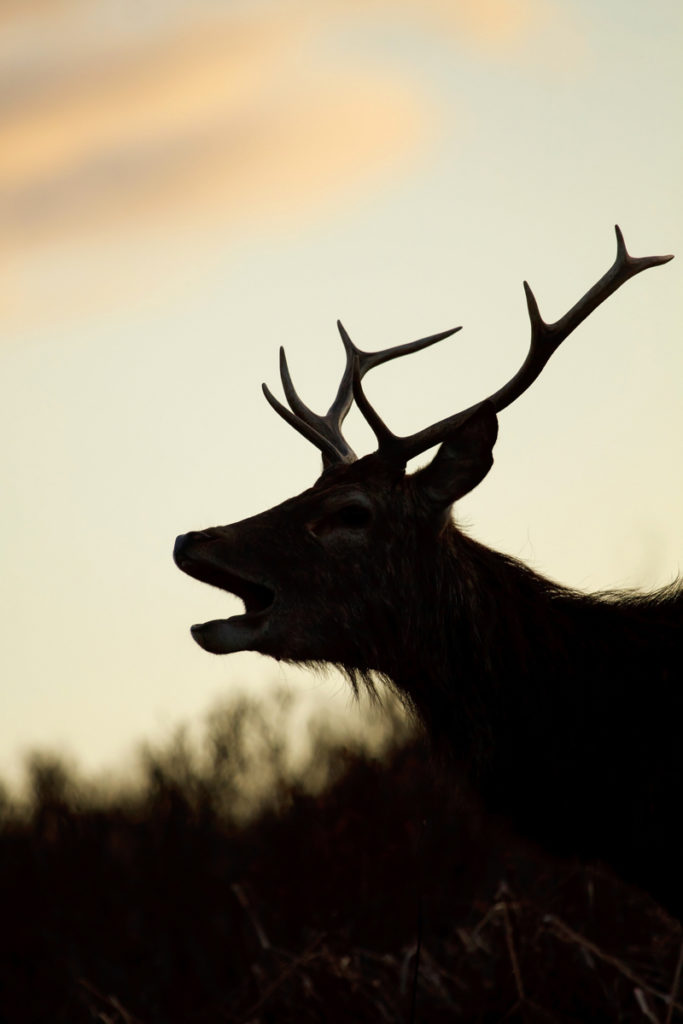
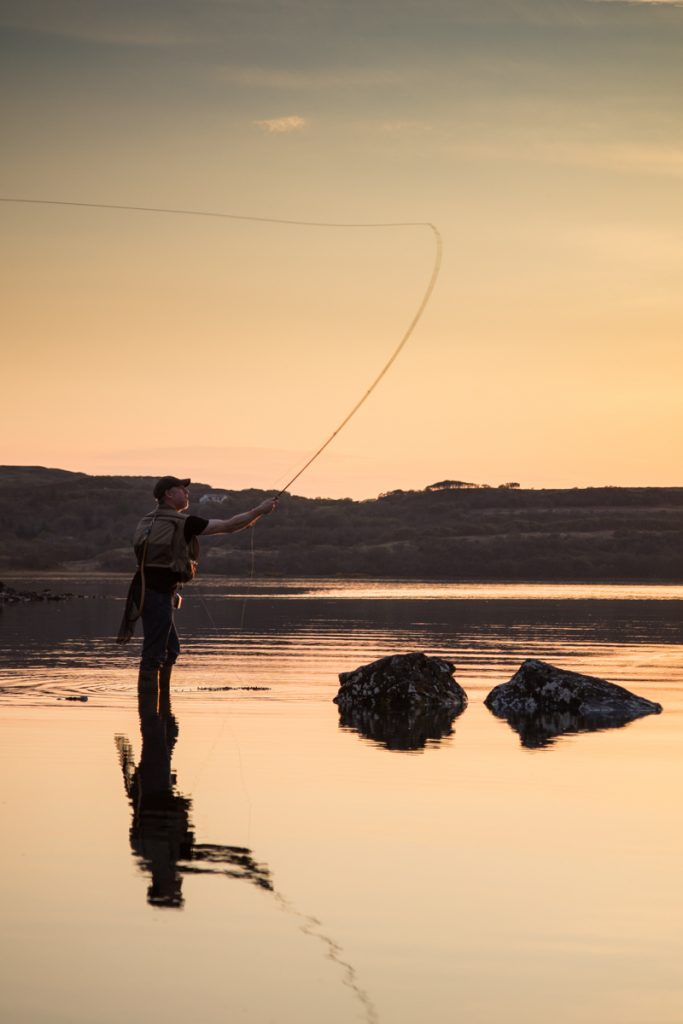
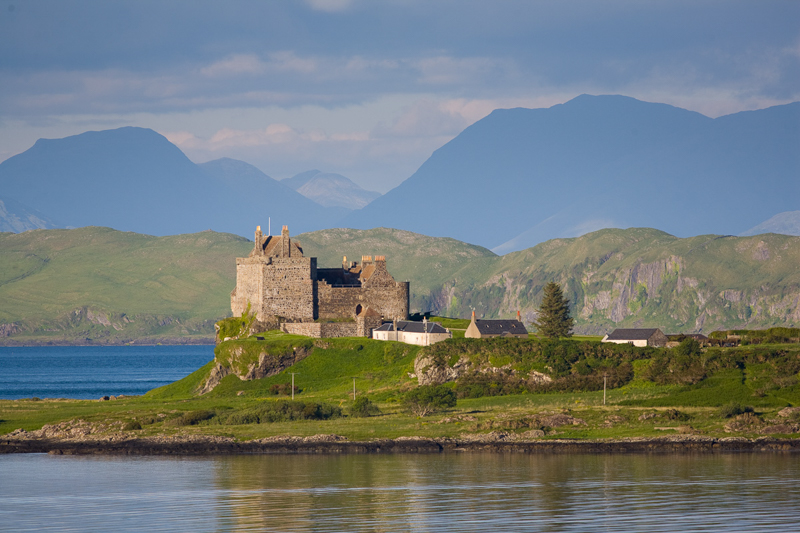
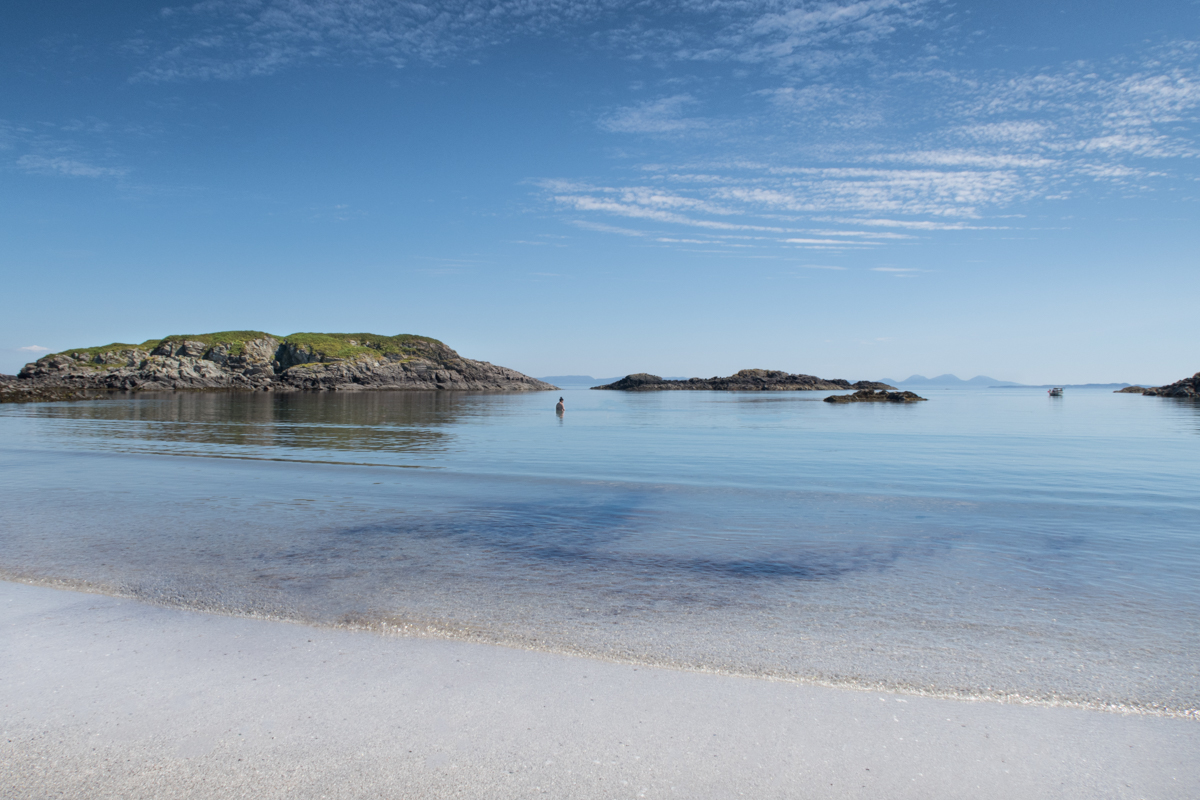
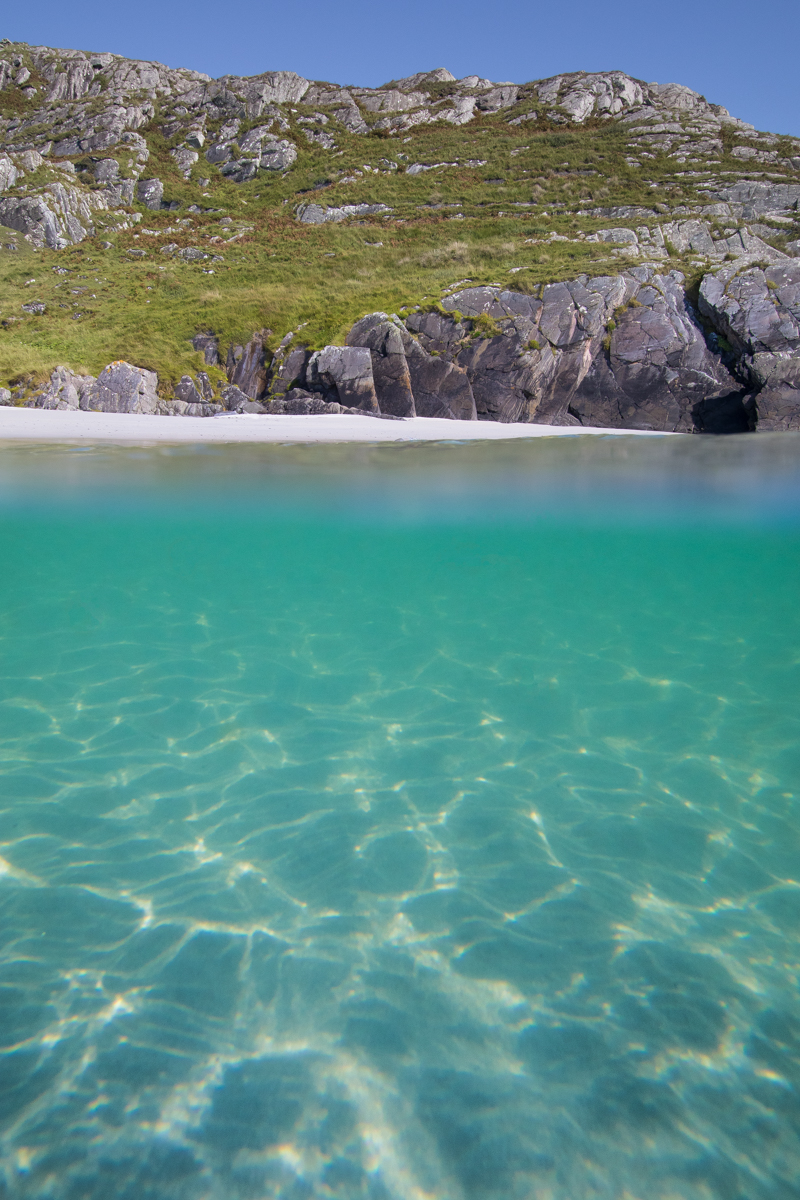
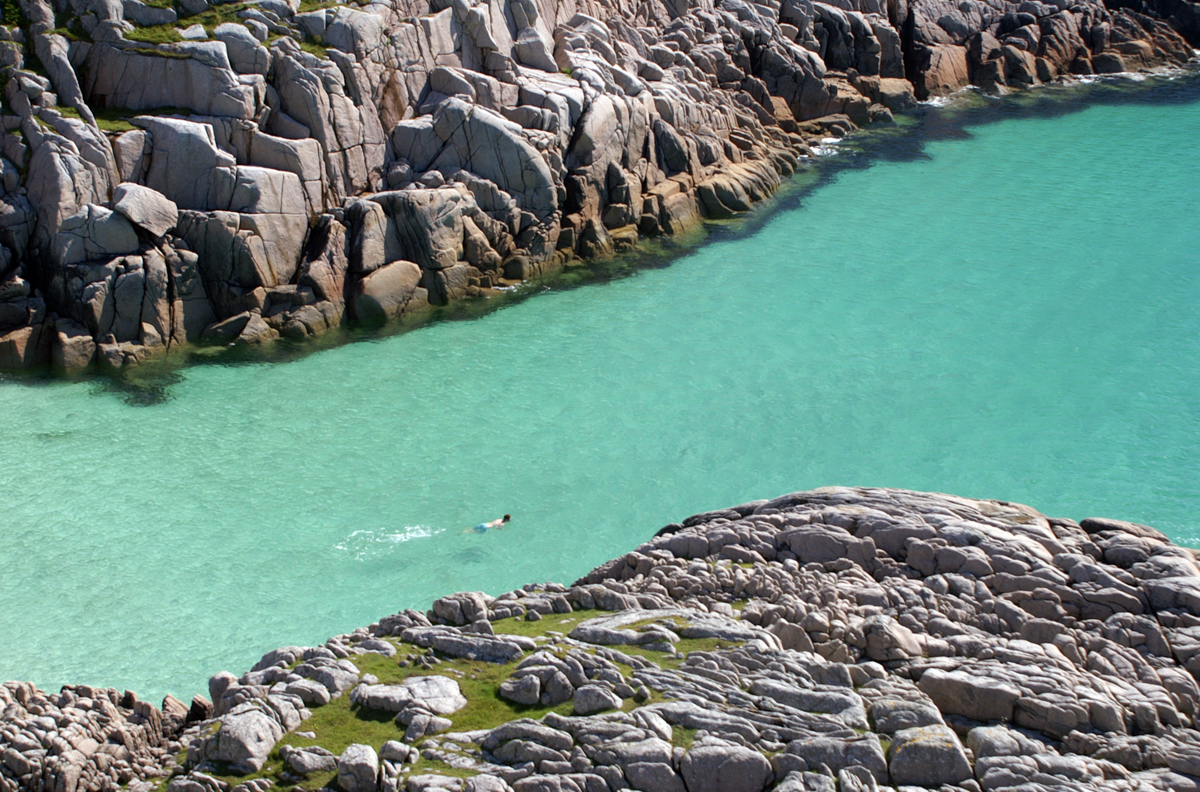
Kayaking and paddle boarding on the Isle of Mull have become ever more popular as visitors look to soak up the scenery and sea surrounding the island.
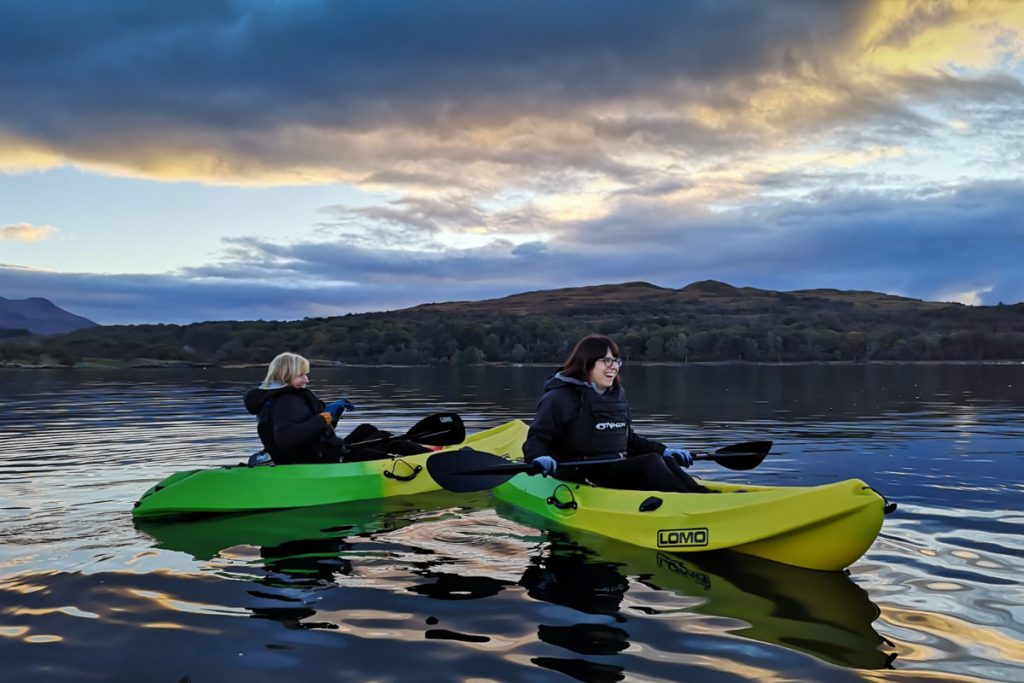
Kayaking with Salen Bay Hire
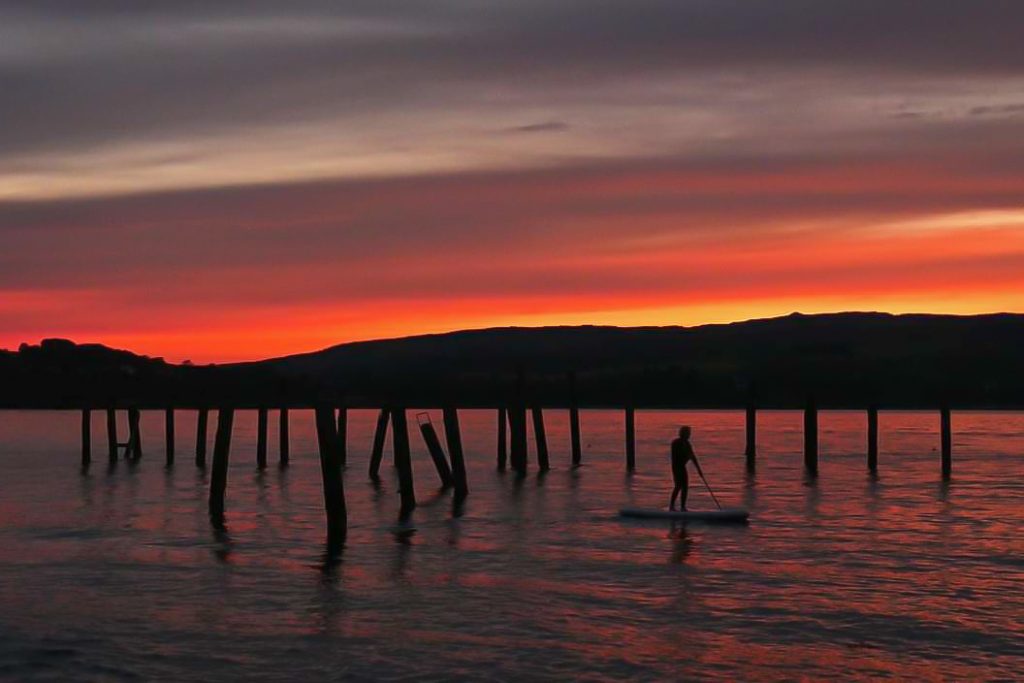
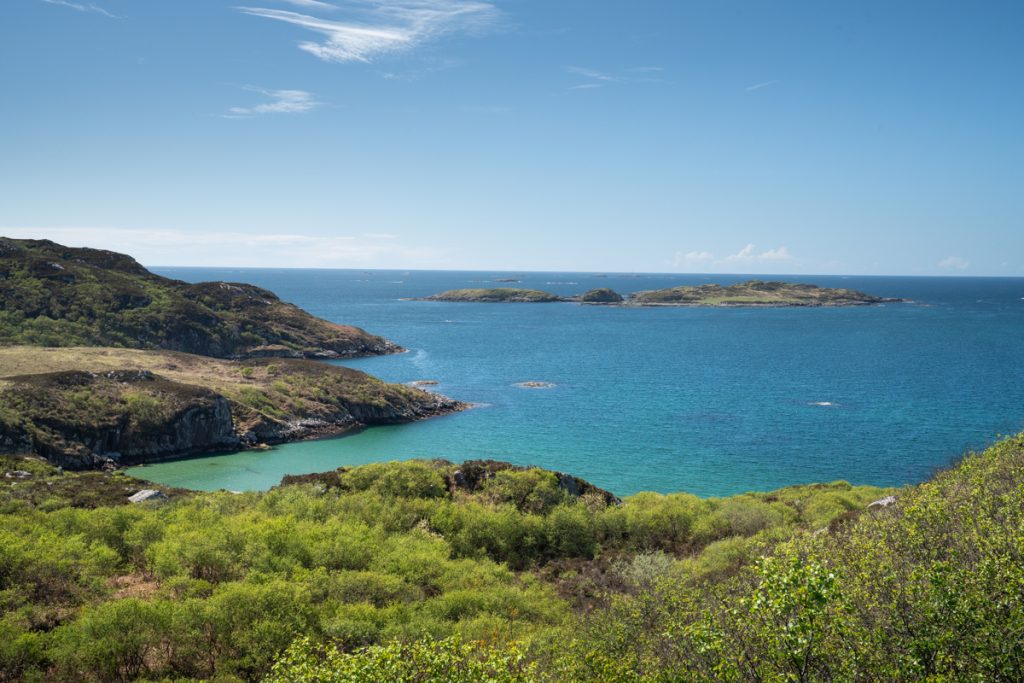
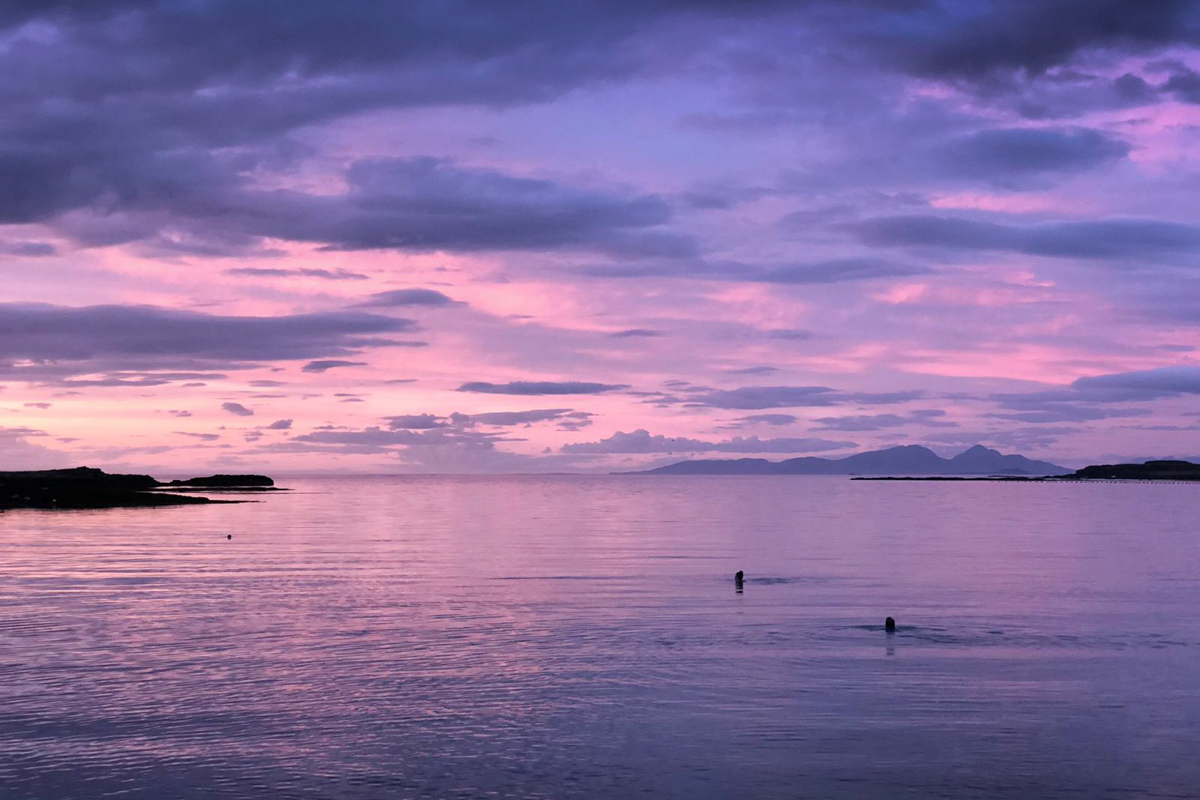
A peaceful paddle in a kayak delivers you to hard-to-reach coves, and perhaps even brings an encounter with a seal or two. Paddle boarding is also a fun choice, and a great way to watch the sunset from a sheltered bay.
Find out how you could enjoy kayaking and paddle boarding on the Isle of Mull, with options in the north, east and south west for you.
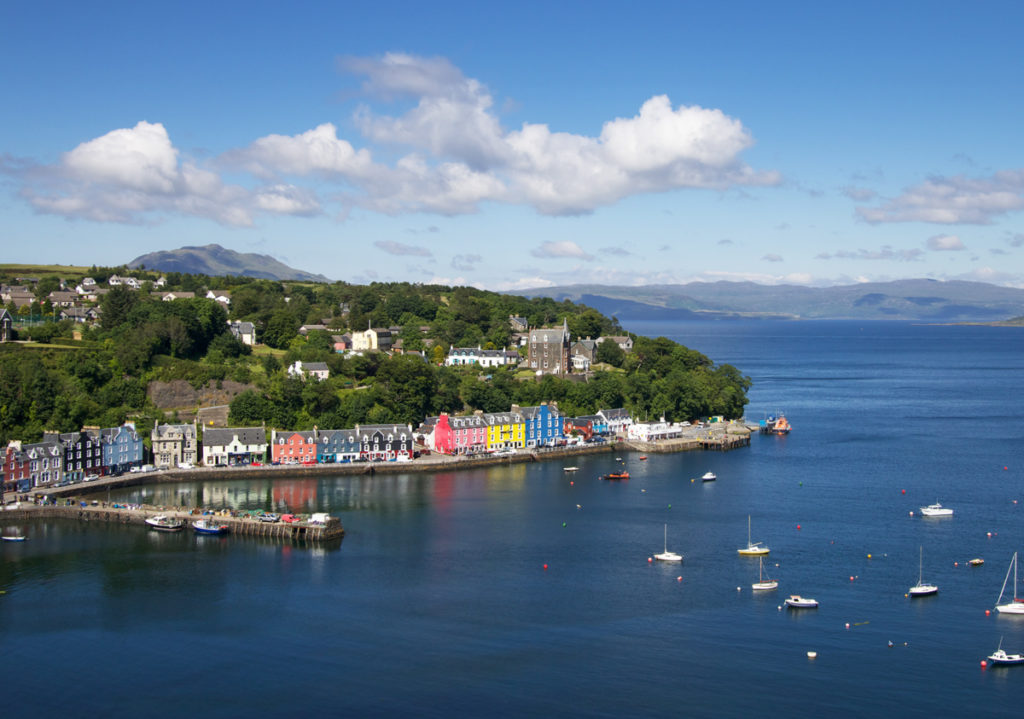
Paddle board around Tobermory’s enchanting bay
Paddle boarding in Tobermory Bay
Yachts and fishing boats are a familiar sight in Tobermory’s iconic harbour, as well as the odd inquisitive seal or two. But now you can take to the water in an entirely new way, by enjoying a paddle boarding experience.
Choose between a one to three hour hire period and soak up the views, scenery and sights of the island’s harbour town from the water with Tobermory Paddle Hire.
Paddle boarding at sunset with Salen Bay HireKayaking with Salen Bay Hire
Paddle boarding and kayaking in Salen Bay
Based in picturesque Salen Bay on the island’s east coast, Salen Bay Hire offer single and double kayak hire as well as paddle boards. Every hire comes with a life jacket and paddle, so it’s just a wetsuit to pack with you.
Sheltered from the wind, this is a lovely spot to spend an hour or two paddling and exploring. Enjoy a unique view of the Salen shipwrecks, so often photographed from the road but rarely viewed from across the water.
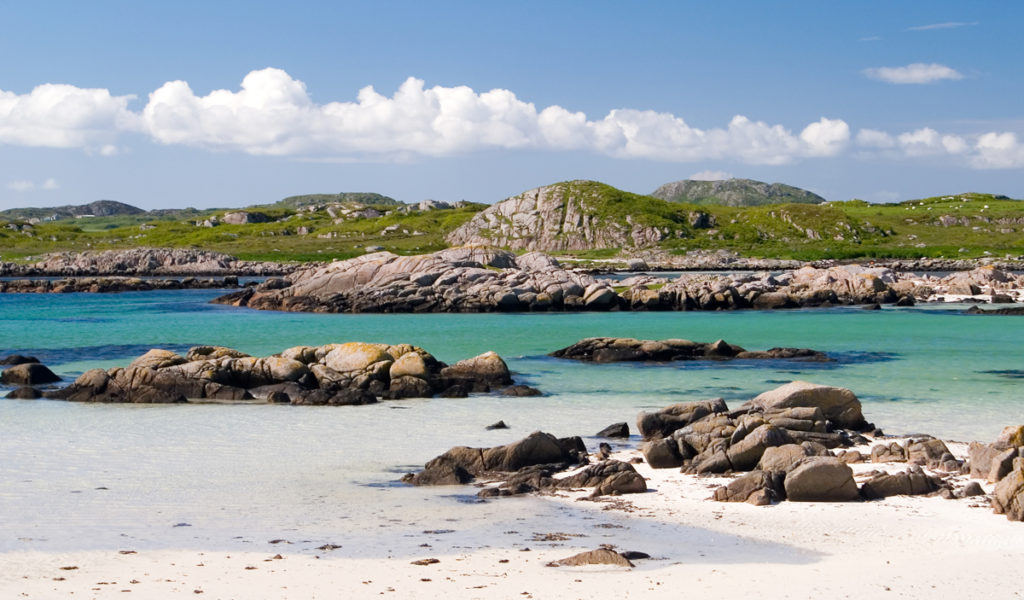
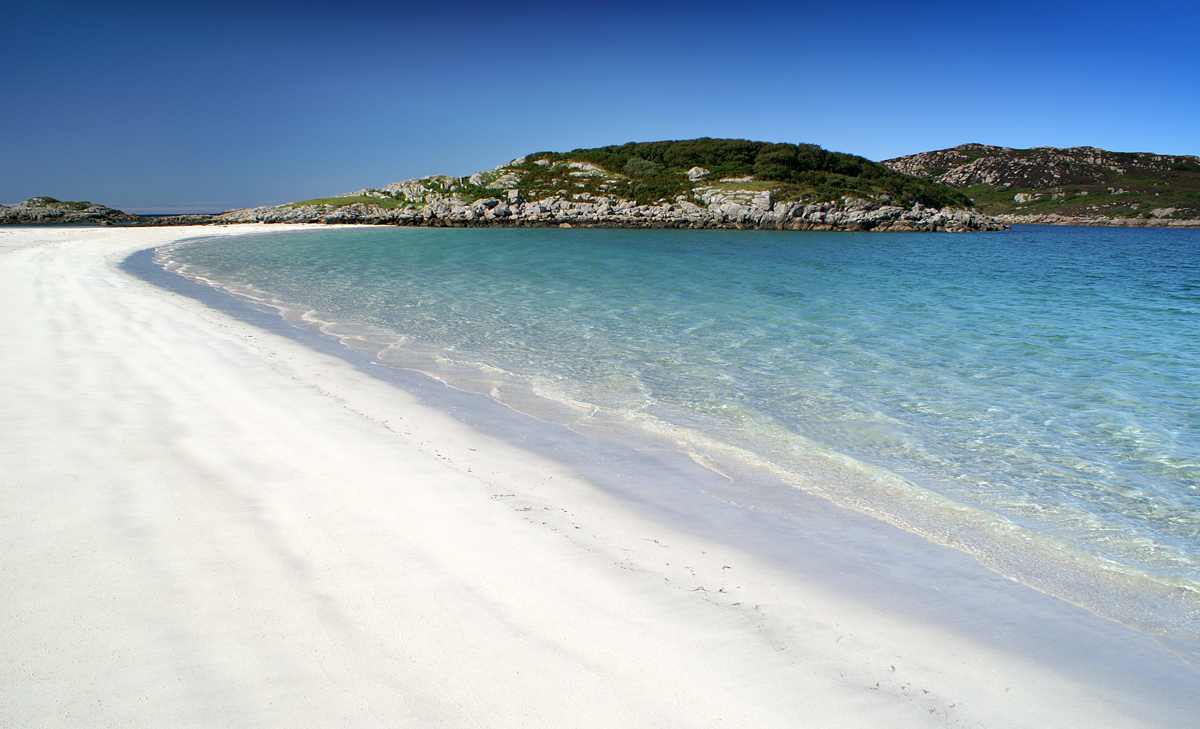
Fidden beach on the Ross of Mull
Sailing and kayaking on the Ross of Mull
If you’re staying on the Ross of Mull, then you needn’t miss out on the action. In addition to the treasure trove of sheltered coves for wild swimming on Mull, you can take to the water in a sea kayak with Bendoran Watersports. Choose between a half or full day on the water with a guide, or hire a kayak or dingie if you have suitable experience.
Reconnecting with nature, recharging your batteries and exploring Mull’s most beautiful corners – this is the ambition of many who visit the island, and by simply carving a day out of your itinerary to dedicate to an all-day walk on the Isle of Mull, you can do exactly that.
Here are four ideas to get you started, with one for each corner of the island. Choose one or explore them all – the island is your oyster, enjoy it!
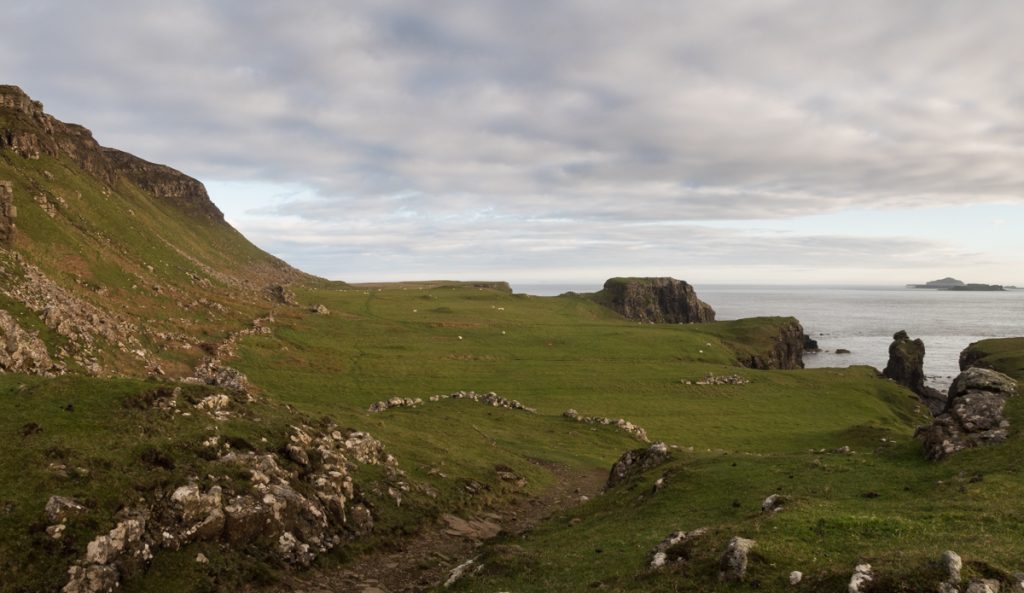
The view as you pass through the wildflower meadow, arriving at the dramatic coastal track.The ‘false’ beach, with excellent views across to the Treshnish Isles to the west.
North Mull: The Treshnish Headland
This is a great choice for an all-day walk on the Isle of Mull that eases you in gently and rewards you with spectacular views. Beginning from the island’s west coast at the start of the Treshnish headland, just south of Calgary, a track takes you past Treshnish Farm and on towards the Coronation Meadow, where wild orchids and other native flowers grow in the breeze of the Atlantic.
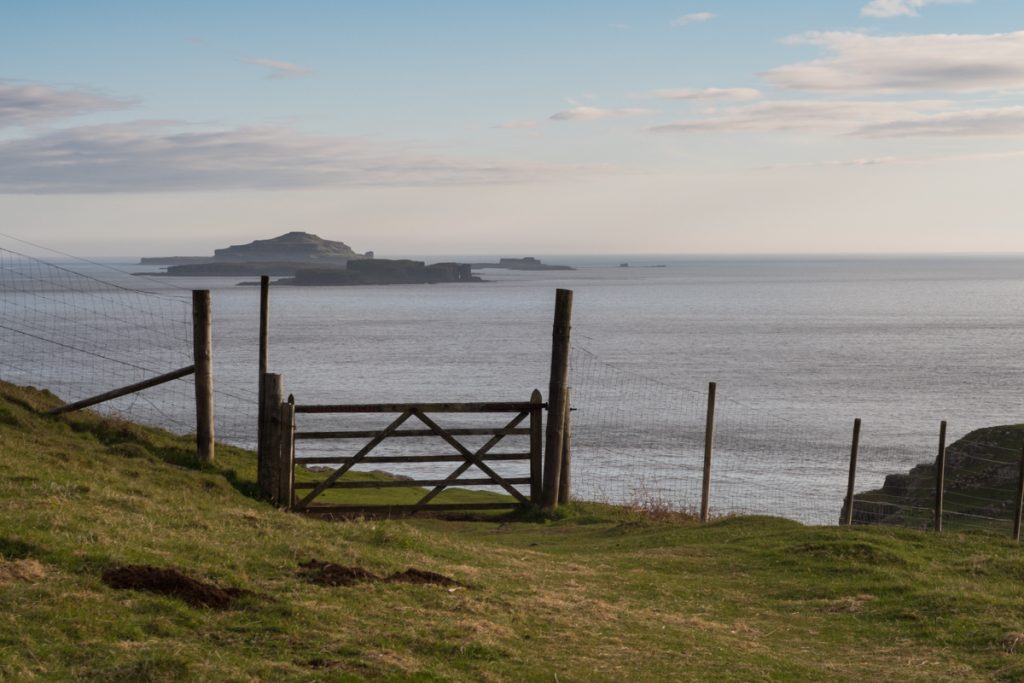
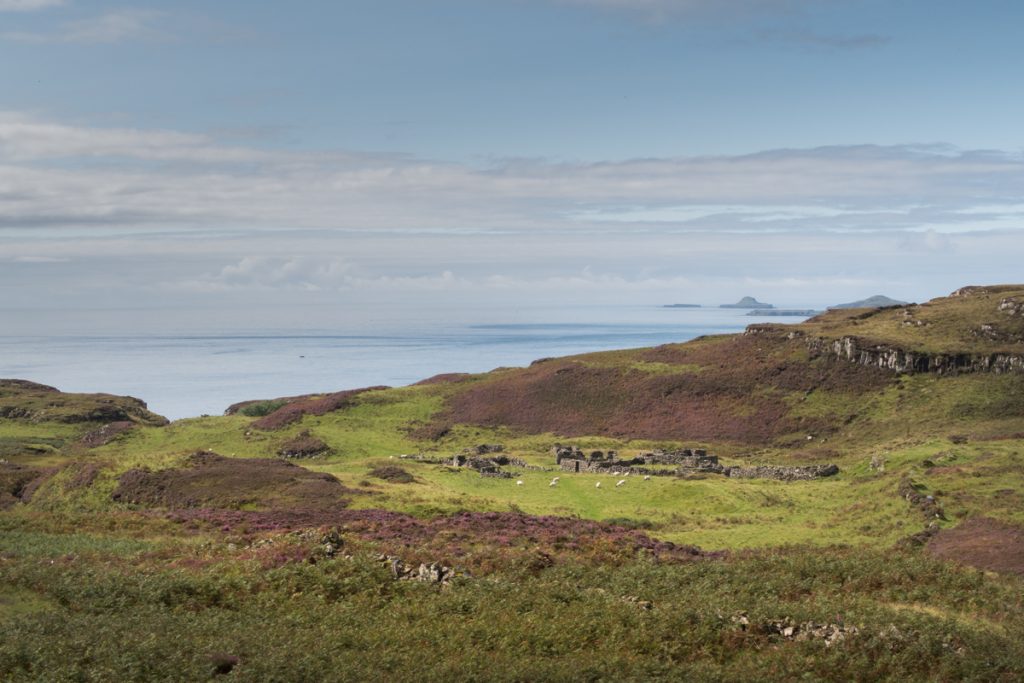
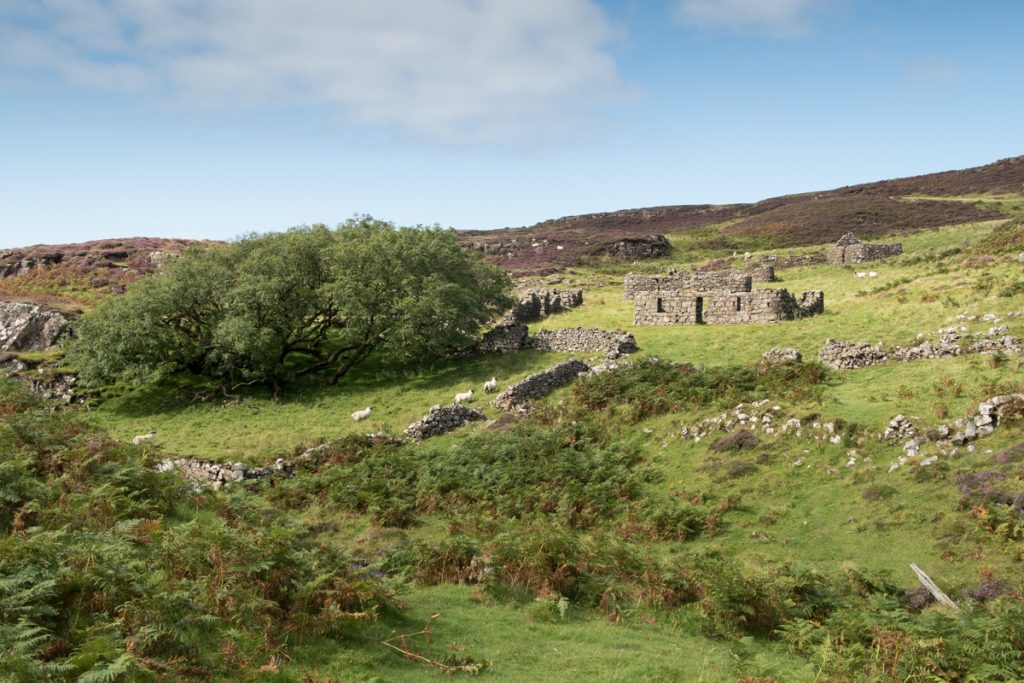
Rounding the coast with views to the Treshnish Isles, you’ll pass over the ‘false’ beach – now a flat, grassy swathe, this was once at sea level! From here, the trail continues past the ruined village at Crackaig, before re-joining the single-track road to return to your starting point.
Rounding the headland as you make your way back towards Reudle.Ruined villages found along the Treshnish walk, telling of more populous times before the Highland Clearances.
East Mull: Glenforsa and Ben Talaidh
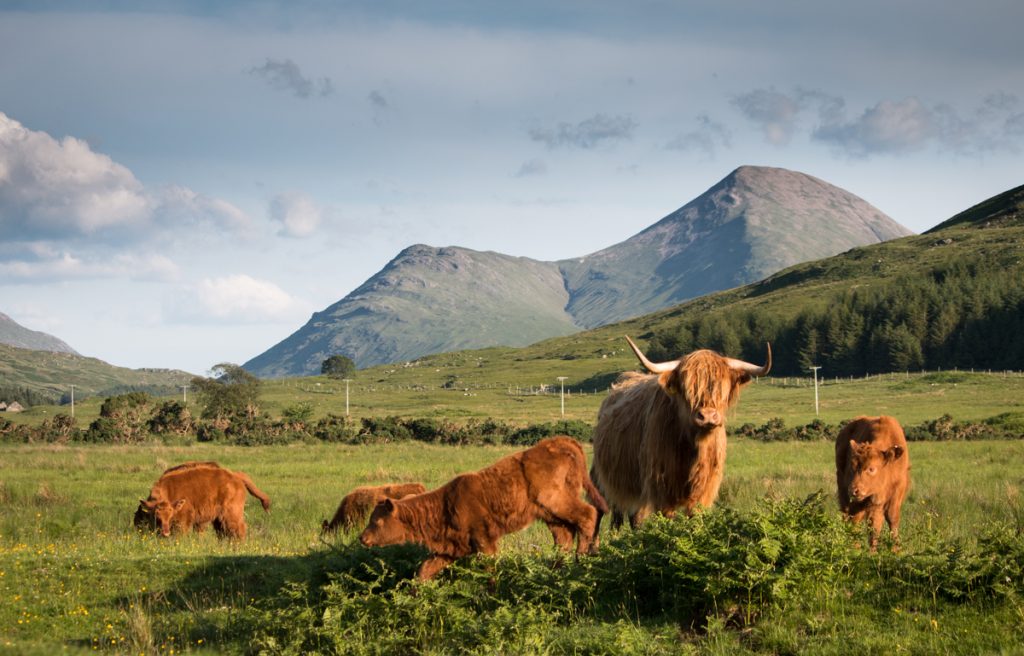
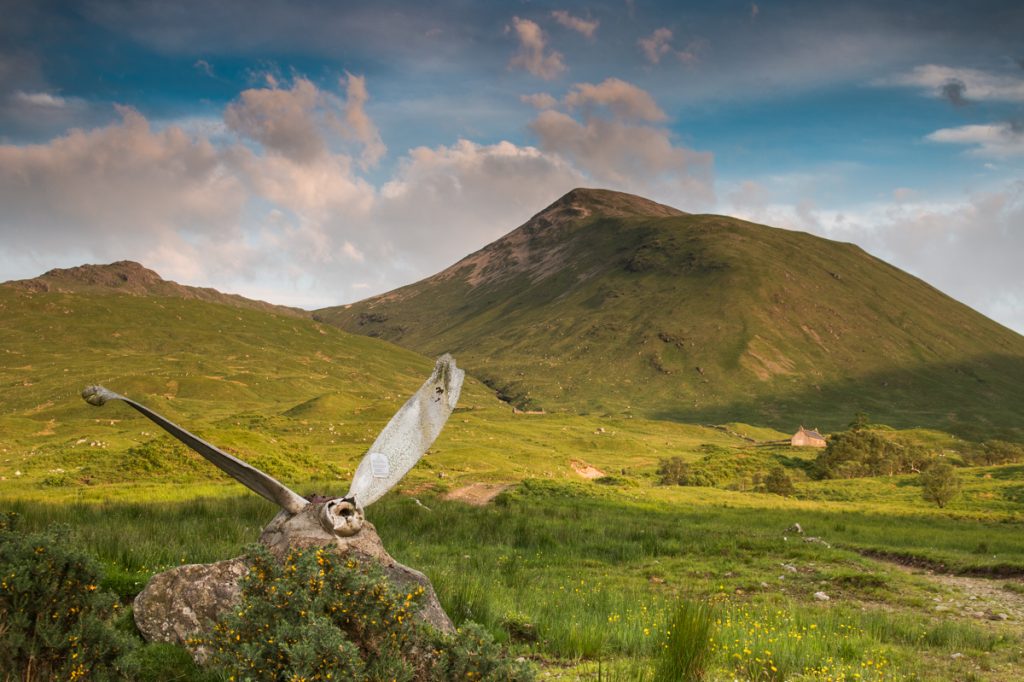
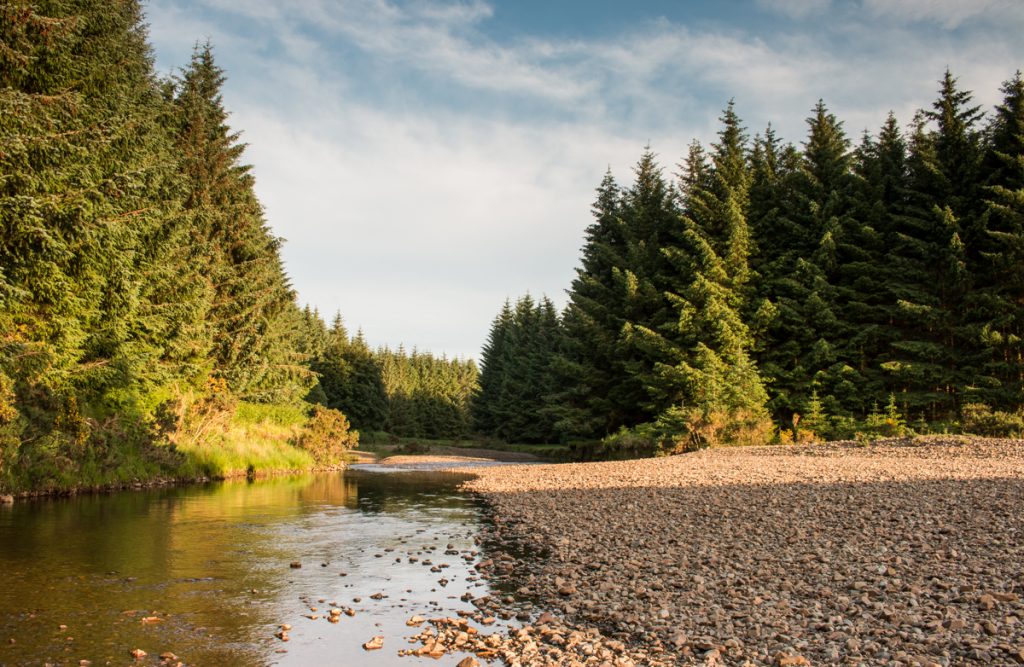
Ben Talaidh in the distance, seen from Glenforsa with its resident Highland cows.The propellor of the Dakota plane crash of 1945, which struck the mountain.On your return, you can take an alternative route along the River Forsa.
Standing at almost 750m high, Ben Talaidh towers at the head of Glenforsa, and its iconic, conical peak can be seen from as far away as Tobermory in the island’s north east.
Climbing this Graham comes not only with fantastic scenery and views from the top though, as having followed the river Forsa through the farmed glen below, you’ll ascend past a bothy to the wreckage of a Dakota plane, which crashed into the mountain in 1945.
The summit affords excellent views across the island’s mountainous interior, west towards Loch Ba and Ben More, and east back to the Sound of Mull and mainland Scotland.
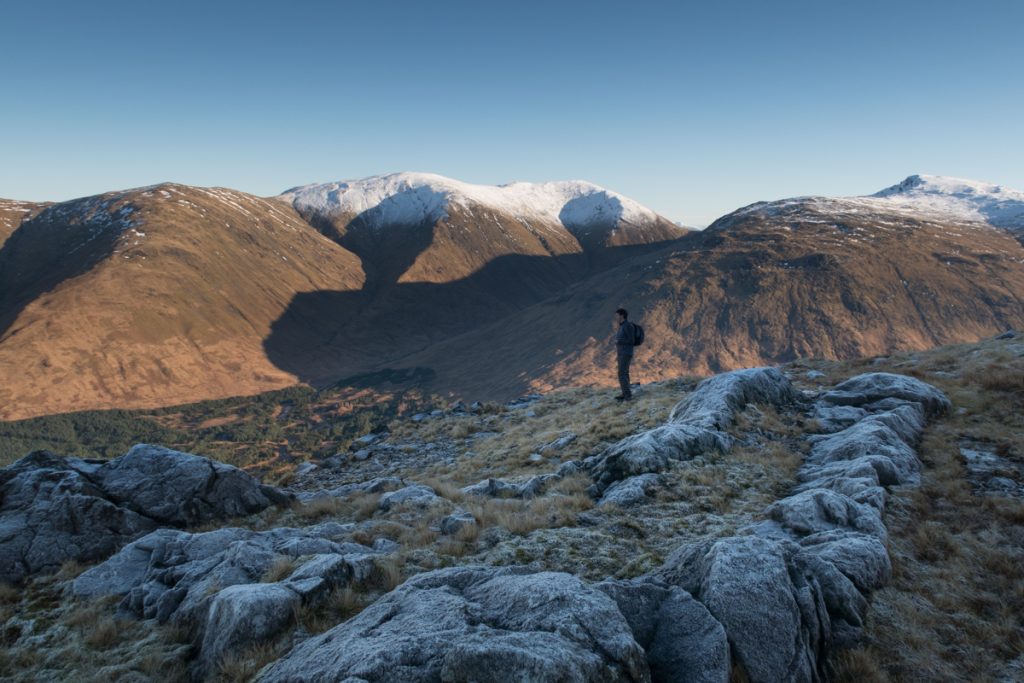
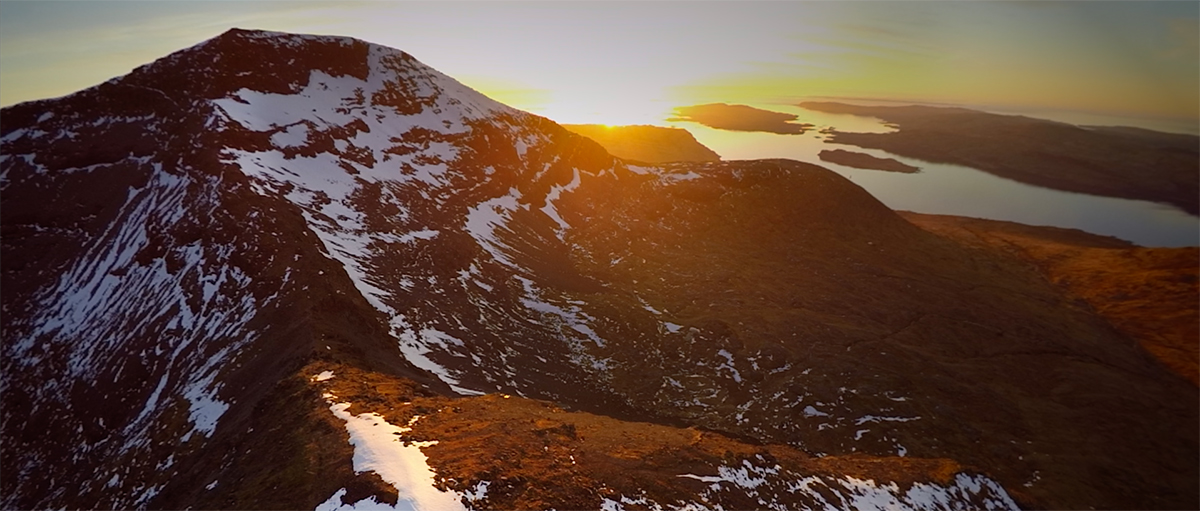
As you make your way through the glen, pass the MBA bothy at Tomsleibhe.A wintry ascent of Ben Talaidh, with spectacular views to Mull’s mountainous interior.
South Mull: Tireregan Nature Reserve
The reward for your efforts is this remote and staggeringly beautiful stretch of coast.The exquisite white sands of Traigh Gheal, so remote you’ll almost certainly be the only people there.
It always pays to be prepared when you head out walking on the Isle of Mull, but no where is this truer than of the Tireregan Nature Reserve. Although not featuring big ascents, the terrain here is challenging and you’ll navigate thick brush, woodland, bog and bracken as you make for the coast. For this reason, it’s a corner of Mull that often goes unexplored, feeling truly remote and untouched.
The reward for your efforts? A taste of Mull’s true wilderness, a wildlife haven, and one of the most unspoilt and beautiful beaches on the island – Traigh Gheal.
Bog, brush and bracken make up much of the route, best suited to experienced walkers.Fantastic views as you cross challenging terrain in the Tireregan Nature Reserve.
West Mull: Ardmeanach and The Burg
The northern side of the Ardmeanach peninsula, beyond Balmeanach.The Ardmeanach peninsula, looking out towards Burg, where the route to the fossil tree leads.
Another of Mull’s wildernesses, the Ardmeanach peninsula extends between Loch Scridain and Loch na Keal on the island’s south west coast. From the Scenic Route to Salen heading north, turn off towards Tiroran just after the small settlement of Kilfinichen and the adventure begins. It’s best to check the tides in advance, as the Fossil Tree at the end of the trail requires a low tide.
As you head west along the peninsula, you’ll pass a memorial cairn and the remains of Dun Bhuirg, affording historical interest along the way. Tracing the coastline, the views are rugged and spectacular. The grand finale of this walk is the Fossil Tree, cast in basalt lava and reached by an equally dramatic ladder bolted to the rocks! The return route retraces your steps, with excellent opportunity to enjoy the local wildlife as you go.
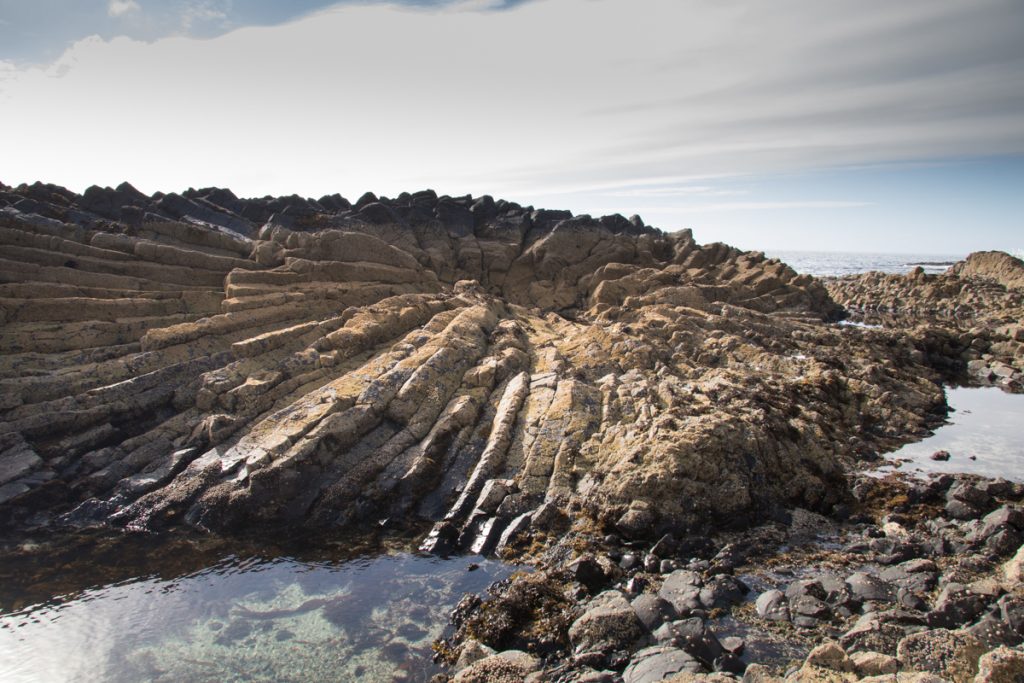
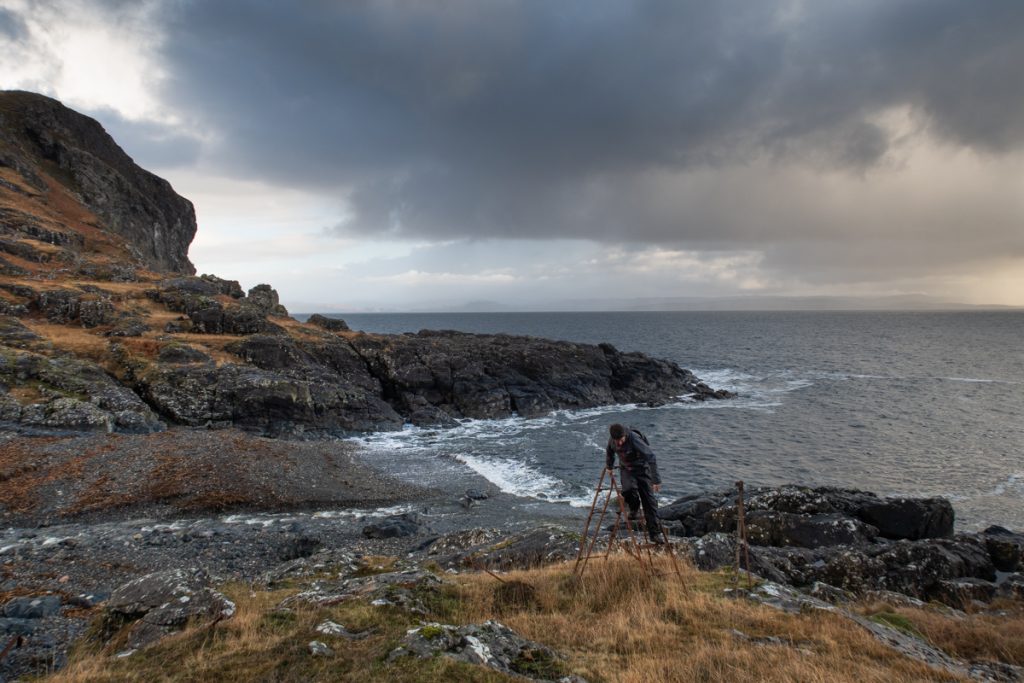
Descend the metal ladder when the tide is out to marvel at the geology and fossil tree.Stunning rock formations and fossils are striking features on this remote part of the coast.
Find more inspiration for short to all-day walks on the Isle of Mull in our guide, complete with OS maps, route descriptions and photos.
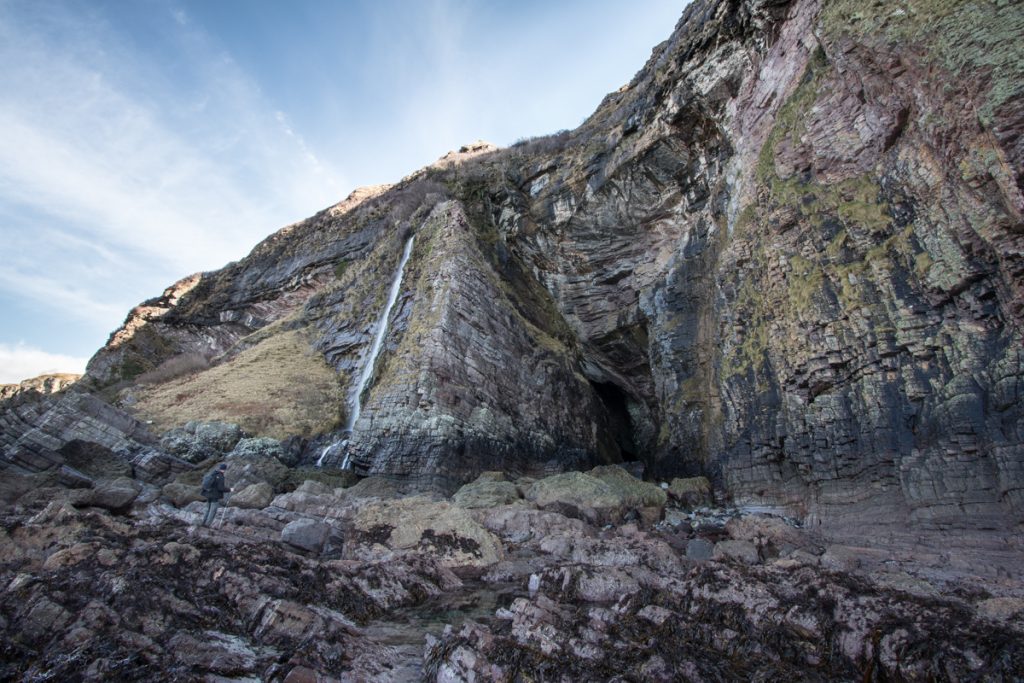
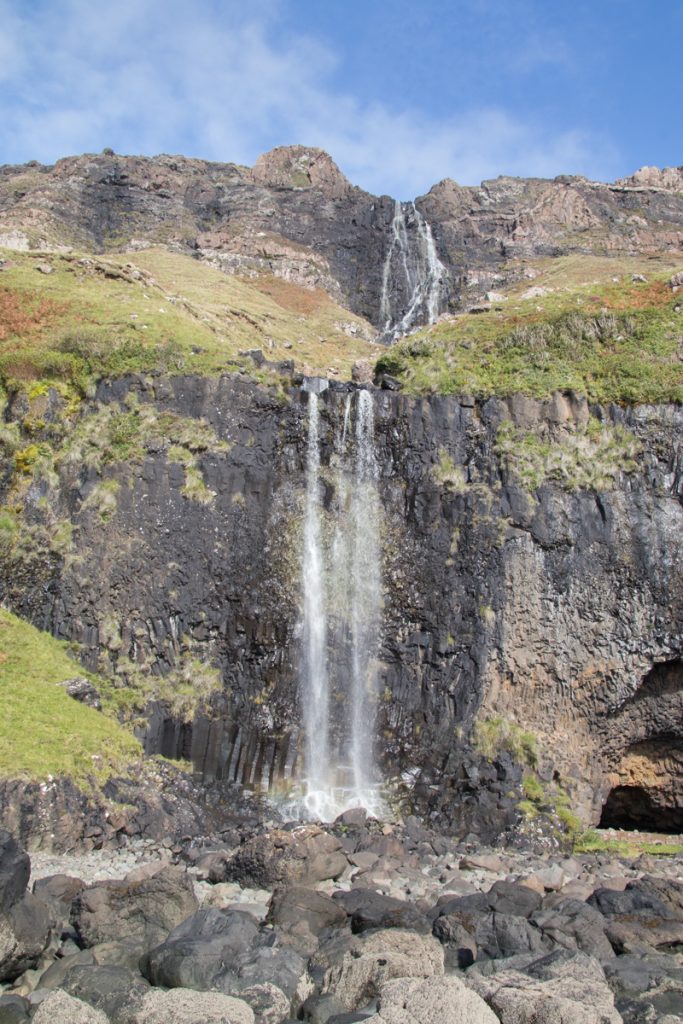
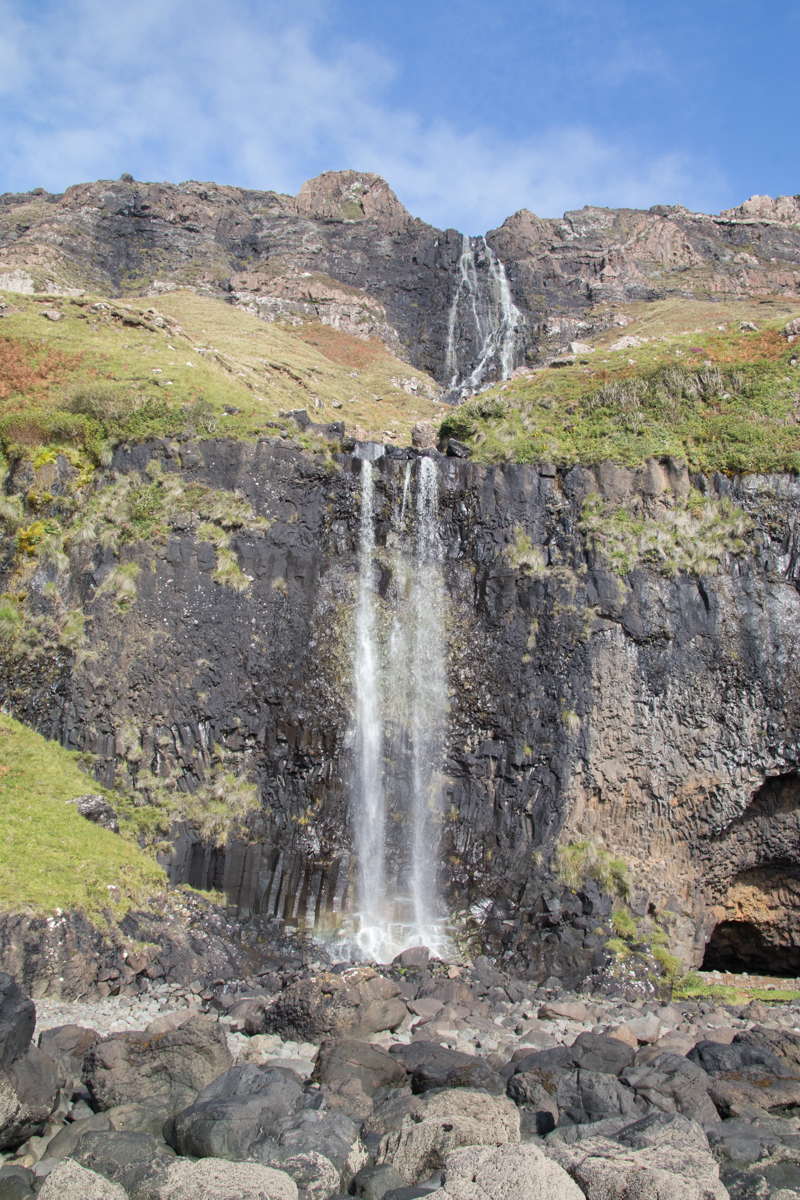
Multi-tiered waterfall on the Ardmeanach peninsula
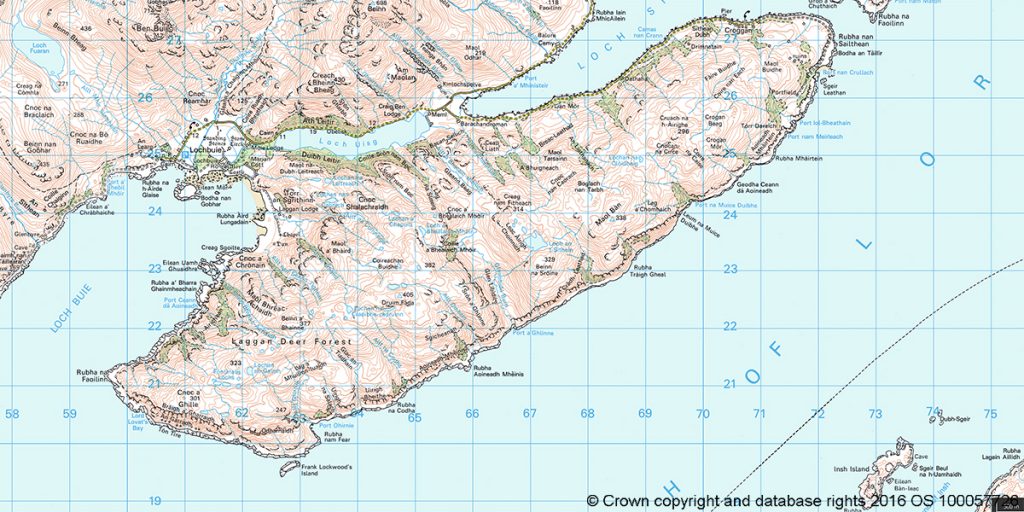
The following photographic blog covers one of the Isle of Mull’s more remote and challenging areas, a lack of paths, difficulty navigating and tough terrain make this a serious expedition for the experienced only. This is not a suggested route!
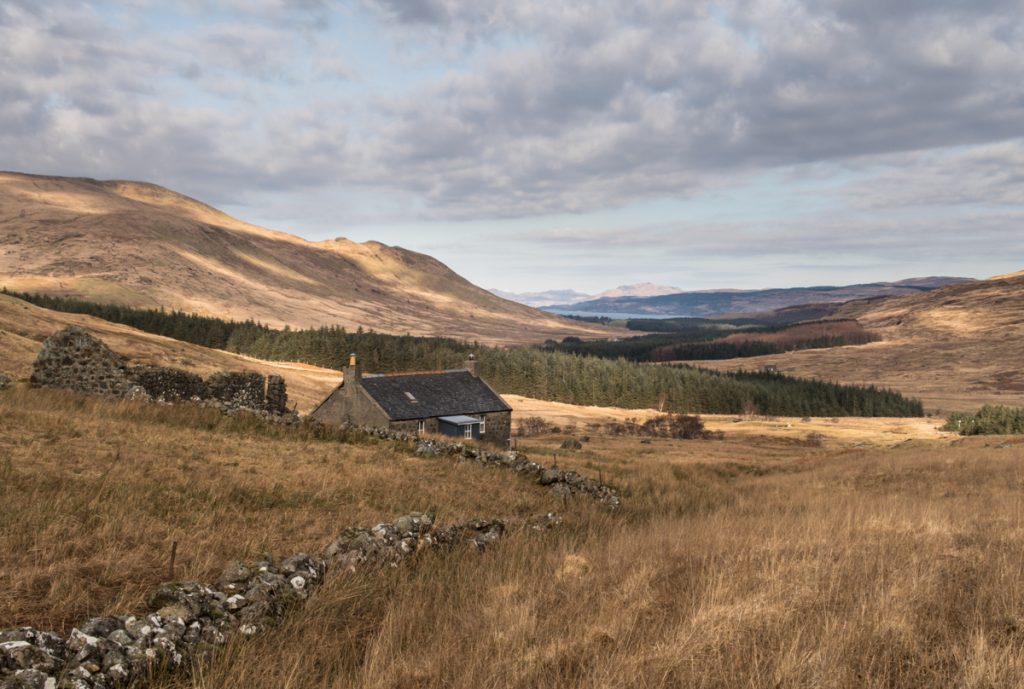
Situated in the Isle of Mull’s south east the Laggan Deer Forest lies to the south west of Croggan on an area of land that is connected to the rest of Mull by two narrow isthmuses, one at Kinlochspelve, another at Lochbuie.
A glance at the map reveals that this is an area with interesting geology, history and some intriguing place names, from Glen Libidil, to Lord Lovat’s Cave.
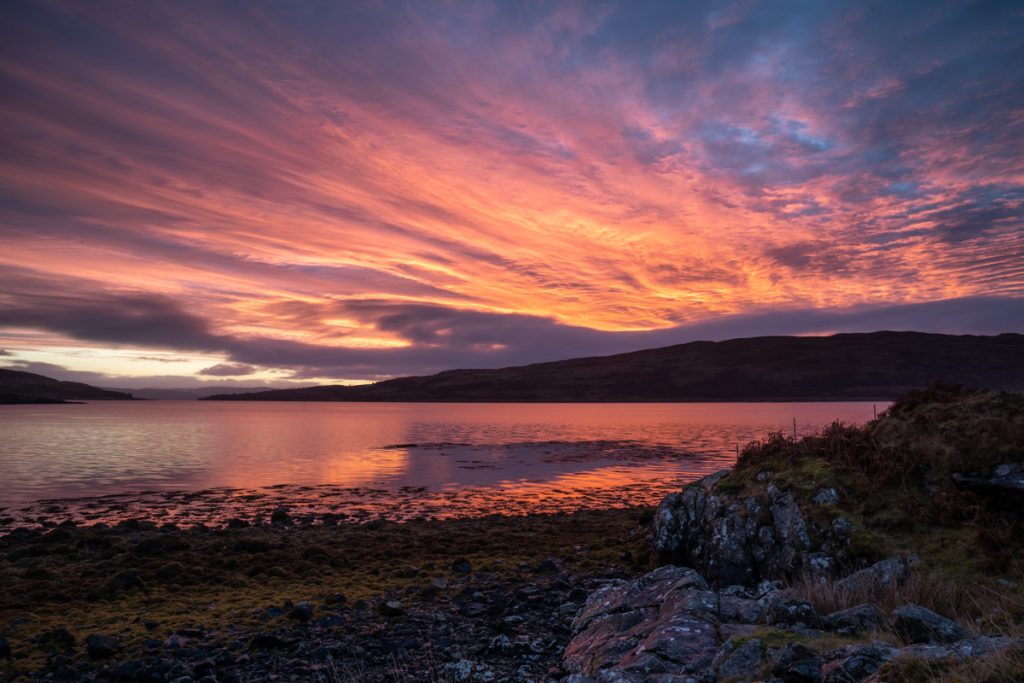
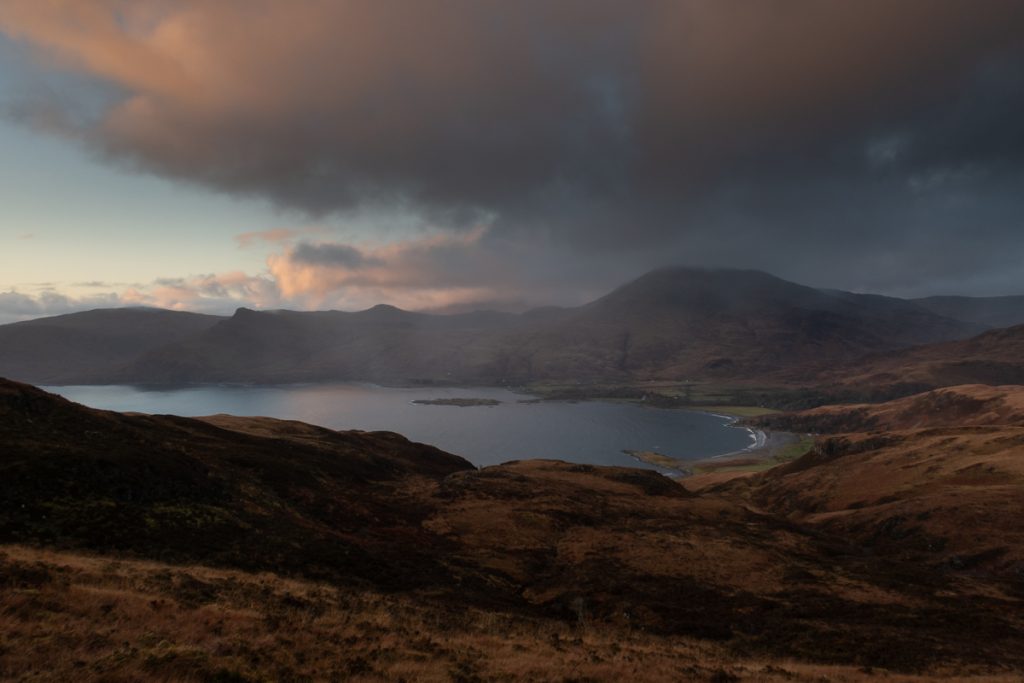
Our day began with a spectacular sunrise over Loch Spelve, a large sea loch with a narrow opening to the Firth of Lorne at Croggan.
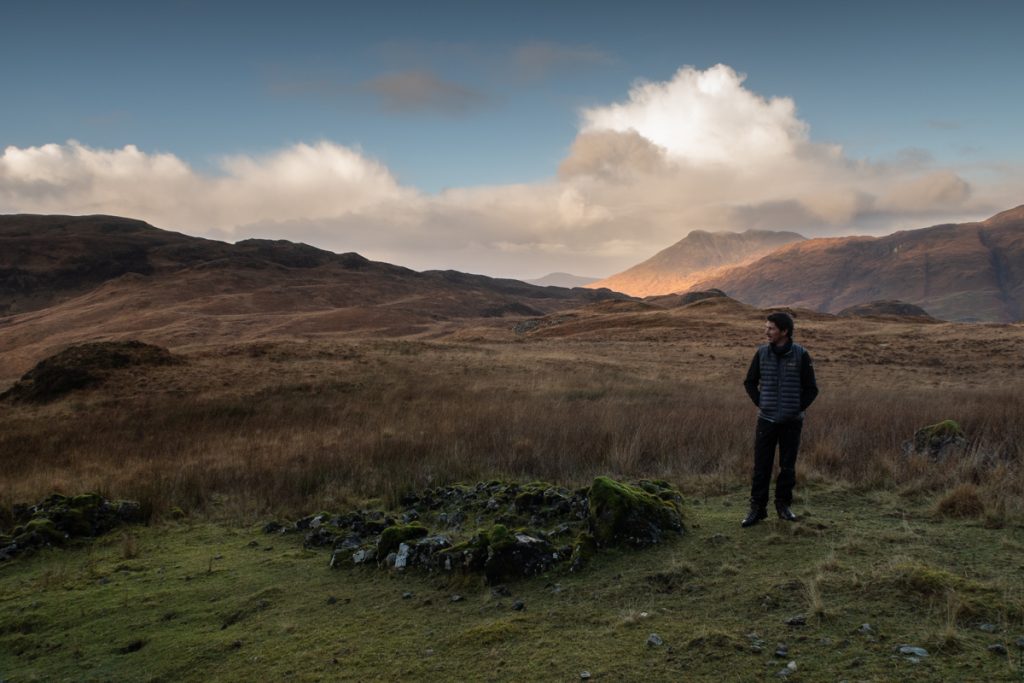
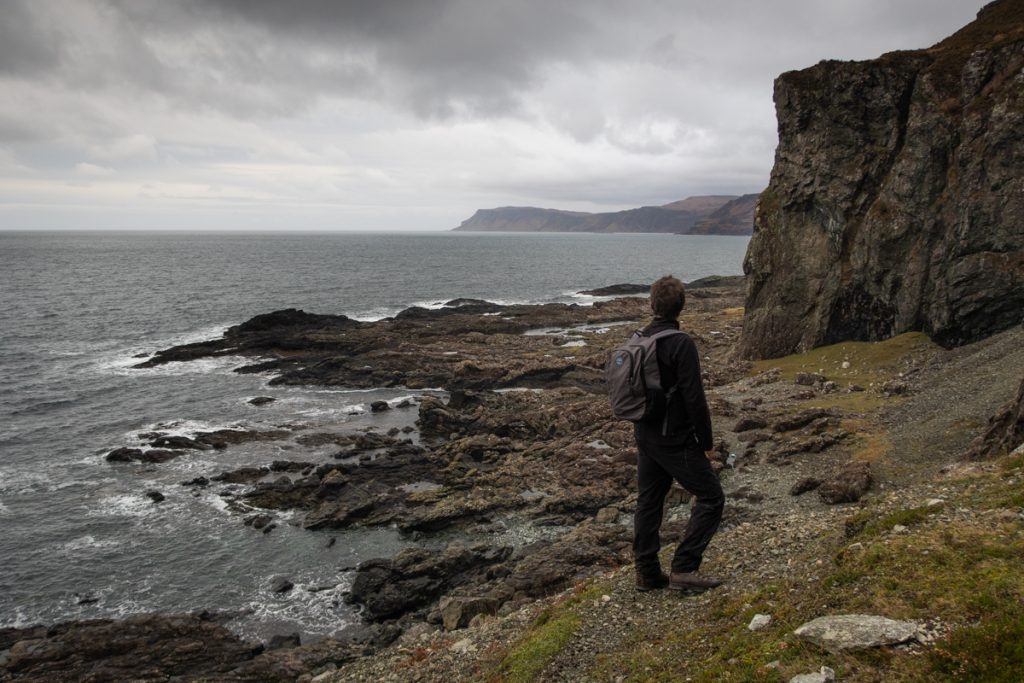
Starting our walk at Kinlochspelve by climbing the rugged hills via Gleann Bheag we began descending into Glen Libidil. There are many signs of former settlements on the hills here, thought to vary in age from the neolithic, to the medieval times up until recent history.
Glen Libidil means deep valley, or more accurately dale, an apt description that perfectly describes the lay of the land. There are areas of interest here for geology fans, including exposed Jurassic rocks and volcanic formations.
Remains of a building with a sunlit Ben Buie in the distanceLooking down into Glen Libidil
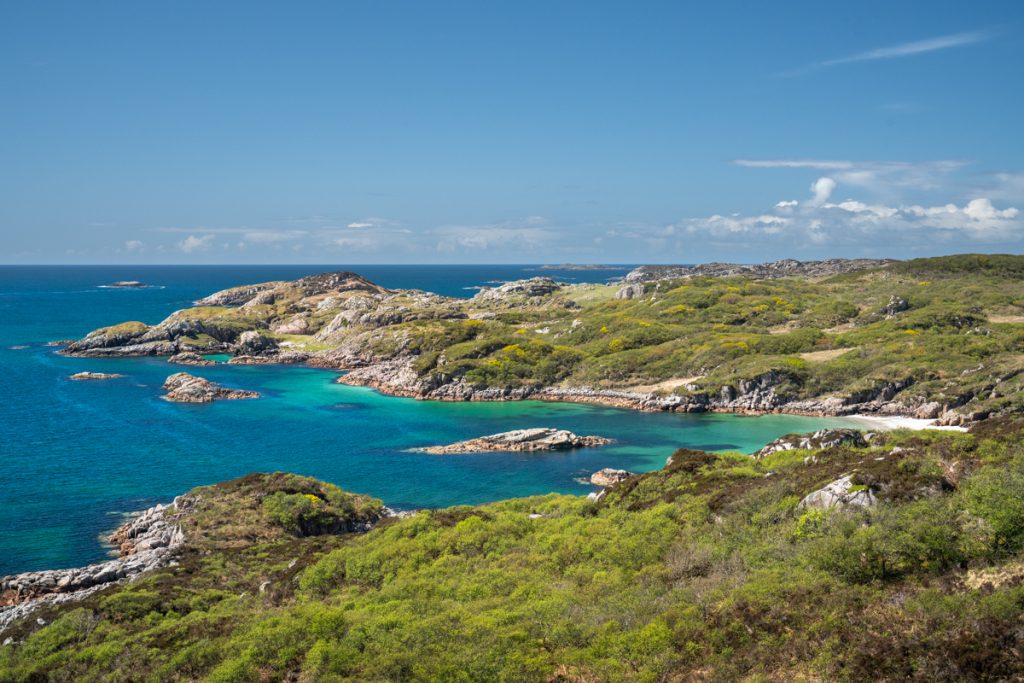
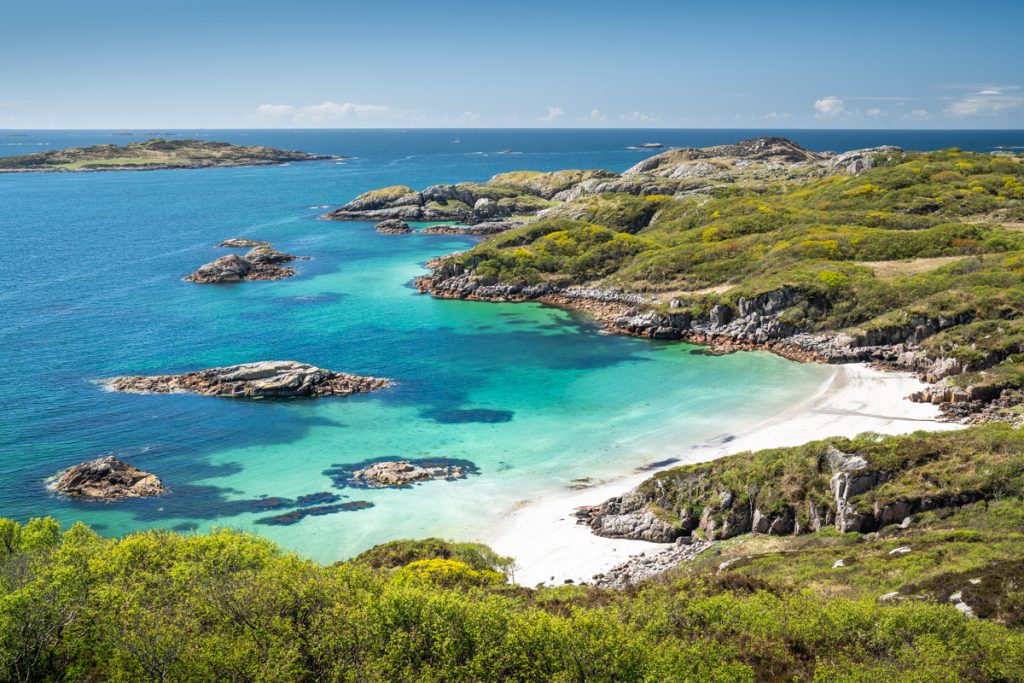
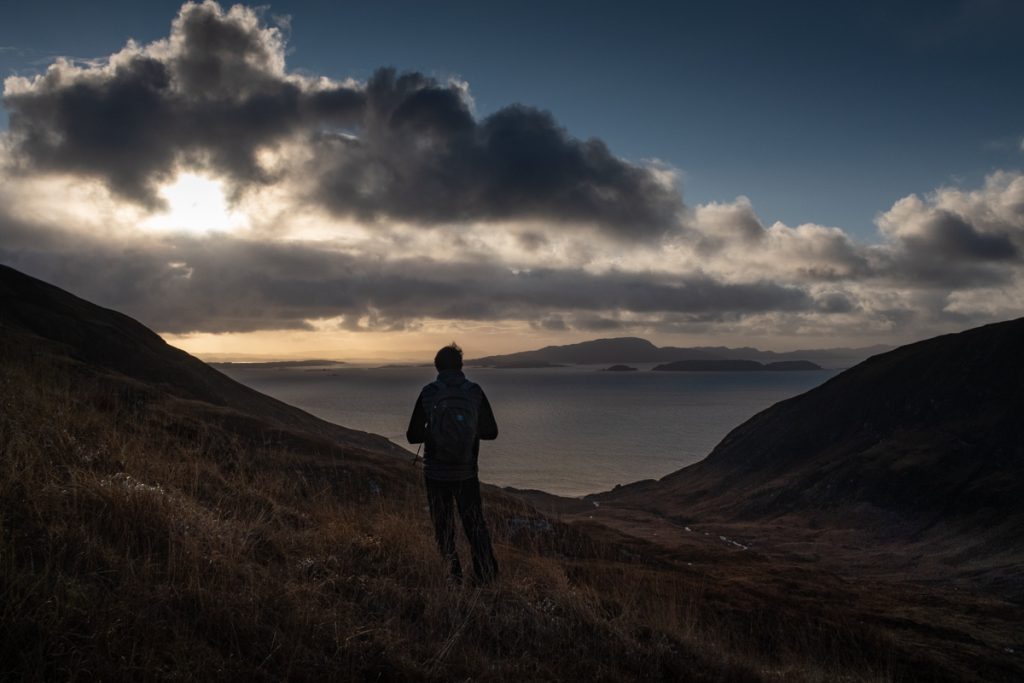
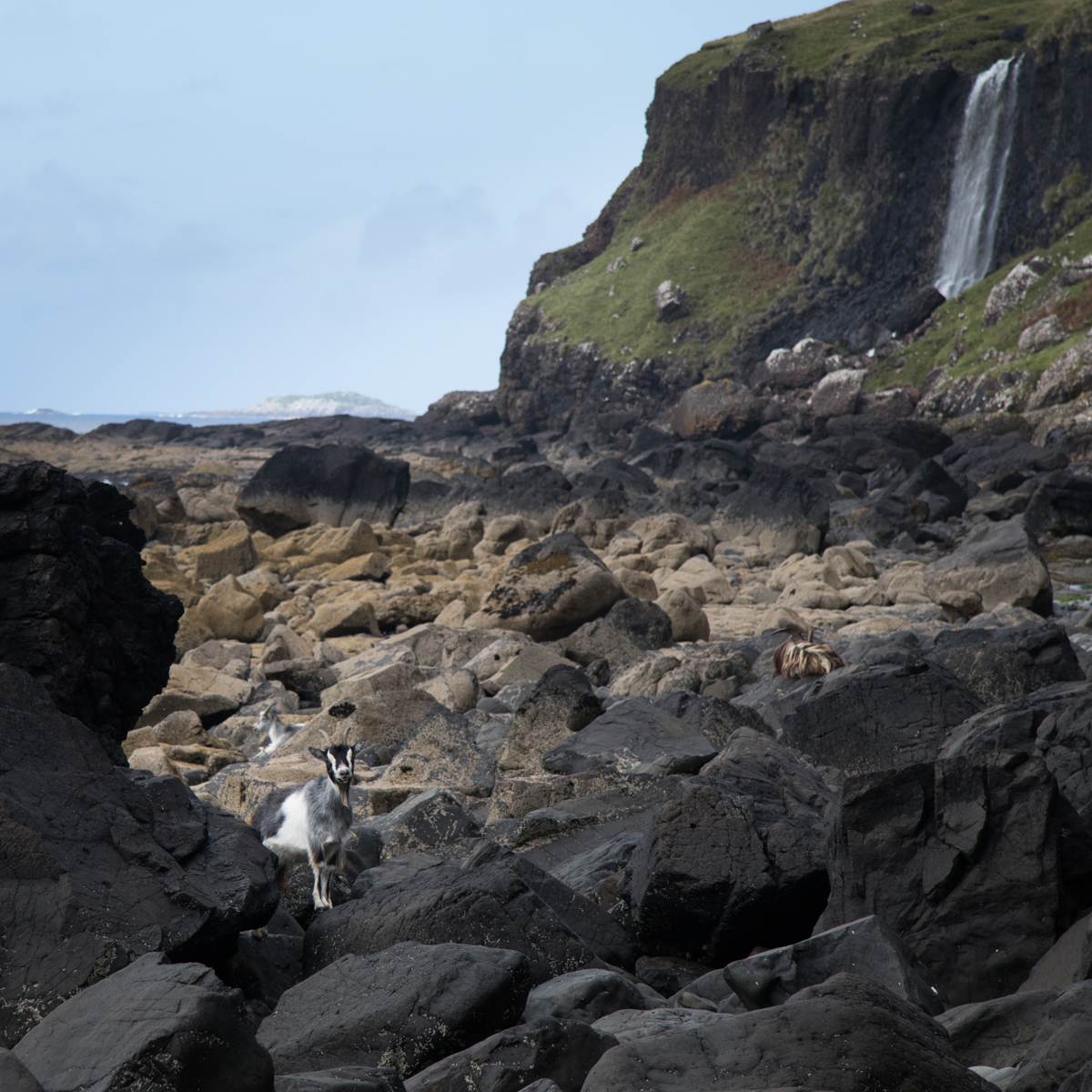
Reaching the coast at Glen Libidil there are excellent views over Argyll’s southern islands, including Scarba, Jura, Islay and closer to Mull the long chain of the Garvallachs. Winter gales had washed large quantities of kelp ashore, which was much appreciated by both the red deer and wild goats we saw dining in the area!
The view from the beach at Glen Libidil
From here we followed the coastline heading south east toward Frank Lockwood’s island. The terrain here is beautiful, a mixture of cliffs, gnarled oak trees, waterfalls and raised beaches. The sea views are superb and an eye should be kept open for passing porpoise and otters. To the skies there are common sighting of eagles and the majestic red deer appear to thrive in the area, perhaps justifying the name Laggan Deer Forest.
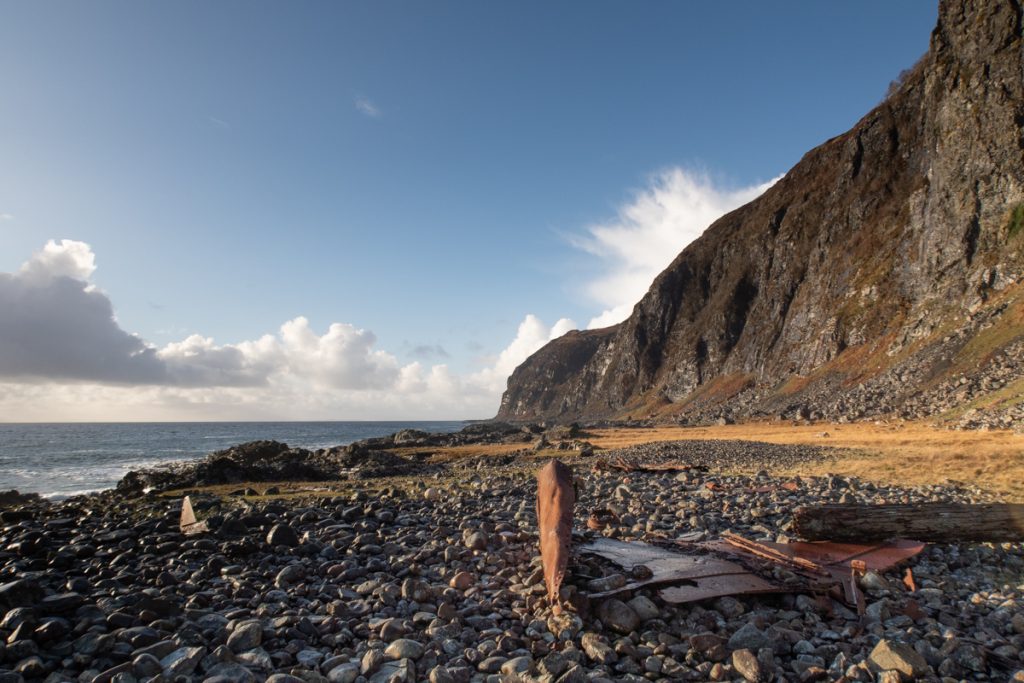
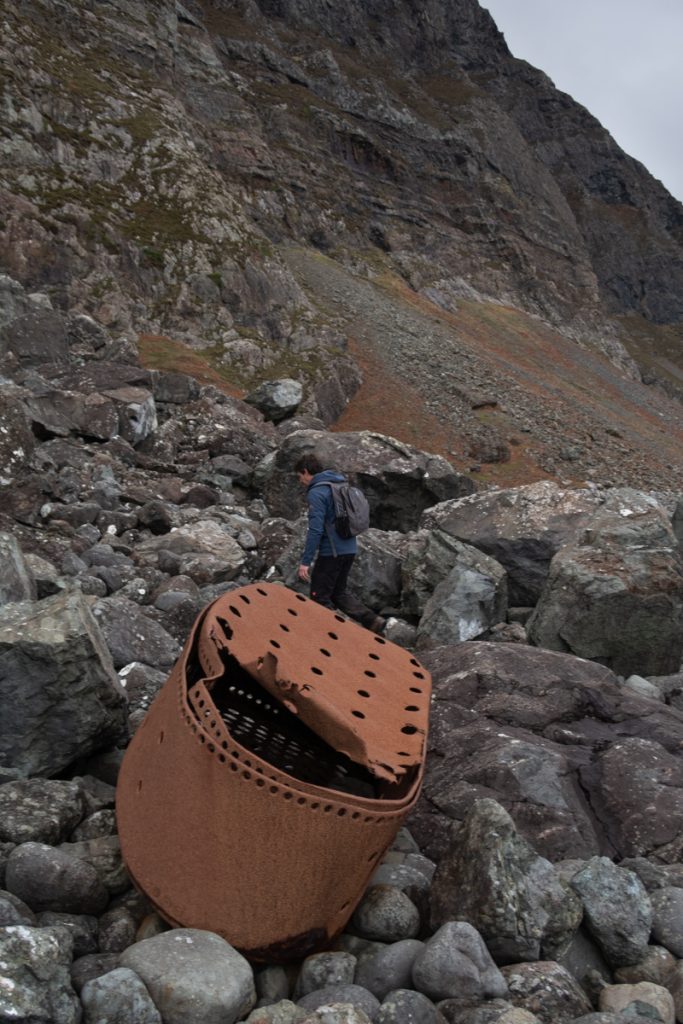
Also of note along this section of coast are the remains of a shipwreck most probably the RFA Maine a vessel that was being used as a hospital ship when it was wrecked ashore on 21 June 1914 in dense fog whilst sailing toward Oban. The ship struck Frank Lockwood’s island, however the remains of the vessel have now washed up over a very wide area.
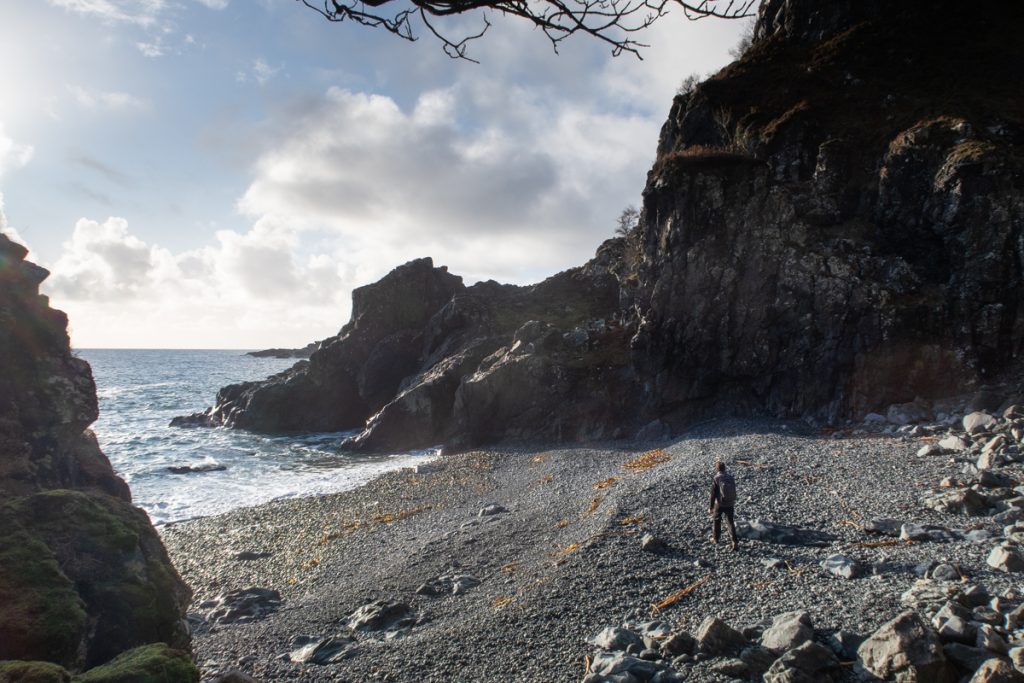
Leaving the pebble beach at Glen LibidilRemains of an atlantic Oak treeShipwreck remains are found along the coastlineThe pebble beach at Uirigh na Salach, a marker of the start of some difficult coastal terrain
We paused for snacks and coffee at the beautiful pebble beach below Uirigh na Salach past which point we found the difficulty of the coastal terrain led us to backtracking to climb (some very steep ground!) uphill before descending again towards the bay of Port Ohirnie, one of the few sizeable bays along this rugged stretch of coastline and a listed anchorage for boats.
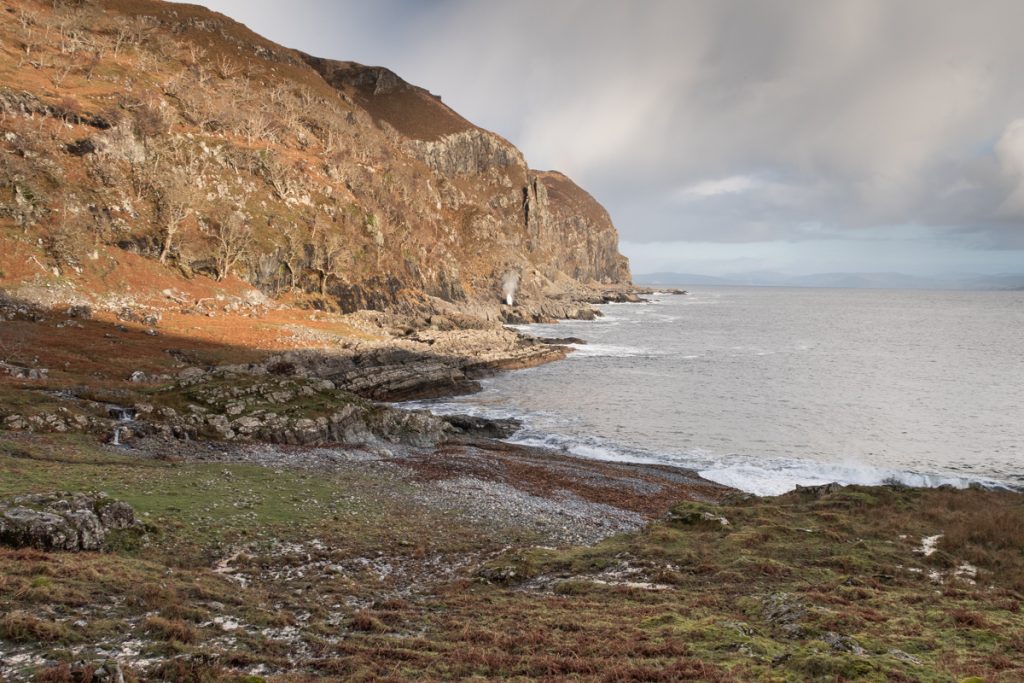
Port Ohirinie has an area of gently sloping ground with mature oak and ash trees along the coast. The beautiful Allt Ohirnie and Allt Bealach Luirginn combine to form a small river which flows into the bay. The remains of a small bothy or possible black house sit to the eastern side of the bay.
Looking back to the coast over some very steep terrain Port Ohirnie and the view to the east (note the blowhole along the coast)
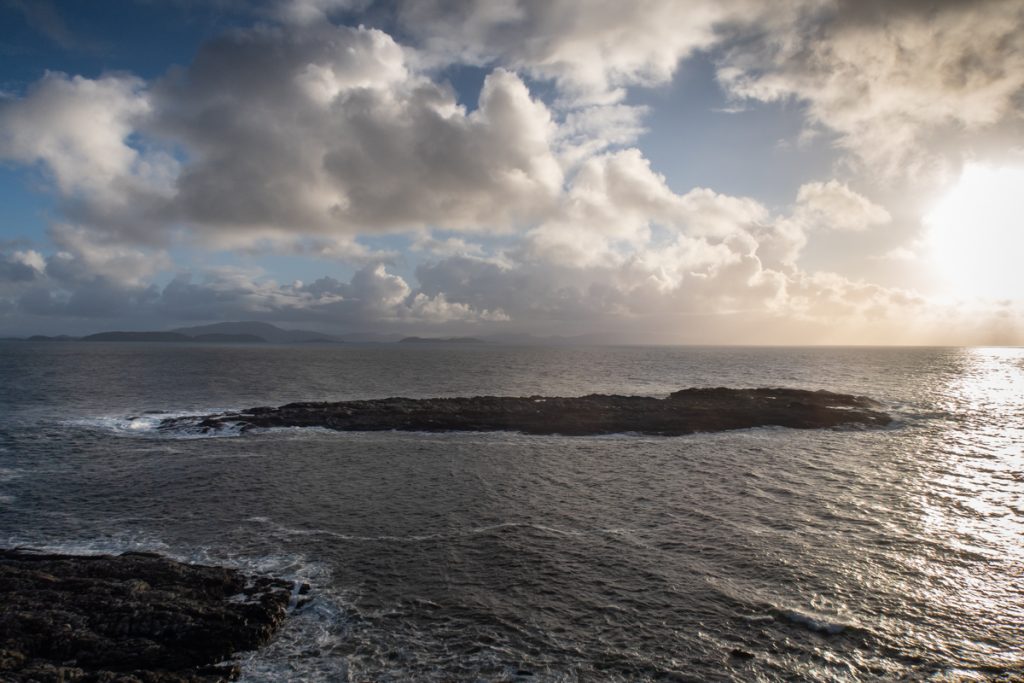
Continuing on we rounded Rubha nam Fear before the views over Frank Lockwood’s island open up. Frank Lockwood was a Liberal MP of the city of York and was said to be fond of visiting the island from Lochbuie in a rowing boat. The low lying island is host to a variety of birds and must have stunning views back towards Mull’s coast, which is especially rugged and dramatic in this area.
Frank Lockwood’s island
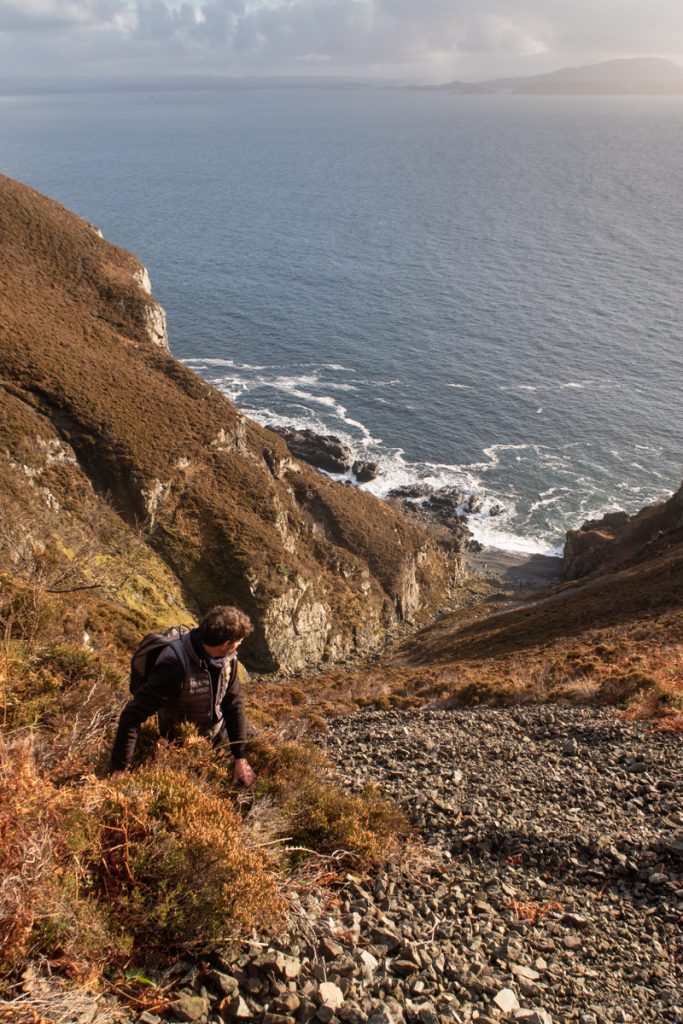
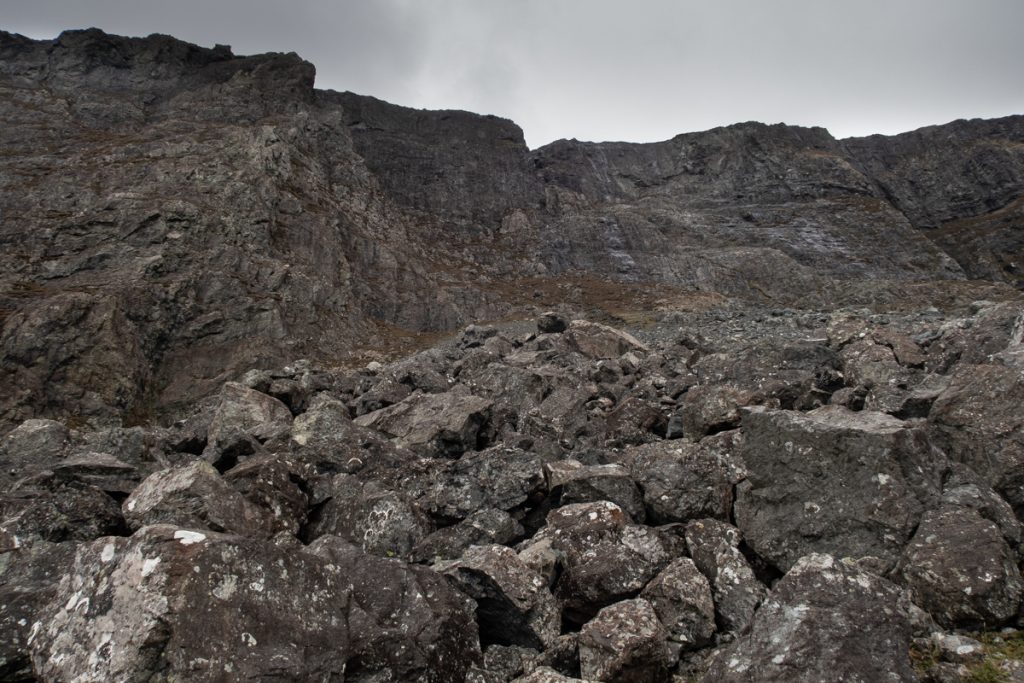
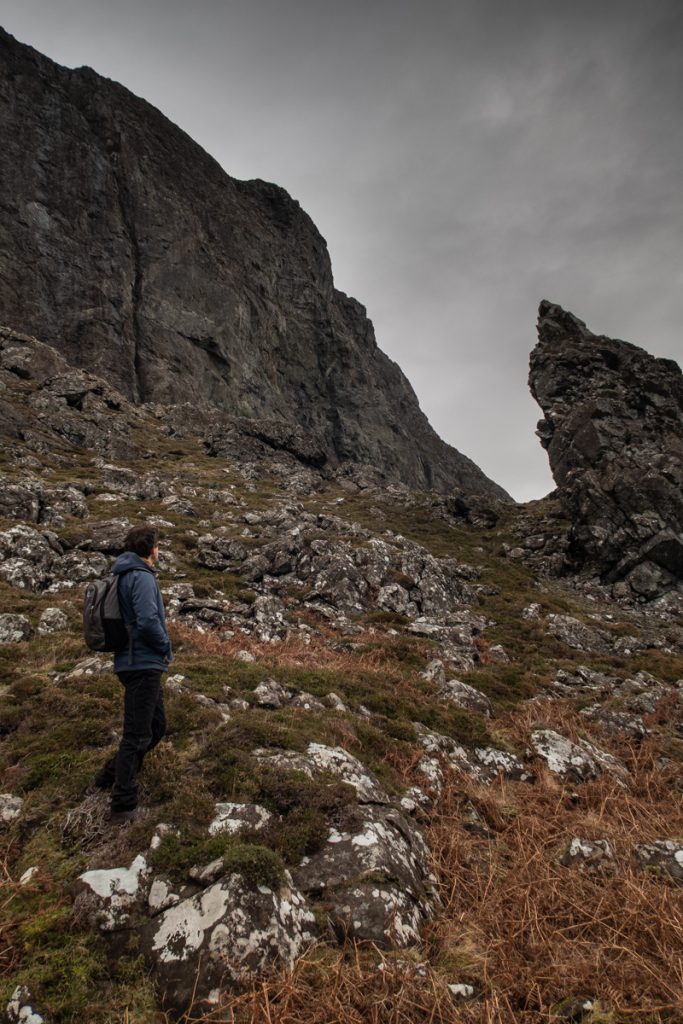
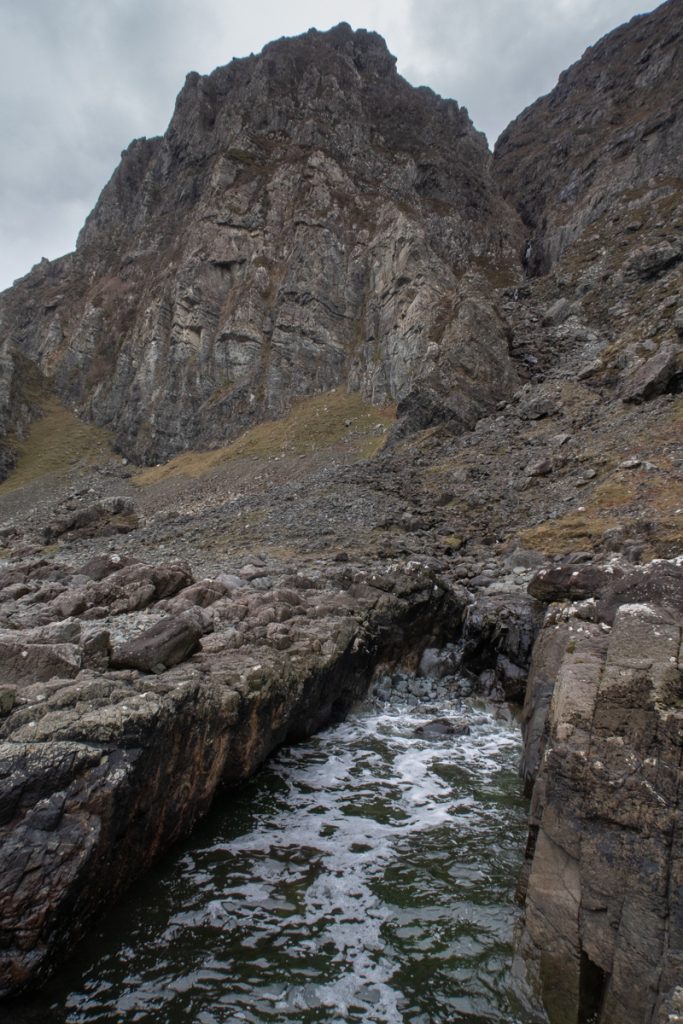
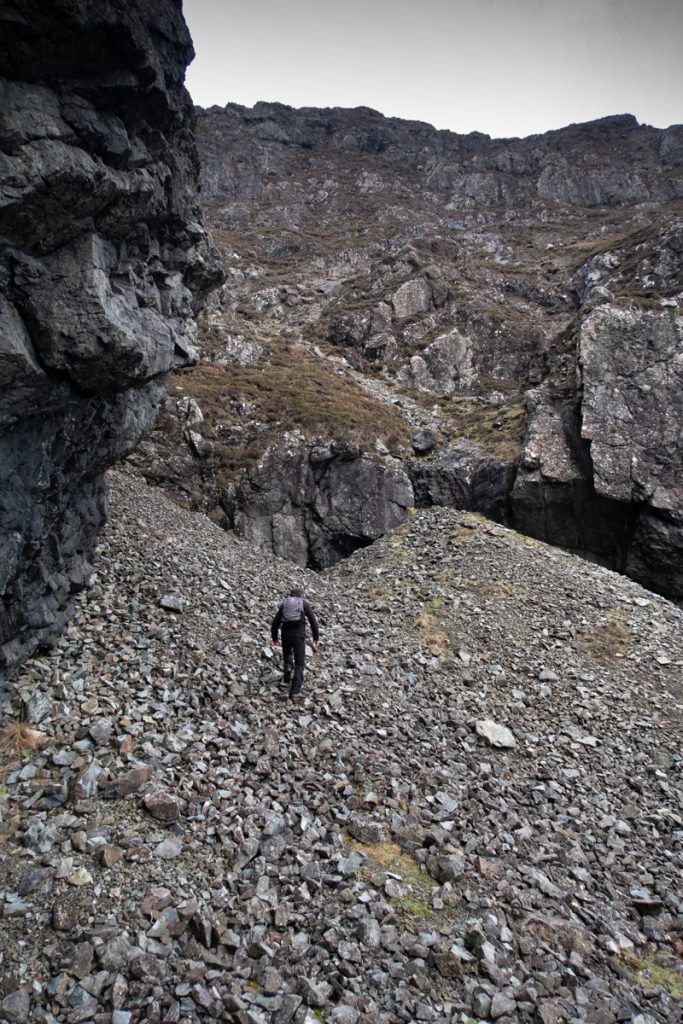
From here onward the terrain again becomes increasingly difficult. passing between huge cliffs and steep boulder and scree fields we headed north aiming for Rubha na Faolinn with plans for exploring some of the incredible geology and features along the way.
The cliffs of An Garradh reach 300m above sea levelTraversing below the cliffsShipwreck remains on the coastFrom sea level to 270m near Bealach Luirginn
As we neared Lord Lovat’s bay we were optimistic that we may be able to explore Lord Lovat’s Cave. During the 1745 Jacobite rebellion Lord Lovat hid here in a cave with a chamber of around fifty feet in length. Lovat was a Jacobite and clan chief, known to switch allegiances at points he was eventually defeated at the Battle of Culloden and beheaded. During his time int he cave he was helped by the owners of Lochbuie House who supplied with with provisions.
Unfortunately a landslide of rocks has blocked the entrance to the cave, so our exploring was limited! However the area does still has a special feel to it if you are feeling imaginative!
Looking over Lord Lovat’s BayThe blocked entrance to Lord Lovat’s CaveSunset over Laggan and Lochbuie
Our route continued around the coast towards the stunning Laggan and Lochbuie, one of Mull’s most picturesque areas to visit. We opted to explore some of the hill country here too, before finishing our day with assistance of head torches!
If you would like to plan your next day out on the island then you may be interested in our series of more conventional walking routes, all detailed with Ordnance survey maps with routes marked on and photographs of the terrain: Isle of Mull Walking Guide
Winter on a Hebridean island brings many things to mind – dramatic tides rolling onto exposed beaches, cosy nights beside the wood burning stove and wrapping up warm to watch for the Northern Lights. Whether your stay is filled with crisp winter sunshine or atmospheric seasonal storms, here are a few outdoor activities on Mull to enjoy in the quiet winter months.
1 Enjoy Stargazing
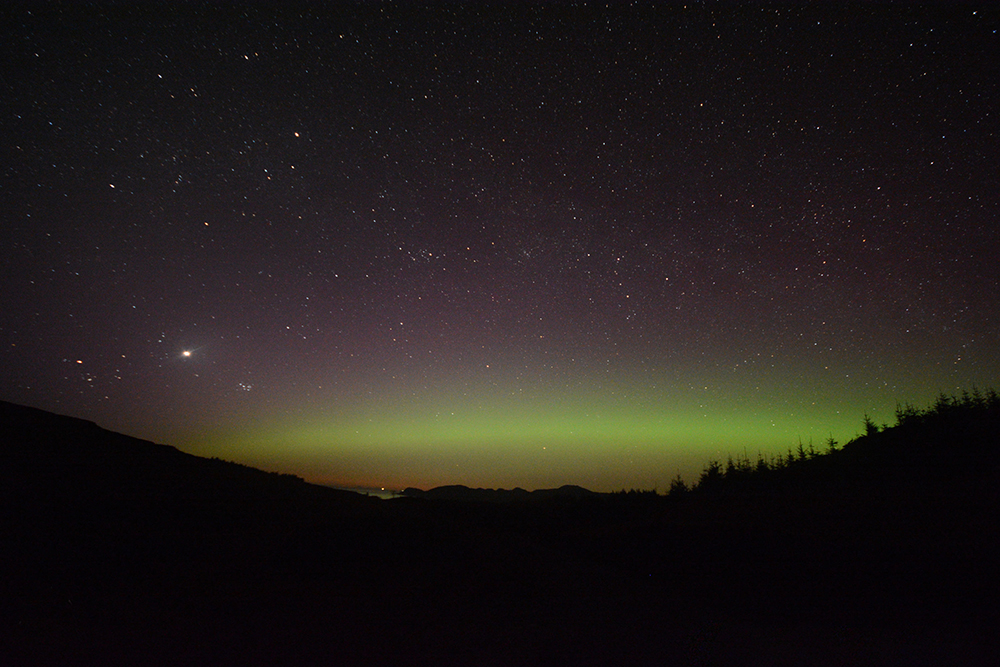
The long dark nights that cloak the Hebrides during the winter months offer a superb opportunity for budding astronomers and stargazers alike. Head out on a clear night and see what you can spot.
For the luckiest, cast your gaze northwards and you may even see the dancing colours of the Northern Lights, which are spotted here throughout the winter months when the solar energy is right. Find out more about stargazing on Mull.
2 Fossil Hunting
Not to collect and take home, but certainly to marvel at. On a bright, calm day, there are two paths to pick from.
For the adventurous, the dramatic route from Tiroran to the Fossil Tree (it’s known as the wilderness peninsula for a reason!) at low tide will take your breath away.
For an easier going amble, the circular walk at Ardtun on the Ross of Mull enables you to enjoy the stunning coastal scenery as you scout out fossil leaf beds, which once stood beside a prehistoric lake!
3 Watch for Wildlife
During the winter months, the red deer descend from their home ranges in the hills and are often seen at lower levels, making winter an ideal time to see them up close.
Much of the island’s wildlife remains with us through the winter – the eagles, otters, seals and more call Mull home year-round. And then there are the seasonal visitors, for whom winter signals their season of return – keep an eye out for the rare Great Northern Diver among others.
4 Go Fishing
At this time of year, fisherman’s huts come in especially handy to shelter from the weather if needed. Tackle and Books in Tobermory are the people to ask to secure your permits to fish, with the Mishnish Lochs a pretty spot with shelter if you need it, or the Aros Park lochan, where you can take cover beneath the trees.
5 Bag Castles
Make your first Duart Castle – while it closes its doors to visitors over the winter months, you’ll enjoy magnificent views of the castle as you approach Mull on the Oban to Craignure ferry.
From here, several beautiful castles await, some ornate and privately owned, like Glengorm, which can be seen from a distance on the walk to the Bathing Pools, or Torosay Castle, which peeks through the trees on a coastal walk from Craignure.
Others act as relics of the past, like the 16th century Aros Castle, where ruins remain statuesque on the hilltop beside Salen Bay and the Aros estuary. Moy Castle, visited by a beautiful coastal path from Lochbuie, is another castle majestic in its age and well worth the walk to.
6 Step Back in Time
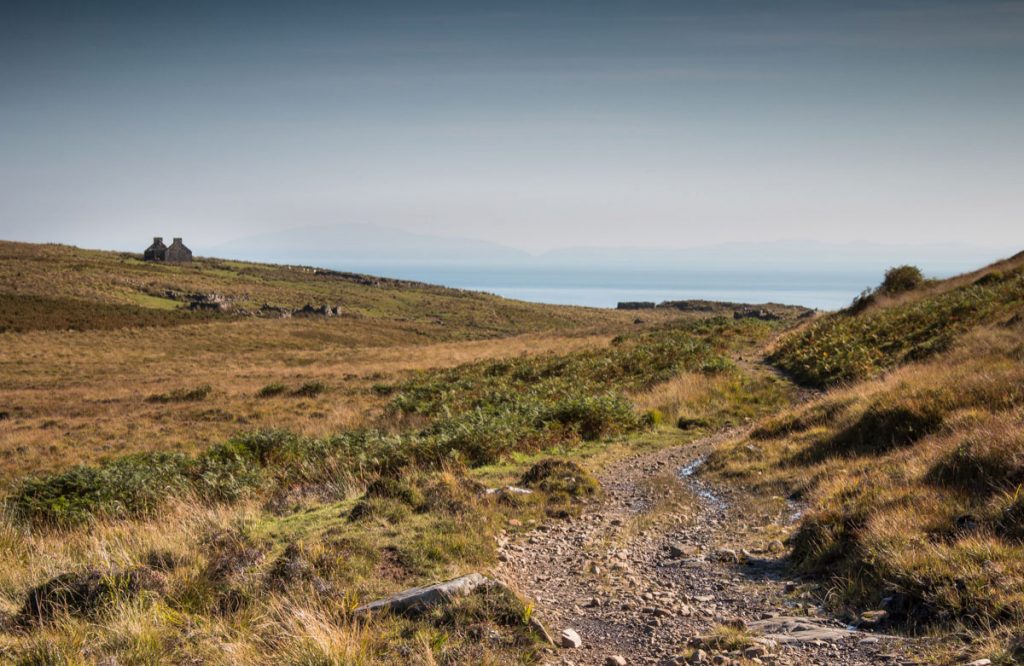
Follow coastal paths to ruined villages that serve as a poignant reminder of the Highland Clearances island-wide. From the Ross of Mull, the path to Shiaba is a stunning, windswept coastal walk with pretty beaches to pass by.
Further north, walk the Treshnish Headland for more spectacular sea views, passing the ruined village of Crackaig as you go. From Tobermory, the walk to Ardmore Point is only a few minutes’ drive, where again, ruined cottages pay testament to times past.
Feeling inspired by these winter activities on Mull? Visit the island at its quietest and enjoy an excellent value winter break – choose from one of our cosy cottages available this winter.
Whether you’ve booked a cottage in the island’s wild south west or are planning a day trip from Tobermory, discover 10 reasons to explore the Ross of Mull. From beaches to island hopping, wildlife to rocks, there’s plenty to inspire your next holiday on Mull.
Fidden beach on the Ross of Mull
1 Breath-taking Beaches
From Knockvologan’s sheltered coves, dotted with pink granite outcrops, to the glittering seascapes of Uisken and Ardalanish with views to outlying islands, to little known sandy beaches flanked by hills and reached by the adventurous – the Ross of Mull has it all. There are beaches you can park beside and beaches well off the beaten track. There’s even a beach rumoured to be a favourite among the Royals! Choose your favourites to visit with our guide to beaches on the Ross of Mull.
2 Isle of Iona
No where on Mull is it easier to experience the charming island of Iona, than from a cottage on the Ross of Mull. Whether you pick Pennyghael, Ardtun or even Loch Assapol as your location for the week, the short ferry crossing from Fionnphort to Iona is within easy reach. Iona makes an excellent day trip with a visit to the Abbey, a walk to hear the corncrakes in season, or a stroll to the beautiful Bay at the Back of the Ocean.
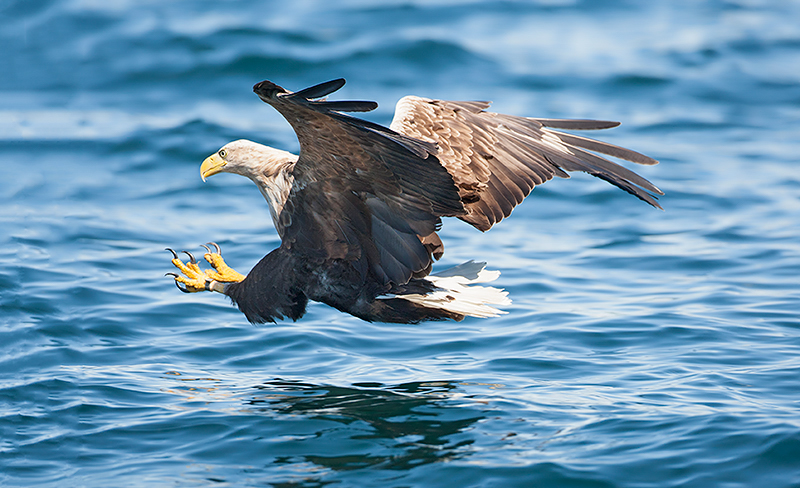
Sea eagle dives for fish
3 Wonderful Wildlife
Mull is well known as a wildlife capital and the Ross of Mull is no different. Spend some time exploring loch and land with the chance to encounter otters, white tailed sea eagles, golden eagles, red deer and seals. If you’re particularly lucky, you may even spot dolphins or a porpoise passing through the sea lochs, or escorting a local fishing boat back to shore. There are even cottages where you can watch wildlife from the window, with hen harriers often sighted from Keills Cottage.
4 Locally Landed Seafood
The Ross of Mull forms a narrow peninsula, bordered by sea on both sides. The proximity to the coast means seafood is often top of the menu. Enjoy the locally landed catch in a laid-back setting at the Creel Seafood Bar beside the ferry slipway in Fionnphort, or for fine dining, book a table at Ninth Wave.
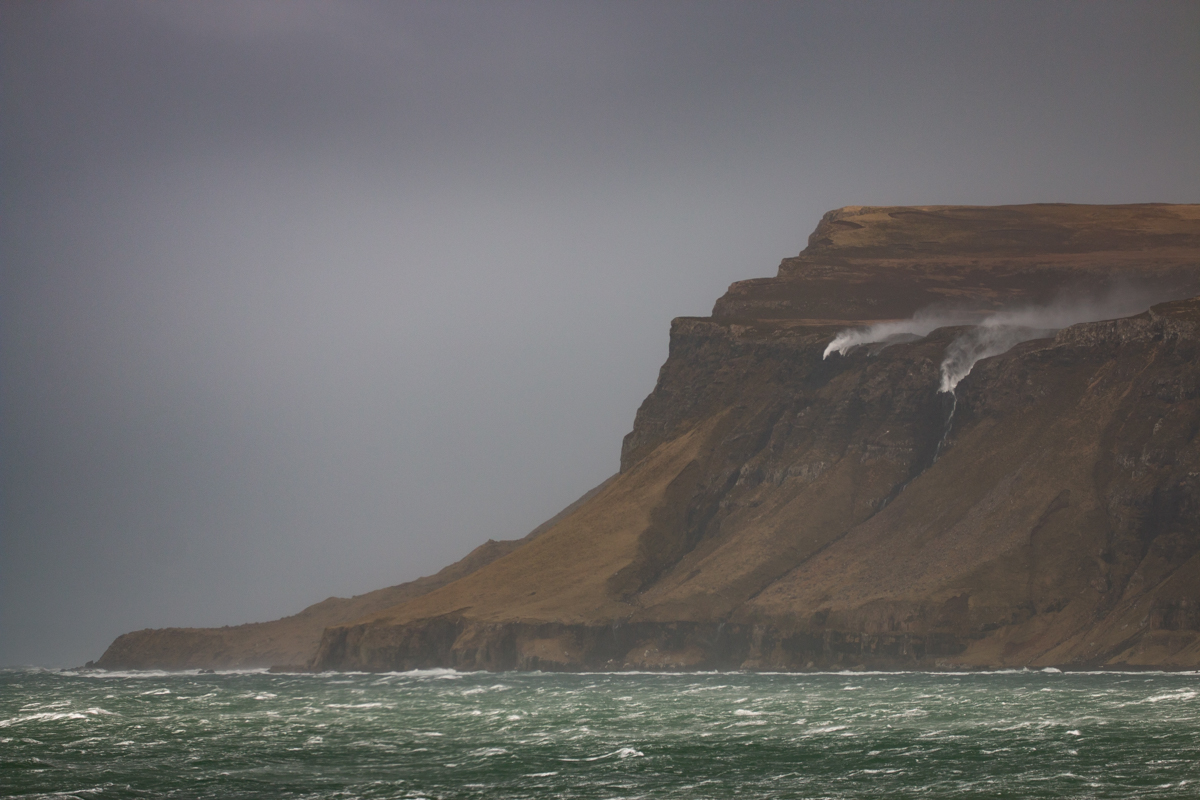
Mull’s wilderness peninsula with a waterfall in reverse during high winds
5 Wilderness Peninsula
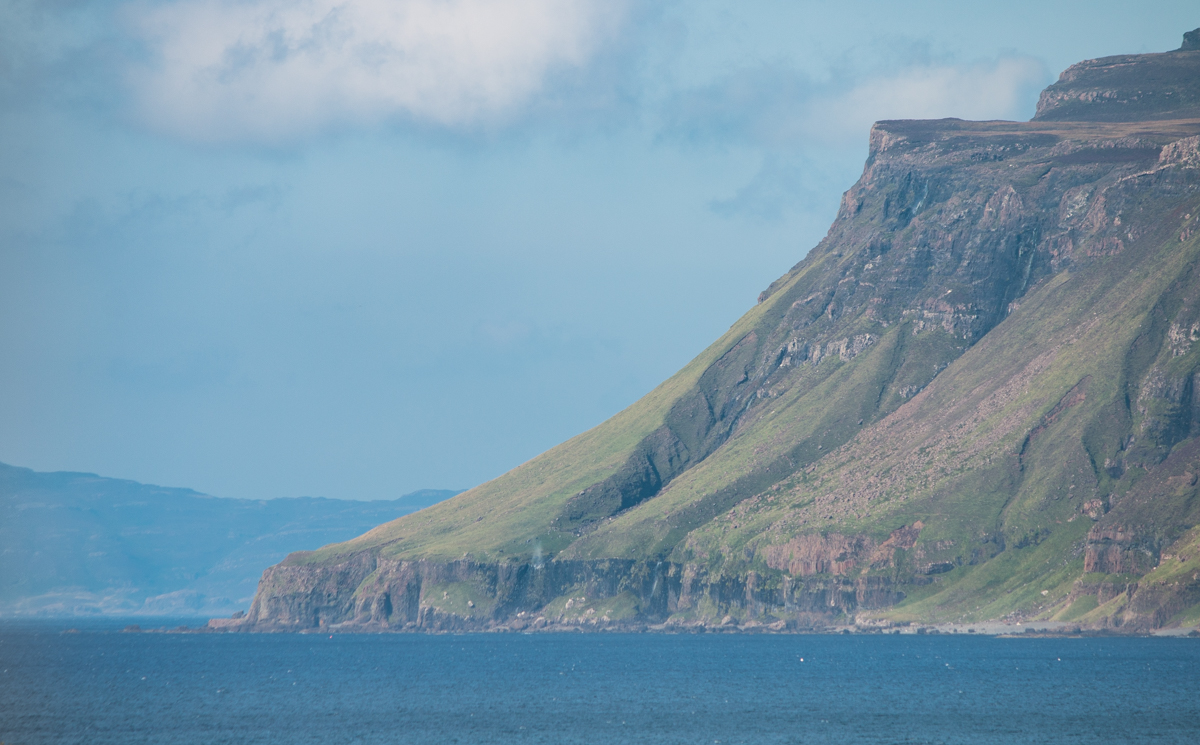
The beautiful waters of Loch Scridain carve their way along the north side of the Ross. Across the water, the dramatic Ardmeanach peninsula comes into view. This wildly beautiful area is easily reached by taking the road signposted the ‘Scenic Route to Salen’, then bearing off beside Kilfinichen Bay, following singposts for Tiroran and the Burg. From the designated parking area, there are dramatic landscapes to explore, with a day-long hike leading you to MacCulloch’s Fossil Tree.
6 Great Geology
This part of Mull has a distinctly different geological makeup to much of the island. Pink granite rocks stand out in the landscape and glow beautifully come sunset. The beaches at Knockvologan and Fidden offer great examples, as does the walk past the disused quarry at Fionnphort. Further along the Ross, you can also explore the shoreline at Ardtun to encounter striking fossil leaf beds.
7 Carsaig Arches
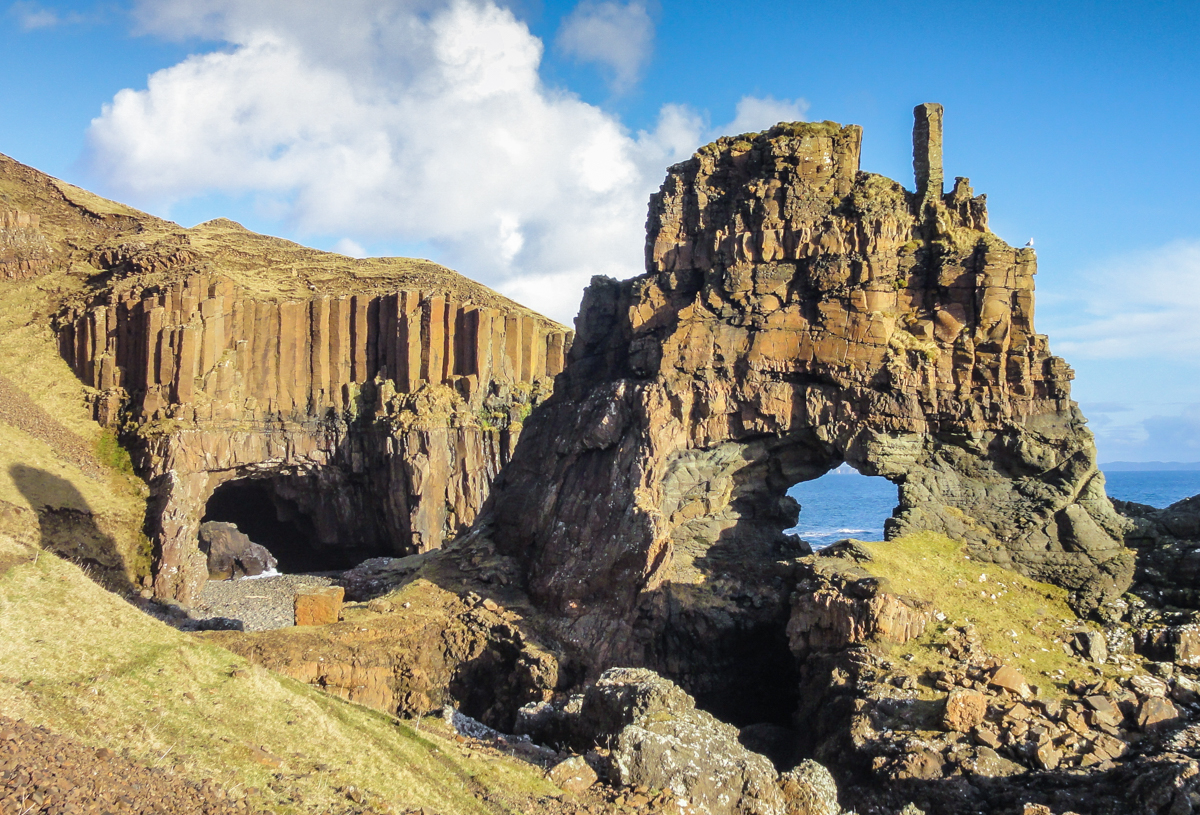
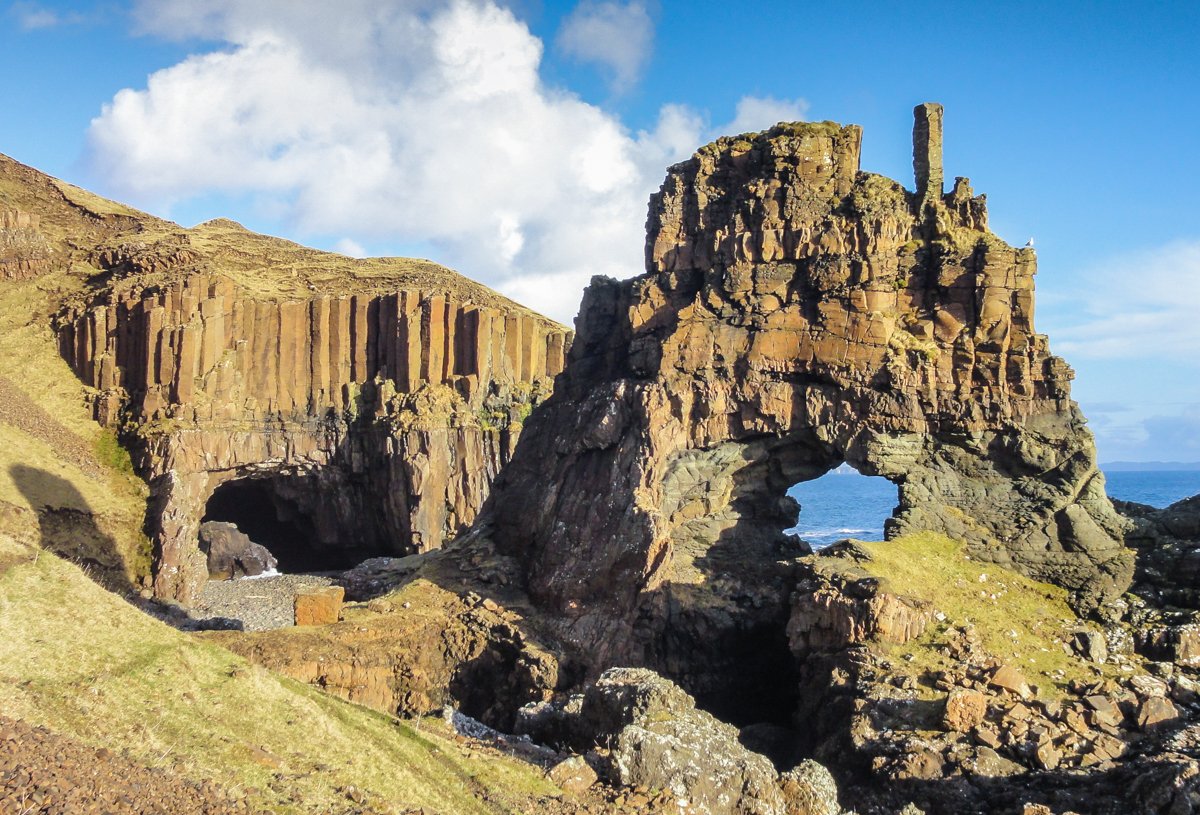
The amazing geology doesn’t stop there, because at Carsaig, arguably one of Mull’s most magnificent natural features awaits – the Carsaig Arches. Reached by a dramatic and nerve-tingling walk along challenging coastline, the route will test your bravery at times, but the reward when you reach the arches is spectacular. Find out more about getting there with our guide to visiting the Carsaig Arches.
8 Crofting Culture
The Ross of Mull has a strong history of crofting. You can still feel the tradition as you explore the local area to this day. Call into the Crofter’s Kitchen at Kintra to stock up on local produce, or take part in a craft workshop at Ardtun’s local willow croft. There’s also the Ross of Mull Historical Centre to explore.
Dramatic basalt columns on Staffa
9 Sailings to Staffa
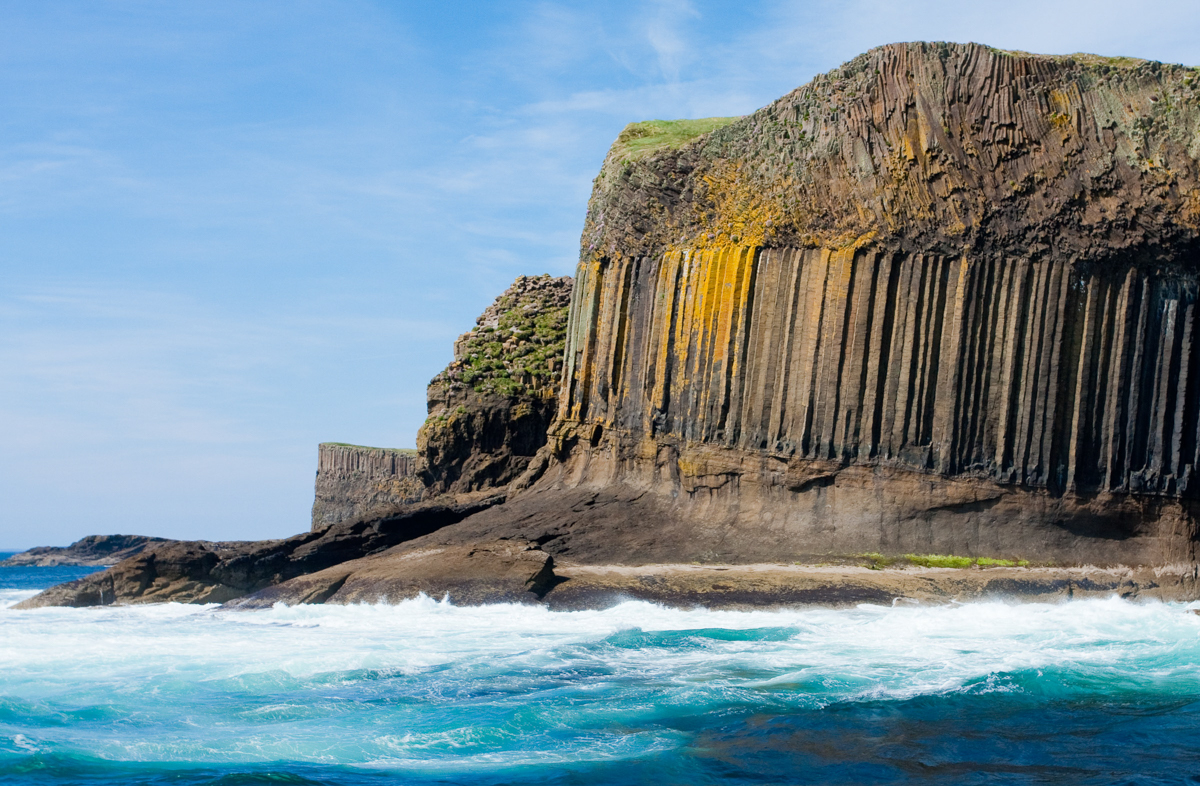
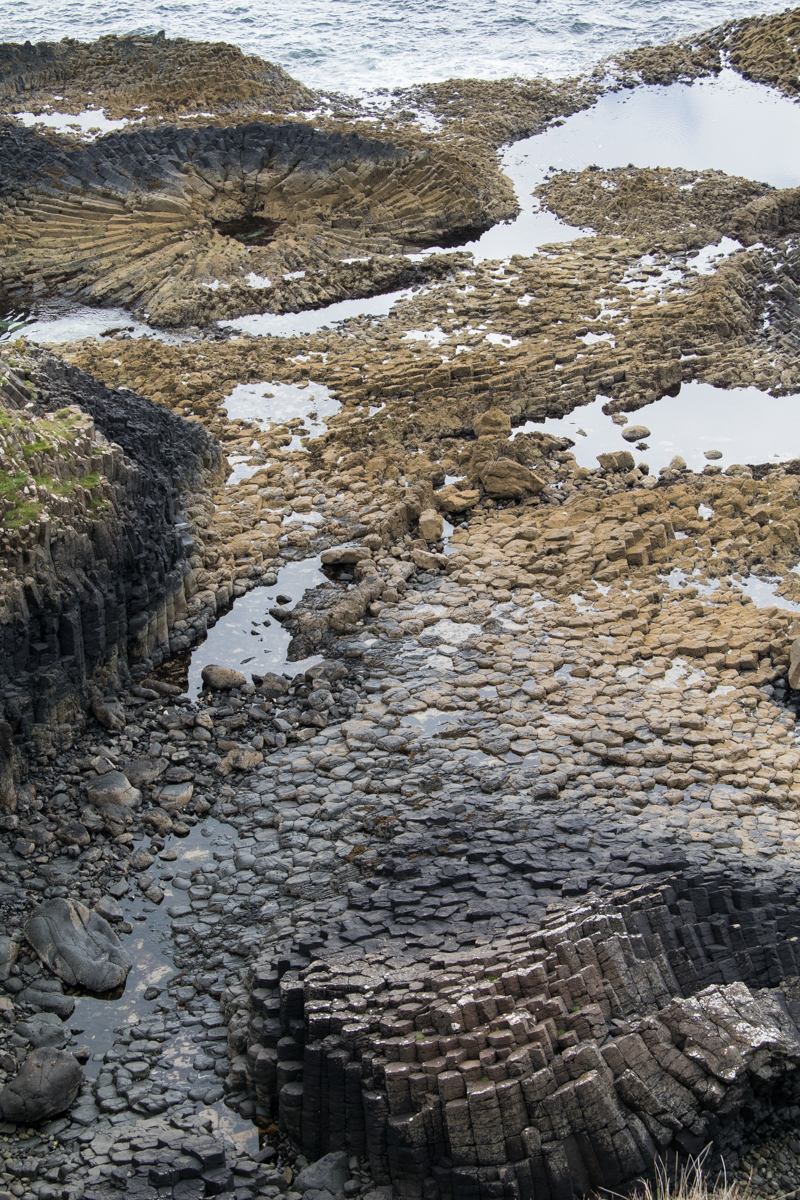
As well as affording easy access to Iona, you can also sail for Staffa from Fionnphort on the Ross. In early summer, visit to meet the characterful puffins, who will be busy in their burrows raising this year’s young. All year round, boat trips to Staffa promise the magic and drama of experiencing Fingal’s Cave and the dramatic basalt columns the island is famous for.
10 Island Hopping
If visiting Iona and Staffa haven’t quite completed your island-hopping fix, then you can also visit one of Mull’s least explored outlying islands from the Ross of Mull – the Isle of Erraid. At low tide, you can walk across the tidal sandbar on Knockvologan beach to reach Erraid. But do make sure you consult the tide times! Make sure you’re back on Mull before high tide cuts Erraid off. Walk to the island’s disused lighthouse observatory or visit the sandy beach on the island’s south coast.
We’ve all had a little more time than usual to explore the local landscapes lately. It’s been no different here on the Isle of Mull, with many of us heading out to enjoy the coastline, woodlands and glens on our doorsteps. Here, we hope to inspire you to explore the island on foot with some of the best walks on the Isle of Mull.
Choose from these five of our favourites to get you started, from hill walks to wildflower meadows and geological wonders.
1 Summit Ben More
Of course, no guide to the best walks on the Isle of Mull would be complete without a nod to the island’s only munro. Ben More makes a fantastic peak to climb starting from the shore of Loch na Keal at Dhiseig.
In fine weather, enjoy clear skies and fantastic views over Mull’s mountainous interior from the top, as well as excellent panoramas across to Iona, Staffa and the Treshnish Isles as you descend. For a more challenging climb, ascend via Beinn Fada.
2 Marvel at the Carsaig Arches
One of Mull’s most photographed features by intrepid walkers, the path to the Carsaig Arches is not for the faint hearted, but promises a breath-taking natural spectacle at the end.
It’s best done in fine weather as you hug the exposed, rocky coastline on the there and back route. You may find sure-footed wild goats and red deer keep you company!
3 Walk among the wildflowers
If you’re staying in a cottage in the north of the island, make a point of planning the Treshnish Point circular walk during your stay. Parking on the west coast of the island, this track leads you around the coastline past pebble beaches, the whisky cave and ruined village of Craickag.
There’s a chance to spot cetaceans off the coast, but what makes this walk most remarkable is the stunning display of wildflowers in early summer.
4 Trek to the Fossil Tree
Keen walkers will relish the opportunity to explore the remote and wild Burg peninsula in the south west of the island.
Parking in the designated area at Tiroran, head out for an all-day hike and experience some of Mull’s most remarkable coastal landscapes and wildlife, as well as the remains of a historic dun.
Consider the tides before setting out to ensure you’ll be able to descend to the Fossil Tree, before retracing your steps.
5 Venture beyond the Three Lochs
The Three Lochs are a regular pausing point for those enjoying the stunning drive through Glen More, but few venture further than the viewpoint. However, the surrounds of this chain of lochs offer excellent walking opportunities.
Enjoy a low level amble around the lochs themselves, keeping your eye out for hen harriers and short eared owls quartering the grassland. For hill walkers, the climb up Ben Fhada, with the optional addition of Creach Beinn, will offer plenty of interest. Although not always a path well trodden, this is undoubtedly one of the best walks on the Isle of Mull with stunning scenery on both routes.
Discover more fantastic walks on Mull in our extensive guide.
The Isle of Mull is one of the easiest islands to reach in the Hebrides, with regular ferries arriving on the island from Oban, Kilchoan and Lochaline on the Scottish mainland. It’s also one of the most exciting to explore, with mountain glens, shell-sand beaches and the vibrant town of Tobermory all to be enjoyed. We’re here to help get you started with 50 of the best things to do on the Isle of Mull. Off we go!
Wildlife
Encounter the white-tailed sea eagles
Explore the coastline for a lucky glimpse as eagles visit their feeding grounds, or book a guided tour with a ranger at Mull Eagle Watch.
Scan the shoreline for otters These often-elusive creatures could test your patience, but when it pays off, the chance to see otters in the wild is well worth the wait.
Watch golden eagles soar over the hills
The more mountainous parts of the island, like dramatic Glen More, are a good place to look.
Look out for deer
A regular sight, red deer outnumber people on the Isle of Mull by three to one! Fallow deer can also be found in a few parts of the island.
Take a wildlife tour
A brilliant way to begin the week, giving you plenty of tips and places to visit during the rest of your holiday.
Meet the puffins on the Treshnish Isles
From April to July, land on Lunga to experience these ground-nesting birds close up. Boat trips depart from Tobermory and Ulva Ferry.
Go whale watching off Mull’s north coast
With the chance to see minke whales in the waters around Mull, this boat trip is a must. You could also spot basking sharks and harbour porpoise, too.
Spot dolphins from a boat trip to Staffa
It’s not uncommon for a playful pod of dolphins to accompany your boat as it sails towards Staffa and Fingal’s Cave.
Look for the corncake on Iona
There are around 40 pairs of nesting corncrake on the Isle of Iona, reached via passenger ferry from Fionnphort on Mull.
Visit the aquarium
Pay a visit to Tobermory’s catch-and-release aquarium located in the harbour building at the end of the colourful Main Street.
Walking
Walk to Carsaig Arches
One of the most ambitious walks on the island, cross challenging terrain to reach one of Mull’s greatest natural spectacles.
Trek from coast to coast
Start from the old fishing boats at Salen and traverse the narrowest part of the island to reach the coast of Loch na Keal at Killiechronan.
Climb Ben More
Take the popular path from Dhiseig or tackle the more challenging A’Chioch ridge ascent.
Walk to the tidal isle of Erraid
Low tide exposes a tidal sandbar you can cross to Erraid from Knockvologan beach. Be sure to check tide times for your return journey to ensure you’re not cut off!
Explore the ruined village at Shiaba
Starting from Scoor in south west Mull, navigate the island’s coastal hilltops to reach Shiaba, with superb views out to sea.
Take a guided wildlife walk
Taking things at a slower pace can make it easier to spot Mull’s more elusive wildlife, with experienced guides to help.
Climb Dun da Gaoithe
A dramatic mountain to climb with views that stretch over the sea to the mountains of mainland Scotland.
Stretch your legs at Aros Park
Follow the crashing course of the dramatic waterfalls, take a tranquil walk around the lochan or follow the coastal path back to Tobermory.
Walk to a hidden beach
Head off the beaten track and discover the Isle of Mull’s many remarkable beaches that you can’t see from the roadside.
History & Geology
Explore the Mull Museum in Tobermory
From the island’s volcanic origins to its crofting roots, step back in time at the Mull Museum.
Visit the Abbey on Iona
A short passenger ferry crossing carries you from Fionnphort in south west Mull to the idyllic Isle of Iona.
Explore the disused pink granite quarry at Fionnphort
The pink granite rock is a distinctive feature on the Ross of Mull, with a lovely circular walk offering a glimpse at how the rock was once mined.
Visit the Ross of Mull Historical Centre
Discover the crofting traditions and challenging times of life on the Ross with exhibits, and pick up a guide book for the rest of your stay.
Walk around the fossil beds at Ardtun
A coastal walk with the chance to see columnar basalt and leaf fossils, revealing trees that once stood beside a prehistoric lake.
Visit the Macquarie Mausoleum
Take this gentle walk from Gruline to the Macquarie Mausoleum, which commemorates Sir Lachlan Macquarie who came from Ulva and became Governor of New South Wales.
Walk to ruined castles at Aros and Lochbuie Visit the ruins on the headland at Aros, just north of Salen Bay, or follow the south coast from Lochbuie to discover Moy Castle.
Visit the Iron Age fort at Aros
While you’re in the area, head uphill to the top of Cnoc na Sroine to see the remains of the Iron Age fort.
Climb up to crater loch
Experience Mull’s volcanic past feet first with a climb to the top of the crater loch, Lochan S’Airde Beinn.
Step back in time at Duart Castle
Spot the impressive seat of Clan Maclean from the ferry into Craignure, then pay the castle a visit for a tour.
Outdoor & Adventure
Go kayaking along the coast
You can even launch your kayak from the cottage when you stay at Seaview or The Old Church.
Wild swim in Calgary Bay
Discover more wild swimming spots around the island with our guide.
Visit Eas Fors waterfall
This multi-tiered waterfall tumbles down the hillside and into the sea on the island’s west coast.
Drive through the Glen More mountains
Pull in at the Three Lochs viewpoint for an incredibly scenic picnic spot.
Walk to the most north easterly point on Mull
This less-travelled walk takes you to Ardmore Point.
Visit MacKinnon’s Cave
Remember to check the tide times and pack a torch – the cave is bigger than you think!
Witness the Dakota memorial
Walk deep into the heart of Glen Forsa and you’ll pass the memorial to the 1945 Dakota plane crash.
Go mountain biking
There’s no shortage of biking trails on the island, passing through woodland, mountain and coast.
Play golf beside the sea
There is not one but two golf courses on the Isle of Mull – a nine-hole course with views to Ardnamurchan in Tobermory, and a course in Craignure with sea views across to the Morvern hills.
Go sea or river fishing
Pick up a permit for river fishing from Tackle and Books and make your own catch of the day.
Family
Visit Rainydays soft play in Tobermory
A great way to entertain the little ones if the weather is wild outside.
Walk the Calgary Art in Nature trail
Think of it like an artistic treasure hunt that leads down to the white sand beach.
Visit the gardens at Lip na Cloiche
Discover driftwood creations, wander through lush, jungle-like planting and enjoy the sea views from this magical garden.
See a play at Mull Theatre
Conveniently located just outside Tobermory, this makes a great addition to your holiday.
Go pony trekking along the beach
Ride through the waves and canter across the beach on surefooted Highland ponies.
Make a splash in the pool
The swimming pool at the Isle of Mull Hotel in Craignure is great for a swim whatever the weather.
Experience the Tobermory Highland Games
A day of bagpipes and competition, this traditional Highland fixture held each July is not one to be missed!
Build sandcastles on Knockvologan beach
One of the most beautiful beaches on the Isle of Mull with gorgeous sandy bays. This one is well worth a visit!
Attend a country show at Salen or Bunessan
See the Isle of Mull’s farmers and crofters turn out in their droves as their livestock compete in the show ring. Find out what’s on.
Visit the shipwrecks at Salen One of the most iconic locations on Mull, don’t miss a visit to Salen’s old fishing boats as you venture up the east coast.
Feeling inspired to visit the Isle of Mull? Book a holiday cottage and get your holiday plans underway!
It’s easy to see how the headland dubbed Mull’s wilderness peninsula earned its name. Venture out on the tidal walk to MacCulloch’s Fossil Tree and you’ll experience the wilds first hand, for while the route is for much of the way straight forward, the views are ruggedly magnificent.
Then, upon reaching the final leg of the outwards journey, the lower level scramble over rocks along the shore and the descent of the metal ladder to get there certainly add to the challenge. One made well worth it by the spectacular waterfalls and 55 million year old fossil tree.
Reaching the start
The walk to MacCulloch’s Fossil Tree begins just beyond Tiroran in south west Mull, so Gardener’s Cottage, Woodland Cottage and The Old Byre make excellent bases from which to begin the hike.
Coming from the Ross of Mull, turn left onto the ‘Scenic Route to Salen’, then a few miles on, take another left signposted to Tiroran and Burg. Continue along the lane until you reach the parking area. Coming from the north, follow the coast road along Loch na Keal heading south. Pass the Gribun cliffs and later, the Tiroran Community Forest before turning right at the signpost for Tiroran and Burg.
The walk to MacCulloch’s Fossil Tree
The walk to MacCulloch’s Fossil Tree follows the southern coastline of the Ardmeanach peninsula for much of the way, before rounding the headland as you approach the tree. Cast your gaze in the direction of loch Scridain, which sits at your side all the way out, and take in the beautiful Ross of Mull scenery beyond. There are eagles to watch, wildlife to spot and – if you’re very lucky – perhaps even a passing pod of dolphins.
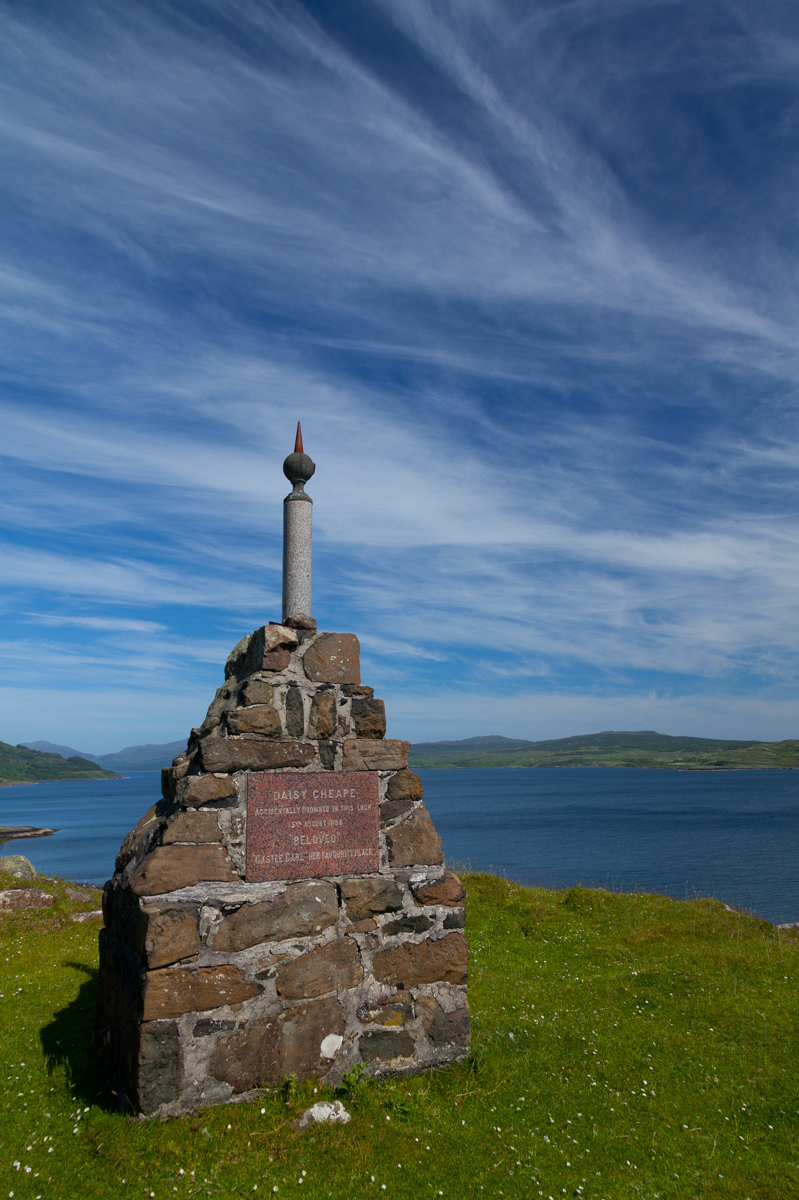
The route is easy going to start with, both for the navigator and for the feet. Simply follow the track towards the farm at Burg and then onwards through the woodland and the memorial to Daisy Cheape.
Bearing north to follow the coast round the peninsula, you enter the final stage of the walk to MacCulloch’s Fossil Tree. It’s here that the journey begins to feel more like a hike. Waterfalls punctuate the sea and wilderness views, being all the more atmospheric after a period of rain. When you reach the metal ladder, descend carefully to the rock-strewn shoreline below before reaching the fossil tree.
As you’ll be on the shore, this walk is best planned carefully with the tides to ensure you can actually reach the rocky beach below to explore. Turn away from the sea to face the cliff you just descended and take in the majesty of the fossil tree remnants, dramatically displayed within their basalt lava cast, before returning the way you came.
The walk to MacCulloch’s Fossil Tree will take the best part of the day. Prepare to enjoy some of the most staggering Isle of Mull scenery as you venture there and back.
Often heralded as one of the most challenging walks on Mull, a hike to the Carsaig Arches is undeniably also one of the most spectacular. It’s the uncompromising landscape that makes the route so tricky and yet so stunning. The way is punctuated by steep-sided cliffs and sheer drops, as well as being strewn with rocks. But it’s the same landscape that makes the experience so remarkable, even before you reach the arches themselves. For keen walkers, venturing to the Carsaig Arches is highly recommended.
Along the shoreline route, your gaze leads directly out to the sea south of Mull. On a clear day, it can land on neighbouring islands, or simply soak in the steady, rhythmic swell of the waves as they sweep in. Look out for Colonsay and Jura, unmistakable with its towering Paps, on the horizon.
Follow the shoreline west to reach the Carsaig Arches.
It’s not a walk for those not physically prepared to put in the best part of a day navigating difficult ground over uneven, rocky shoreline. Take provisions to keep your energy levels up and stay hydrated. Pull on your sturdiest pair of walking boots, because when you reach the Carsaig Arches and take in the naturally eroded features first-hand, you’ll be glad you made the trip.
The walk to Carsaig Arches on Mull
Your journey begins on foot from the small parking area beside the pier at Carsaig. Getting here in itself is a bit of an adventure. Turning off just outside Pennyghael, follow a narrow lane down hill. You will first pass a waterfall and red phone box before reaching the pier and sea.
Keep an eye out for the seals that often claim these rocks for a spot to slumber. They won’t be the only wildlife you can expect to meet. Wild goats roam the cliffs here, and eagles aren’t uncommon sights overhead.
View of Carsaig Bay at the beginning of the walk.
Head west around Carsaig Bay to begin your journey to the Carsaig Arches. Following the coastline makes navigating reasonably straight forward, which is helpful when the terrain demands more of your attention. Following the shore along enables you to appreciate the magnitude of the cliffs above, where you can still discern the different lava flows that formed much of Mull’s landscape 60 million years ago.
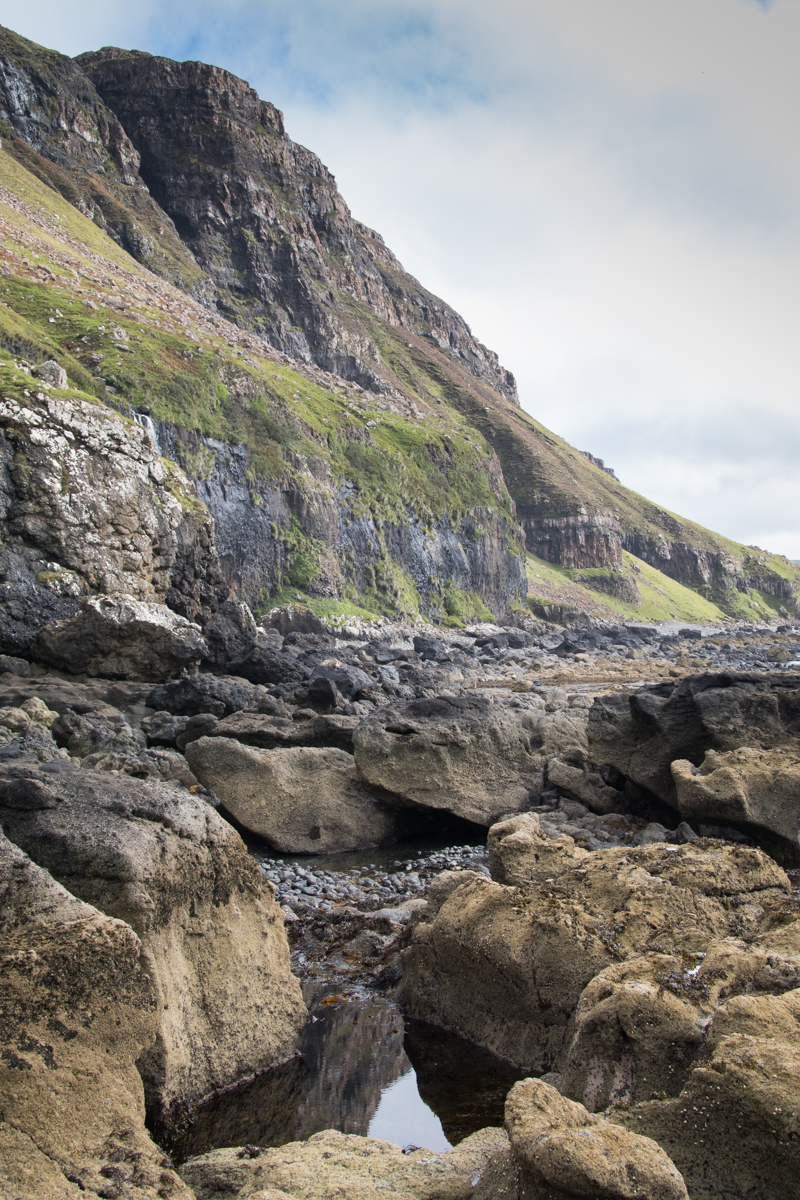
The shoreline around Carsaig has interesting geology.
As you walk, you’ll gain a unique insight into Mull’s intriguing geology. If you’re ready for a break, take some time out to pay closer attention to the rocks. You can even locate the KT boundary in the cliffs along the route. This section in the rock dates back to the event that caused the extinction of the dinosaurs.
The route to the Carsaig Arches runs along the shore at the base of these cliffs.
Reaching the Carsaig Arches
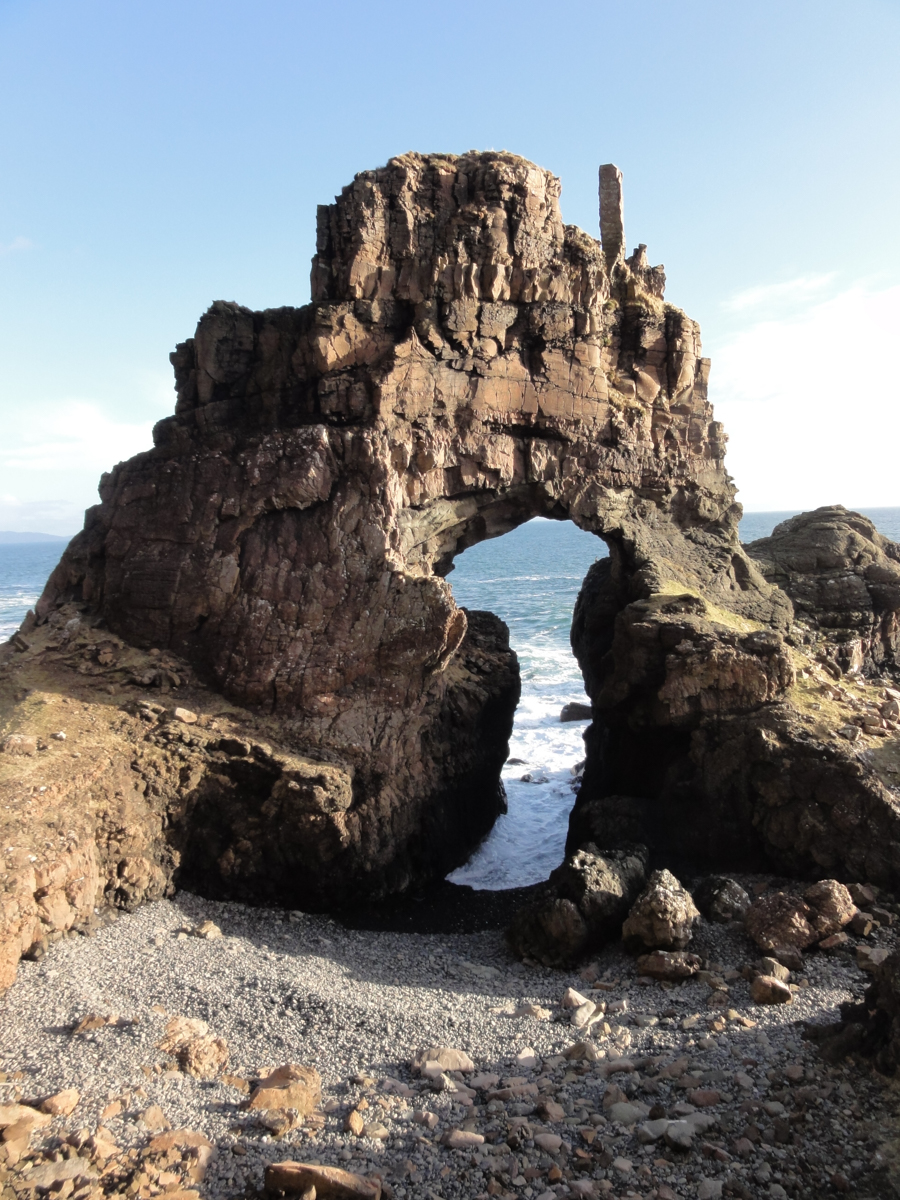
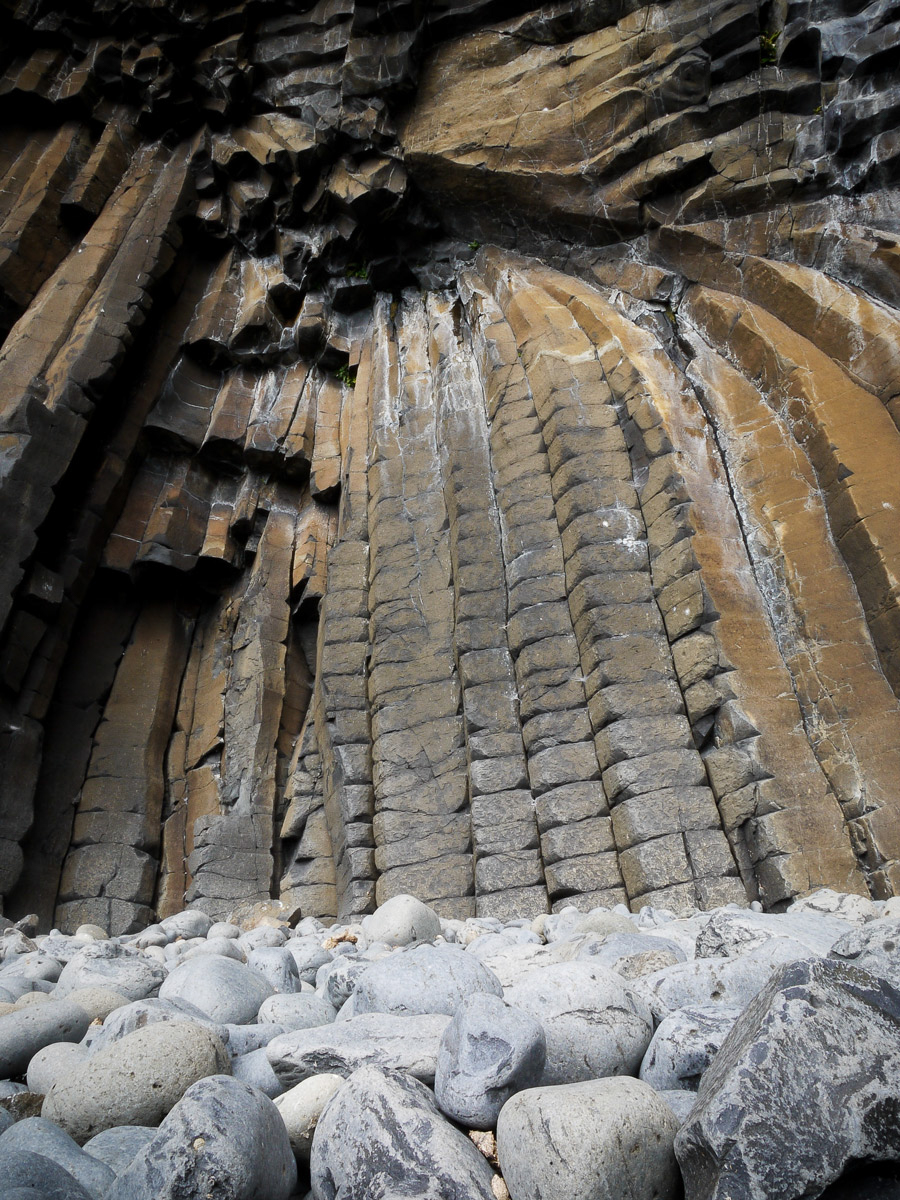
When you near Malcolm’s Point, you have almost reached the Carsaig Arches. Just a short distance on from here delivers you an excellent view. Take your time to photograph the arches, eroded by the tides into the rock. They are another example of columnar basalt, which you’ll also see on a voyage to Staffa and Fingal’s Cave.
The spectacular second arch, viewed at a distance.
It is possible to climb up to the second arch, but this comes with significant risks. The way is exposed, the path virtually non-existent and the drops to either side treacherous. For this reason, many prefer to take in the second arch from a safer vantage point, rather than ascending it. Return the way you came with a full camera and an amazing memory from your holiday on Mull. Discover more walks on Mull and check out a map of the route to the Carsaig Arches.
Waves crashing through the arch.
Note: Hill walking has inherent risks and dangers. Conditions change quickly and navigation can be difficult. Always make sure you are well prepared for any conditions and have the correct level of experience for your chosen route.
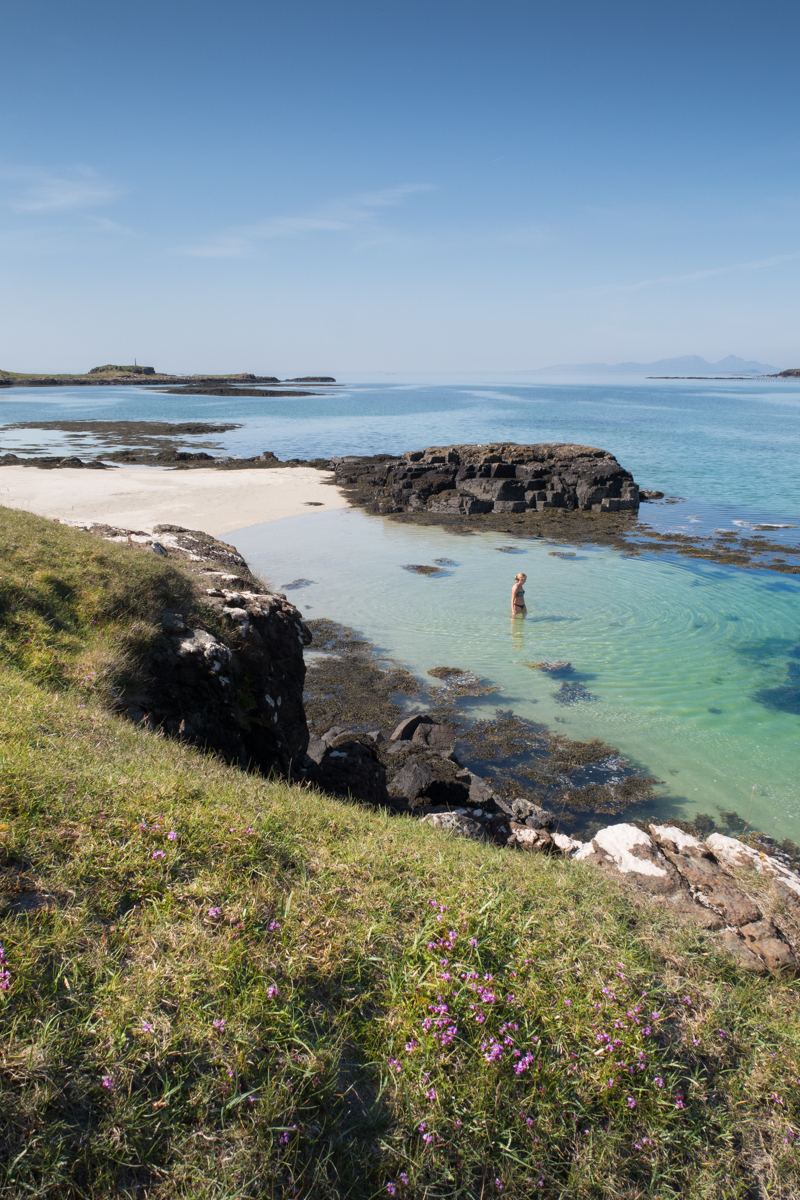
For the converted, wild swimming offers invigoration akin to the feeling of summiting a mountain for a hiker. The temperatures tend to be bracing, the experience intrinsically in touch with the elements. Depending on where you choose to go wild swimming on Mull, it can be just as physically challenging as cresting a peak too.
Practised with care, wild swimming on Mull opens up an entirely new experience of the island from its waterways. Float in silent bays, cool off in pools filled by gentle waterfalls. Soak up the island views, often from sea level, and connect with nature anew. Here are some places you could try wild swimming on Mull.
Wild swimming in North Mull
Croig
A visit to Croig in itself is a real treat, but it’s also a brilliant spot for wild swimming on Mull. The wee harbour has oodles of charm, with traditional stone walls, a sleepy feel and fishing pots piled by the pier. You can park the car by the roadside before setting out on the path that meanders along this stretch of coast.
You’ll find several sandy coves that are oh-so appealing for a wild swim, with the walk back to the car a good way to warm up after dipping into the water.
Calgary
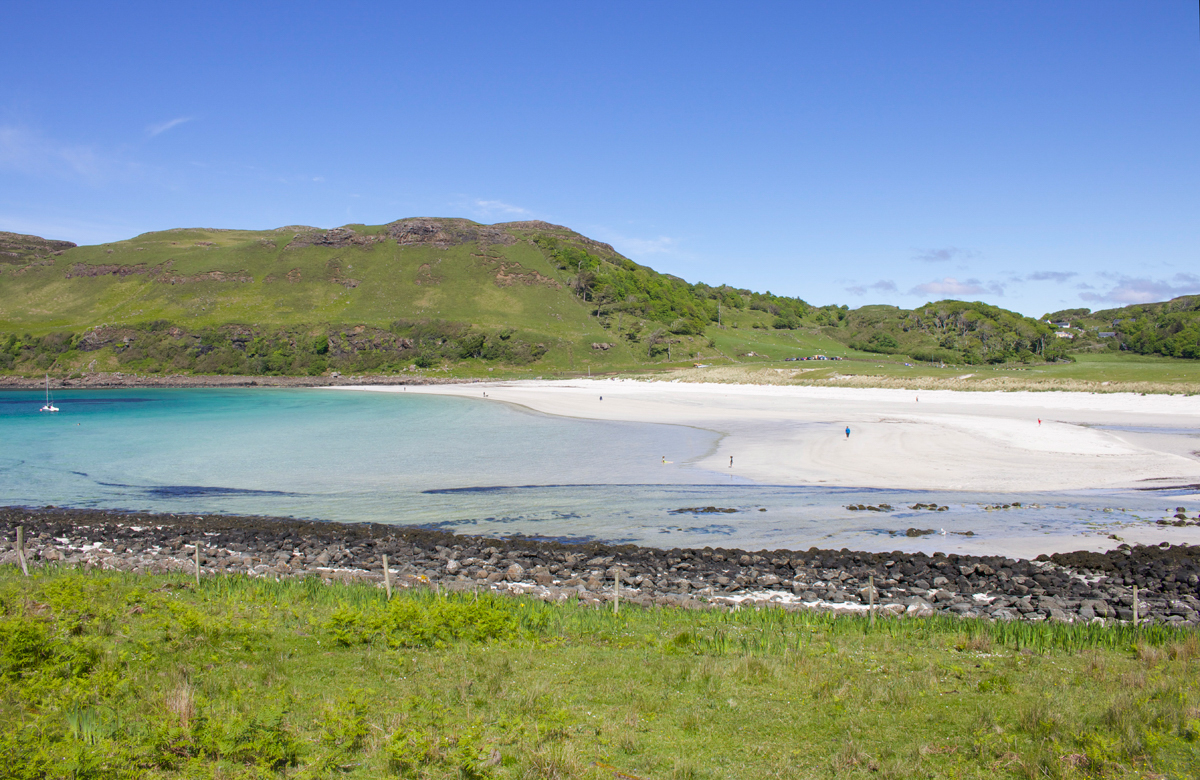
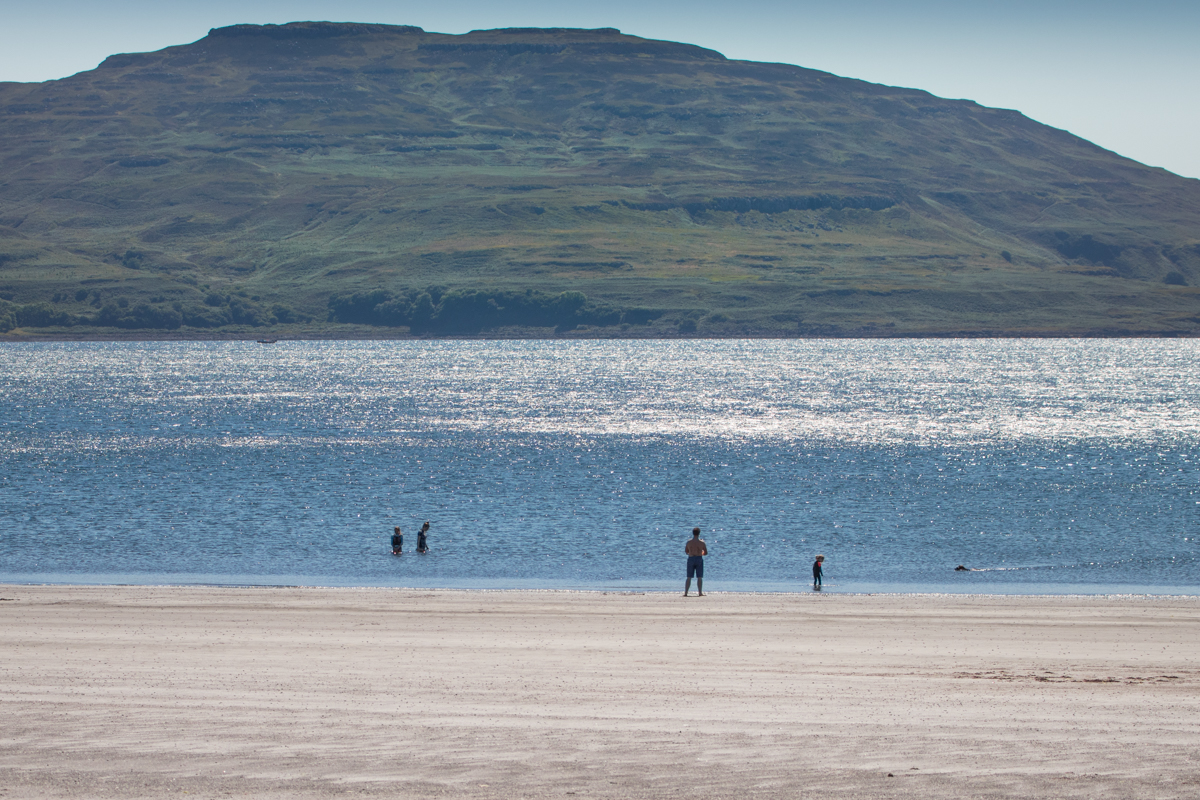
Perhaps unsurprisingly given its reputation as Mull’s most beautiful beach, the clear waters of Calgary Bay are another hotspot for wild swimming on Mull. You’ll find plenty of visitors donning a wetsuit and taking a dip, while the hardiest head straight in in costumes. The horseshoe-shaped bay and headlands to either side mean the waters are fairly sheltered here.
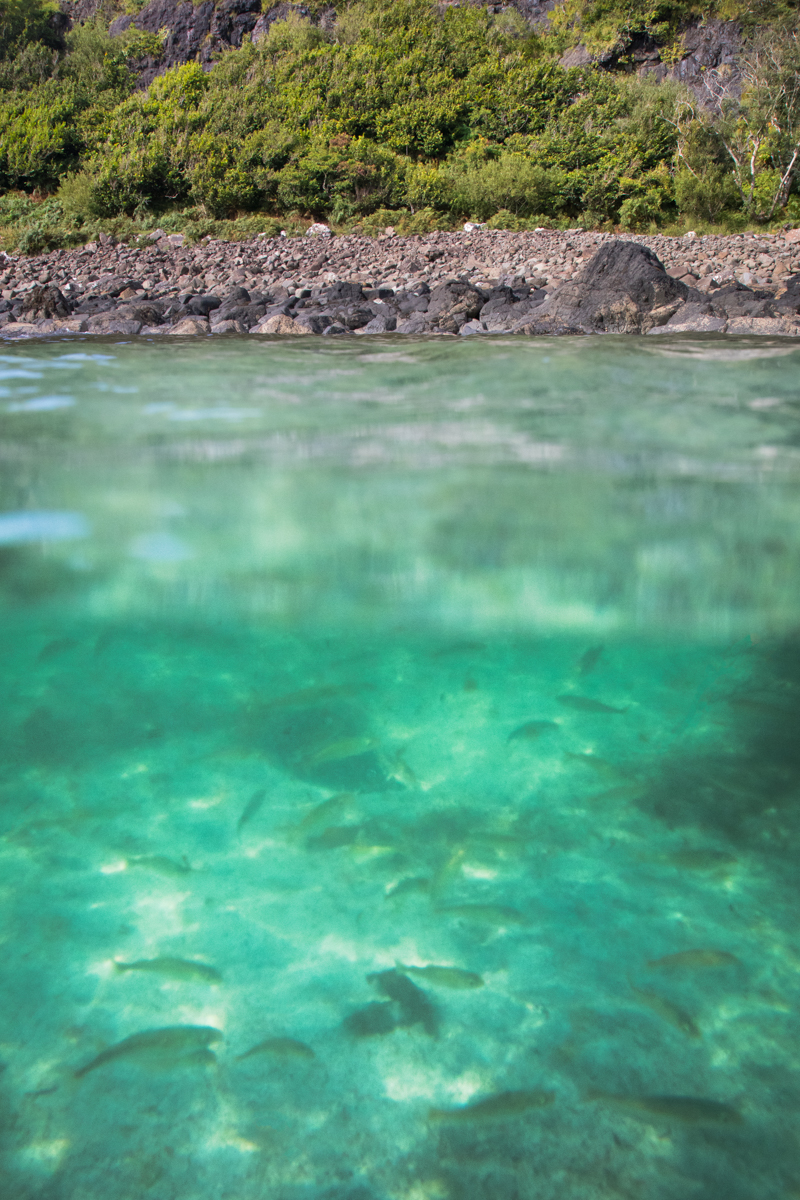
And as with the best of wild swimming on Mull, you won’t be the only one out for a paddle. Calgary Bay’s waters are incredibly clear, giving you excellent views of the fish that flit about beside you.
Making a splash on the West Coast
Ben More Pools
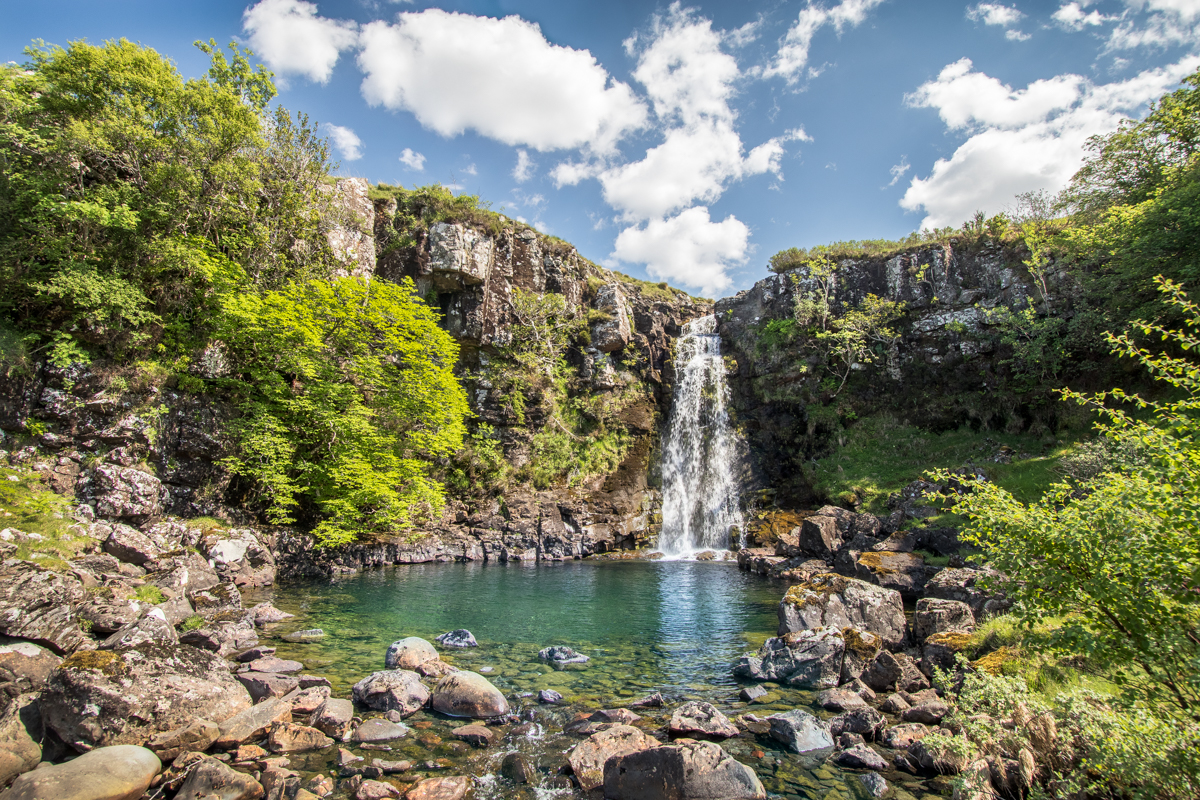
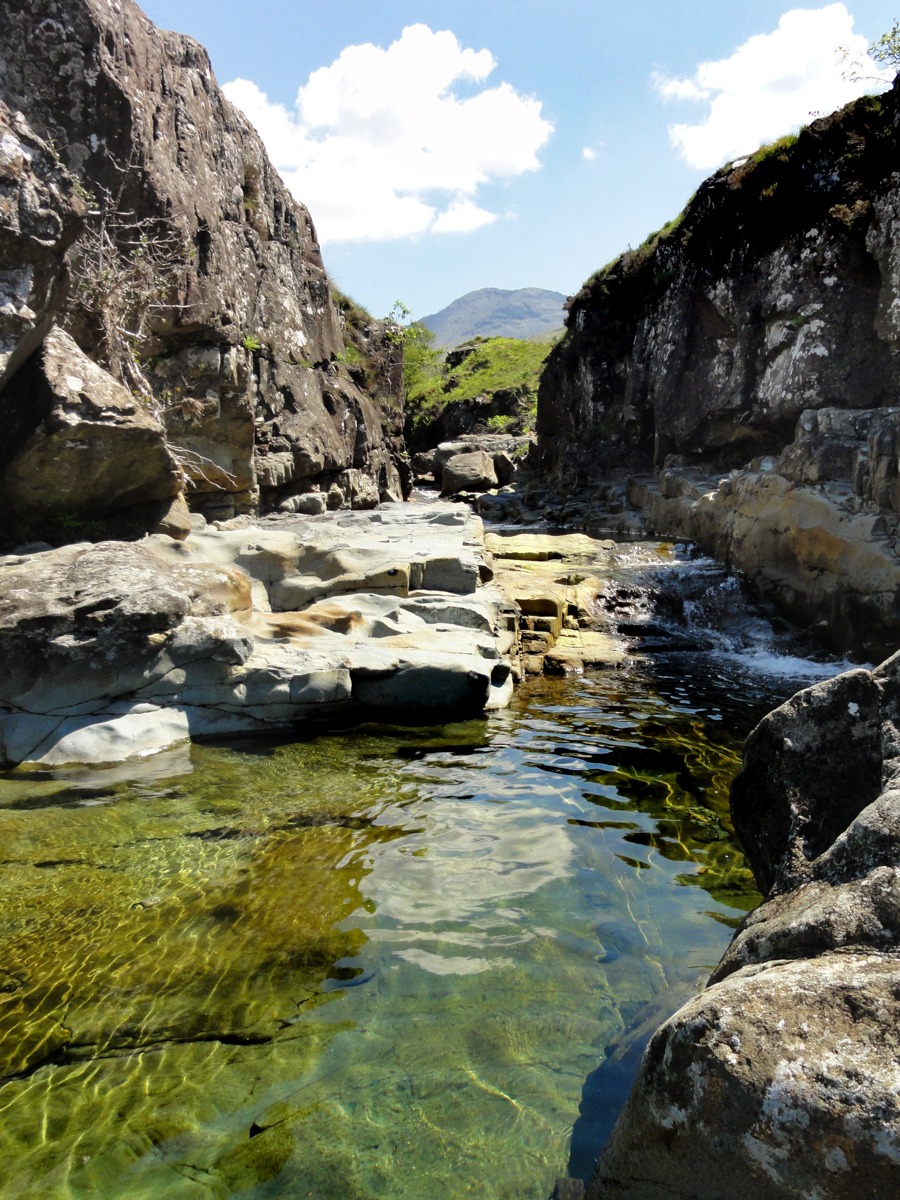
Ben More may be best known as a munro to bag, but explore its slopes and foothills and you’ll find some enchanting wild swimming spots too. This crystal-clear pool is filled by the waterfall, creating an ultra atmospheric experience. You’ll almost certainly have the pool to yourselves.
Traigh na Cille
You’ll often hear this beach referred to as the ‘Black Beach’ thanks to its grey sands. Like many of Mull’s beaches, you’ll need to walk a short distance to reach the water at Traigh na Cille, rather than stepping from the roadside onto the sand. That makes it essential to bring your towels and warm clothes with you.
Taking a dip on the Ross of Mull
Knockvologan
Unless you’re staying locally, reaching Knockvologan beach demands a fair drive, albeit through lovely scenery if you head down the west coast, or through the dramatic mountains of Glen More. It’s a journey that more than pays off though, as this beach is filled with secluded coves, white shell-sand and crystal clear waters. Depending on the tide, there are good areas of shallows, which warm up much more quickly than the deep end in the summer months.
Uisken
In contrast to the bays at Croig and Traigh na Cille, Uisken couldn’t be easier to reach. A short drive from Bunessan brings you to a beachside carpark, which fills quickly in summer as it’s only small. Bag your spot and the sand will be between your toes in seconds! This is another sheltered bay, where you can swim while gazing out to the Paps of Jura.
Dun a’Gheird
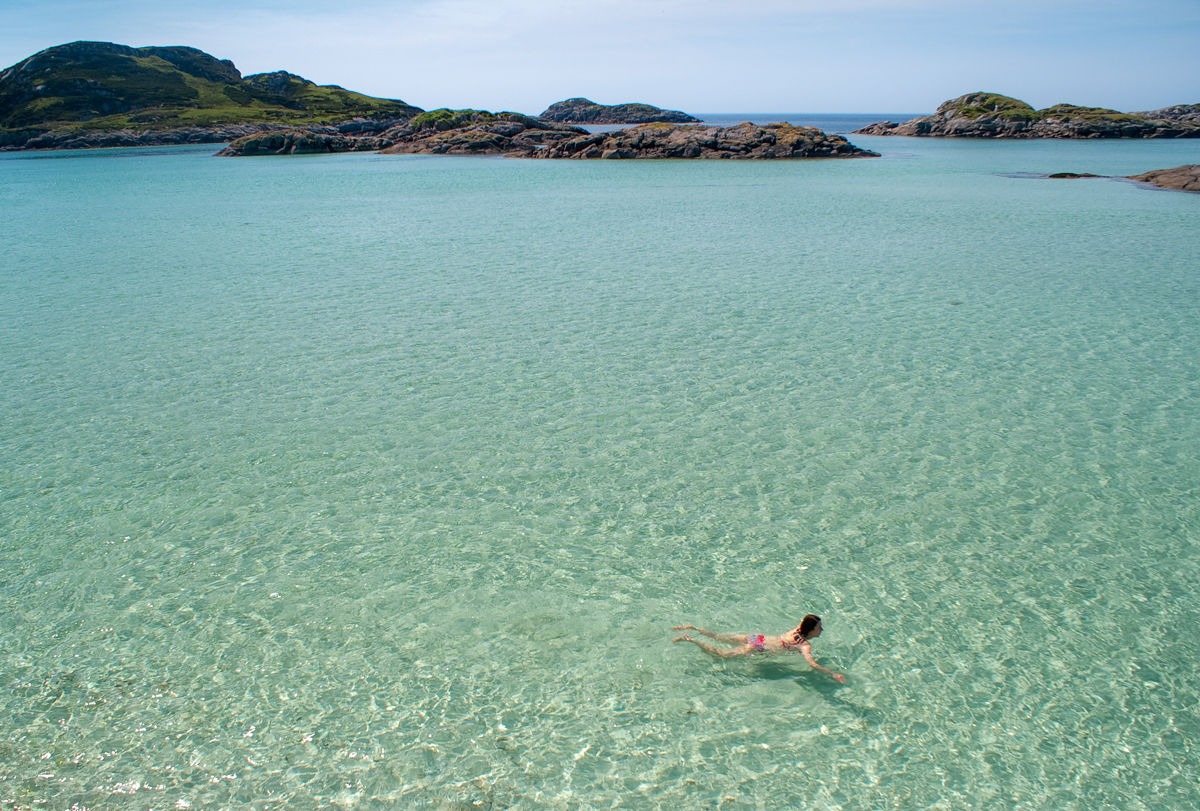
If you’re set on having the beach to your group alone, pull on walking boots before your wet suits. A small amount of exploration delivers you to seriously stunning white sand coves, like this one. Named after the fort beside the beach, the dazzling waters won’t disappoint…
Note: Wild swimming has inherent risks and dangers and is undertaken at your own risk. Conditions change quickly. Always make sure you are well prepared for any conditions and have the correct level of experience for your chosen swim. Make sure someone knows where you are swimming and always take someone with you. Please note that inclusion of locations on this list does not guarantee their safety or suitability for wild swimming. Check the tides, depth and ensure there is no blue-green algae present before swimming.